

UN : ค้นหาหนังสือธรรมะ หน้า 88 / 162
หน้าหนังสือทั้งหมด
30
Nong Pa Fa Cave Manuscripts: A Historical Insight
…g and Lanna had a close relationship in the past, especially in the culture.
These manuscripts are unique materials, both for the knowledge of the Tipiṭaka and the study of the Early Buddhism in the re…
… a copy of the Parivāra and reveal the cultural ties between Lan Xang and Lanna. They are vital for understanding the Tipiṭaka and Early Buddhism in the region. More insights can be found at dmc.tv.
32
Dhamma-kāya in the Pali Canon
…nnual Conference of the Australasian Association of Buddhist Studies (AABS) in December 2007 at the University of Western Sydney and once again in the International Seminar on Early Buddhism (ISEB) in A…
…en overlooked in previous studies. While many references have been made, significant aspects remain unexplored, warranting a closer examination of its occurrences and implications. This research builds …
33
Reinterpreting Dhammarāya in the Pali Canon
…s either as purely representing ‘early Buddhist ideas’ or simply sectarian ‘Theravāda thoughts,’ it understands the function of the Pali canon as something in between that reflects the understanding of …
…exts strictly as ‘early Buddhism’ or sectarian ‘Theravāda thoughts.’ Instead, it offers a middle-ground perspective reflecting early Theravāda communities' understanding of the Buddha’s teachings. This …
36
References to 'Dhammakāya' in the Pāli Canon
…works that refer to the term dhammakāya in the Pali canon, while the latter three seem to have been unknown to them. The present study takes all these references as a whole to reflect the use and unders…
In the Pāli Canon, the term 'dhammakāya' is found four times, significantly in the Aggiāṇā-sutta and Apadāna literature. It serves various roles inc…
37
Exploring the Concept of Dhammakāya in the Aggañña-sutta
…ivitṭhā múla-jāta pattiṭṭhita daḷha asamāhāri ka samaṇena vā brāhmaṇena vā devena vā mārena vā brahmuna vā kenaci vā lokasmiṁ, tass’etaṁ kallam vacanāya: 20 “bhagavato’mhi putto oraso mukhato jato dhamm…
… The conversation between the Buddha and novices Väsetṭha and Bhāradvāja provides insights into the understanding of dhamma and the spiritual lineage of the Tathāgata. It highlights variations in manusc…
38
Understanding the Concept of Dhammakāya in Buddhist Thought
…ense of ‘the Buddha’s teaching(s).’
For example, Dutt interprets the term as being a tappurisa compound
referring to a ‘collection of the Buddha’s teachings and disciplines.’22
Reed interprets it in the…
In this passage, Vāsettha and Bhāradvāja discuss the unwavering confidence in the Tathāgata, stating that those deeply rooted in dhamma can claim to be hei…
39
Interpretations of Dhammakāya in Early Pāli Texts
Gombrich, while differently translating the term in this passage as a bahubbiha compound 'dhamma-bodied,' similarly interprets it as an indication that the Buddha's true import is due to …
…ies in his teachings rather than his personality. Harrison supports this view, while Need expresses uncertainty about the clarity of 'dhammakāya.' Reynolds indicates that the teaching or scripture inter…
40
Understanding Dhammakāya in Aṅgāṇā-sutta
In brief, contemporary academics refer to the term dhammakāya in the Aṅgāṇā-sutta either as a noun or an adjective. As a noun, the term is interpreted mostly as the Buddha’s teachings collected toge…
The term dhammakāya is interpreted in contemporary academia as both a noun and an adjective. As a noun, it denotes the Buddha’s teachings, while as an adjective, it refers to…
41
Understanding Dhammakāya: A Scholarly Interpretation
…easoning, recondite, apprehensible only to the wise. ... Would I preach the dhamma, others will not understand.
In this passage, which is generally regarded as a revelation of the Buddha’s thought after…
… delves into scholarly interpretations of the term 'dhammakāya', emphasizing the need for a nuanced understanding of 'dhamma' as both a realized reality and a verbal expression. It identifies three inte…
42
Saddhā: The Criterion of Being the Tathāgata's Son
… Brahma’ respectively.
According to Buddhist philosophy in the Pali canonical context,
this kind of unshakeable confidence is not merely a ‘strong belief’
or ‘firm faith’ in the ordinary sense, but is a…
…sizing the irremovable confidence (saddhā) in the Buddha. It defines this confidence as settled and unchangeable despite external influences from beings of high status or power. This kind of confidence …
43
Understanding the Noble Discipleship in Buddhism
…dhammas, attained dhammas, known dhammas, dived into dhammas; has crossed beyond doubt, deprived of uncertainty; has obtained confidence in the master’s teaching, without having to rely on others.
As …
…e eradication of doubts and fetters. It describes the transformation experienced by those who truly understand Buddhism, highlighting the significance of being a 'true son' of the Buddha, born and creat…
44
Qualities of a Stream-Attainer in Buddhism
….186, 210,
213.
4. Being endowed with four qualities of a Stream-attainer (sotāpattiyānga), namely,
unwavering confidence in the Buddha, dhamma, Sangha; and the perfect virtues
beloved of the noble ones…
…lude association with virtuous individuals, adherence to the noble eightfold path, self-reliance in understanding the dhamma, and unwavering faith in the Buddha and Sangha. The qualities of a Stream-att…
45
Understanding Dhamma and Spiritual Realization
…In other words, the person’s mental qualities have been raised up from an ordinary level to a supramundane level; in which case he is said to be (re)born of dhamma (dhammaja) and created by dhamma (dham…
This content discusses the process of spiritual attainment through dhamma, emphasizing four key activities that lead to the emergence of noble qualities. It highlights how listening to the Buddha's te
48
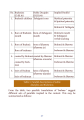
Brahmins and Noble Disciples: A Comparative Analysis
No. | Brahmins (D.III.81) | Noble Disciples (D.III.84) | Implied Parallel
---|------------------------|---------------------------|------------------------
1. | Brahma's children | Tathägata's sons |
…iples linked to dhamma. Each point illustrates the symbolic relationship between Brahma and dhamma, underlining the essence of spiritual inheritance and creation by divine entities. The contrasts drawn …
49
The Tathāgata and Brahmā: A Semantic Analysis
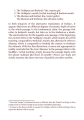
1. The Tathāgata and Brahmā,48 the creator god
2. The Tathāgata's mouth (verbal teaching) & Brahmā mouth.
3. The dhamma and Brahmā, the creator god; or
The dhamma and Brahman, the ultimate reality.
I
… to how 'dhamma' is referred to in Buddhist and Brahmanical contexts, emphasizing the importance of understanding these distinctions in Buddhist philosophy. Notably, 'Brahmā' refers specifically to the …
50
Understanding the Connotation of Dhamma in Relation to Brahma
…ase that ‘brahma-’ refers to the masculine ‘Brahma’
In case of the term ‘brahma-’ in the three compounds50 being
translated as a masculine ‘Brahma,’51 the comparison of the first and
the third parallels…
In this text, the term 'brahma-' is analyzed in the context of its translation as the masculine 'Brahma.' It discusses how the comparison between the Tathāgata and the Brahma, the creator, illustrates
51
The Transformative Power of the Noble Eightfold Path in Buddhism
…ith both of them.
In this regard, the Patisambhidāmagga describes that the four transcendent paths function in eradicating different sorts of defilements53. Once a particular 'transcendental path' (loku…
This text delves into the concept of transformation in Buddhist philosophy, specifically through the Noble Eightfold Path. It highlights how this path aids in the eradication of defilements, enabling
52
Understanding the Noble Eightfold Path and Threefold Path in Buddhism
…old path, which is now experienced on a higher level, and this spiral-like progression is continued until complete liberation is attained.
Similarly, Harvey explains the development of the threefold pat…
…le to the Four Transcendent Paths. Additionally, the text aligns these conceptions with the broader understanding of dhamma, emphasizing the characteristics that differentiate enlightened beings from or…
54
Understanding Dhamma and Brahman in Buddhism
… or as the neuter ‘brahman’ leads to the same conclusion that the term dhamma constituting the compound dhammakāya refers to ‘transcendental realities.’ It refers to the dhamma that is the incorruptible…
…disciples. The discussion references various scholars' insights, indicating a scholarly approach to understanding these concepts within Buddhist philosophy. It concludes that the ‘body’ of the Tathāgata…
55
Implications of Dhamma and Brahma in Buddhist Teachings
…cations from the parallel usage of the term 'dhamma' and 'brahma' elsewhere, for it may add further understanding to the present conclusion regarding the four designations of the Buddha.
Implications f…
เนื้อหานี้สำรวจการใช้คำว่า 'ดัมมะ' และ 'บราเหมะ' ในวรรณกรรมพุทธศาสนา และการตีความความหมายที่เชื่อมโยงกันของทั้งสองคำ เป็นการศึกษาความสำคัญของการใช้คำที่ขนานกัน ซึ่งสะท้อนถึงสถานะความบริสุทธิ์สูงสุดที่