

understanding : ค้นหาหนังสือธรรมะ หน้า 26 / 50
หน้าหนังสือทั้งหมด

30
Nong Pa Fa Cave Manuscripts: A Historical Insight
The Nong Pa Fa Cave manuscripts are quite old and one of them dates back to 2112 BE (1569 CE), or 441 years, which is extremely rare for a palm-leaf manuscript. The oldest manuscript, however, is kept
… a copy of the Parivāra and reveal the cultural ties between Lan Xang and Lanna. They are vital for understanding the Tipiṭaka and Early Buddhism in the region. More insights can be found at dmc.tv.
32
Dhamma-kāya in the Pali Canon
Dhamma-kāya in the Pali Canon¹
Chanida Jantrasrisalai
I. Why ‘Dhamma-kāya’ in the ‘Pali Canon’?
The term dhamma-kāya/dharmakāya appears in Buddhist literature of different schools. Previous scholars
…of the Pali texts, further contributing to the ongoing discourse on Buddhist philosophy. For deeper understanding, refer to dmc.tv.
37
Exploring the Concept of Dhammakāya in the Aggañña-sutta
IV. Reference 1: Dhammakāya as the Tathāgata’s Designation
The first Pali reference to the term dhammakāya that is well known to all previous works is a passage in the Aggañña-sutta, wherein the term
… The conversation between the Buddha and novices Väsetṭha and Bhāradvāja provides insights into the understanding of dhamma and the spiritual lineage of the Tathāgata. It highlights variations in manuscript editio…
39
Interpretations of Dhammakāya in Early Pāli Texts
Gombrich, while differently translating the term in this passage as a bahubbiha compound 'dhamma-bodied,' similarly interprets it as an indication that the Buddha's true import is due to 'his teaching
…rpretations of 'dhammakāya' across different scholars in the Pāli tradition, reflecting the nuanced understanding of the Buddha's essence and teachings. More information can be found at dmc.tv.
40
Understanding Dhammakāya in Aṅgāṇā-sutta
In brief, contemporary academics refer to the term dhammakāya in the Aṅgāṇā-sutta either as a noun or an adjective. As a noun, the term is interpreted mostly as the Buddha’s teachings collected togeth
… Buddha and the nature of the Tathāgata, emphasizing that true enlightenment is attained through an understanding of these profound teachings.
41
Understanding Dhammakāya: A Scholarly Interpretation
Points to Consider
It may be observed that the difference in previous scholarly interpretations of the term dhammakāya in this passage mainly pertains to the inter-relatedness of two distinctive meani
… delves into scholarly interpretations of the term 'dhammakāya', emphasizing the need for a nuanced understanding of 'dhamma' as both a realized reality and a verbal expression. It identifies three interconnected …
42
Saddhā: The Criterion of Being the Tathāgata's Son
Saddhā: Criterion of being the Tathāgata's Son
The first point to be looked at is the criterion of being the Buddha’s ‘true son’ which is, in this passage, defined by means of his
irremovable confiden
…t. The passage highlights the spiritual achievement of a Stream-enterer, illustrating this profound understanding and commitment to the teachings of the Buddha. For more on Buddhist teachings, explore dmc.tv.
43
Understanding the Noble Discipleship in Buddhism
Vin.II.192, A.IV.186, 210, 213
Just as a piece of clean cloth that is deprived of dirt would well-absorb the dye, the pure and clear eye of dhamma (dhammacakku) arose to the man, on that current seat
…confidence in the teachings, establishing themselves as Stream-enterers on the Holy Eightfold Path. Understanding their state aids in recognizing genuine practitioners of Buddhism, as opposed to mere claimants. Fu…
45
Understanding Dhamma and Spiritual Realization
…hout other preparatory activities, it can be explained that, during the time of their listening and understanding of the discourse, their mental qualities have been gradually purified and thus prepared. All their …
This content discusses the process of spiritual attainment through dhamma, emphasizing four key activities that lead to the emergence of noble qualities. It highlights how listening to the Buddha's te
48
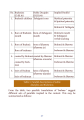
Brahmins and Noble Disciples: A Comparative Analysis
No. | Brahmins (D.III.81) | Noble Disciples (D.III.84) | Implied Parallel
---|------------------------|---------------------------|------------------------
1. | Brahma's children | Tathägata's sons |
…allow for deeper exploration of their roles in spiritual philosophy over time, opening pathways for understanding the significance of these two groups in religious contexts.
49
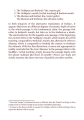
The Tathāgata and Brahmā: A Semantic Analysis
1. The Tathāgata and Brahmā,48 the creator god
2. The Tathāgata's mouth (verbal teaching) & Brahmā mouth.
3. The dhamma and Brahmā, the creator god; or
The dhamma and Brahman, the ultimate reality.
I
… to how 'dhamma' is referred to in Buddhist and Brahmanical contexts, emphasizing the importance of understanding these distinctions in Buddhist philosophy. Notably, 'Brahmā' refers specifically to the creator god…
54
Understanding Dhamma and Brahman in Buddhism
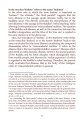
In the case that 'brahma-' refers to the neuter 'brahman'
In the other case in which the term brahma- is translated as 'brahman'63 the ultimate,64 the third parallel65 suggests that the term dhamma in
…disciples. The discussion references various scholars' insights, indicating a scholarly approach to understanding these concepts within Buddhist philosophy. It concludes that the ‘body’ of the Tathāgata encapsulat…
55
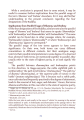
Implications of Dhamma and Brahma in Buddhist Teachings
…cations from the parallel usage of the term 'dhamma' and 'brahma' elsewhere, for it may add further understanding to the present conclusion regarding the four designations of the Buddha.
Implications from Paralle…
เนื้อหานี้สำรวจการใช้คำว่า 'ดัมมะ' และ 'บราเหมะ' ในวรรณกรรมพุทธศาสนา และการตีความความหมายที่เชื่อมโยงกันของทั้งสองคำ เป็นการศึกษาความสำคัญของการใช้คำที่ขนานกัน ซึ่งสะท้อนถึงสถานะความบริสุทธิ์สูงสุดที่
58
Understanding the Concept of Body and Collection in Dhamma
Functionally, however, both terms seem to imply a different relationship between individual members and the ‘totality’ of the whole ‘body’ or ‘collection.’ As a ‘body,’ the ‘totality’ of the whole org
…amma and serves as the creator of noble disciples who inherit this dhamma. This establishes a clear understanding of the functional aspect of these terms and their implications in spiritual development.
59
Understanding Dhamma and Nibbāna
The parallel usage of dhammakāya and dhammabhūta with brahmakāya and brahmmabhūta suggests further that the term dhamma in the passage should refer to Nibbāna. Indeed, it is possible also to say that
…ties that collectively influence the elimination of defilements. The text illustrates a spectrum of understanding the four noble truths across different levels of realization, asserting that the journey from Strea…
60
Understanding Dhammakāya: The Essence of Transcendental Dhamma
Arhatship (arahattamagga).86 Therefore, the particular path is not a mere ‘collective title’ of the path-constituents but the ‘essential totality’ by which a ‘body’ is defined.
The dependence of funct
…'s 'body.' The analysis considers different grammatical forms of Dhammakāya and its implications in understanding the Buddha's designations, indicating that it can serve both as an adjective and a noun. For more i…
61
Exploring the Concept of Dhammakaya
First, as a *kammadhāra* compound, the translation of the term *dhammākāya* will be ‘the body that is transcendental (lokuttara) dhamma’ or ‘the body that is Nibbāna.’ This gives a similar sense as th
…, shedding light on the depth of these terms in Buddhist teachings. This exploration concludes that understanding Dhammakaya is crucial in comprehending the nature of the Buddha as the embodiment of ultimate truth…
65
The Characteristics of Paccekabuddhas in Apadāna Literature
In the Apadāna literature, besides the life history of the Buddha and his disciples, a section is devoted to a depiction of the characteristics of Paccekabuddhas. This - section is entitled 'Paccekabu
…f self-enlightenment, becoming Paccekabuddhas instead of following the Buddha's teachings directly. Understanding 'dhamma' within this context reveals deeper insights into the nature of these spiritual beings. For…
68
Dhammakāya and Noble Disciples
VI. Reference 3: Dhammakāya and Noble Disciples
Besides the term’s relation to the Buddha and Paccekabuddhas, a Pāli canonical reference mentions also the relation of dhammakāya with noble disciples.
…derscoring her status as an Arhat who has eradicated all fetters. The narrative emphasizes her deep understanding of the four noble truths and her ultimate liberation, highlighting the profound bond between dhamma…
70
The Essence of Dhamma-Milk in Spiritual Growth
related also to the happiness arisen from the realisation of truths, as
mentioned in the previous verse.
In verse 33, Gotami is said to have been fed on the ‘dhamma-milk.’105 Because it is fed to her
…sights underscore the importance of dhamma-milk in achieving true fulfillment and happiness through understanding and experience.