

AF¯ : ค้นหาหนังสือธรรมะ หน้า 57 / 92
หน้าหนังสือทั้งหมด
76
Understanding the Terms Kevala and Dhammakāya in Buddhist Texts
Generally, the term ‘kevala’ is translated either as ‘only’ or ‘entirely.’ It is observed that, whenever the term appears together with another word that conveys the meaning of ‘emanating,’ ‘illuminat
This text explores the interpretation of key Buddhist terms such as 'kevala', which denotes 'only' or 'entirely', particularly in contexts associated with illumination. The term 'dhammakāya', often li
78
Understanding Dhammakāya in Early Theravādin Context
The research approach employed in the present study is intended as a more direct, analytical and inclusive one than previous approaches to this question. It is more direct in that it set off by docume
This study analyzes the term dhammakāya through close readings of Pali canonical passages, revealing that it relates not only to the Buddha but also to other noble figures like Paccakabuddhas and disc
80
Understanding Dhammakāya and its Significance in Buddhism
mental qualities128 or purity,129 or identifies it with realities to be
attained or experienced spiritually by noble disciples through the
penetration of the noble paths.130 In one instance, he connec
This text examines the term dhammakāya as articulated by Buddhaghosa, linking it to spiritual realities and teachings of the Buddha. It highlights the role of dhamma-vinaya as a guiding principle and
82
Interpretations of Dhammakāya in Pali Commentaries
In addition to the above two commentators, Upasena and Buddhadatta141 are also Pali commentators who lived around the same times.142 Upasena agrees with Buddhagōsha in regard to his interpretations of
The text discusses the interpretations of the term 'dhammakāya' by various Pali commentators, focusing on Upasena and Buddhadatta, who align with Buddhagōsha, and their views on the Buddha's qualities
88
Overview of Theravāda Buddhist Manuscripts in China
I will give a brief overview of the manuscripts that have been
discovered and catalogued, an explanation of some current research
projects, and I will discuss some of the problems that threaten
China'
This document provides an overview of Theravāda Buddhist manuscripts found in China, particularly in Yunnan Province. It discusses the significance of these manuscripts within the Dai community and hi
89
Preservation of Dai Buddhist Manuscripts in Sipsong Panna
This project is in accordance with the national emphasis on the protection and development of religious culture in minority areas.3 Most of the Dai Buddhist manuscripts in Sipsong Panna are made from
This project aligns with the national focus on protecting religious culture in minority areas, specifically the Dai community in Yunnan. Research has identified more than 400 Dai Buddhist manuscripts,
91
Exploration of Theravāda Buddhist Manuscripts in Sipsong Panna
literature.9 It is notable that the Agama Sutras (阿含经) discovered in the Xishuangbanna region are incomplete. For example, the Hinayana Agama should have contained the Khuddaka Patha (小品), Dharma-phra
The Agama Sutras found in the Xishuangbanna region are notable for their incompleteness. The Hinayana Agama is expected to contain various texts that are partly missing. According to The Complete Coll
94
Buddhist Manuscript Formats in Dai Region
Volume 98 Khuddaka-nikāya (小阿含经) and Volume 99 Majjhima-nikāya (中阿含经) are all in 5-line to 6-line format manuscripts; Volume 100 Digha-nikāya (长阿含经) is in 4-line to 5-line-format. The jäṭaka Wexiandal
Volume 98 Khuddaka-nikāya and Volume 99 Majjhima-nikāya are primarily in 5-6 line formats, while Volume 100 Digha-nikāya is formatted with 4-5 lines per page. The jäṭaka Wexiandala represents a key Bu
95
Dai Buddhist Manuscripts in Yunnan's Dehong Prefecture
It is noteworthy that there is a community of Dai people in the Dehong Autonomous Prefecture in the west of Yunnan, and a wide range of Buddhist manuscripts are stored there. Palm-leaf manuscripts are
This text discusses the unique tradition of Buddhist manuscripts among the Dai people in Dehong Autonomous Prefecture of Yunnan, where various types of manuscripts are produced. Most texts utilize sa-
96
The Imminent Extinction of Palm-Leaf Manuscripts in Sipsong Panna
III The Problem of the Imminent Extinction of Palm-Leaf Manuscripts in Sipsong Panna
Buddhism in Sipsong Panna is characterised by its manuscript culture. However, today the number of the palm-leaf m
This text discusses the worrying decline of palm-leaf manuscripts in Sipsong Panna, where Buddhist manuscript culture is rich but facing imminent extinction. Key reasons include the autonomous nature
98
Preserving Palm-Leaf Manuscripts in Southwestern China
Conclusion
Numerous palm-leaf and sa-paper manuscripts exist in the Dai regions in Southwestern China. These Buddhist manuscripts, copied and inscribed in Pāli and the Dai language using traditional
In Southwestern China, palm-leaf and sa-paper manuscripts are crucial for studying ancient Buddhism, showcasing the influence of Theravāda Buddhism. The recent collection efforts by the local governme
100
The Dhammakāya Verse: A Lan Na Thai Manuscript
The Dhammakāya Verse:
a Lan Na Thai manuscript
Kitchai Urkasem
This article is a report on research undertaken with the support of the 60th Dhamma chai Education Foundation (DEF) on a palm leaf manu
This article discusses research supported by the 60th Dhamma chai Education Foundation on a palm leaf manuscript titled Dhamma kāya from northern Thailand's Lan Na region. Undated, it is believed to h
114
การบรรลุของพระพุทธเจ้าและอรรถธรรม
ญ๊ษัททําสําทัดะสา adigatạ: that the Lord attained. Imam dhammakāyăm buddharakkhaṇam: the body of Dhamma (dhammakāya) is the property (lakhana) of the Lord Buddha. Yogāvacarapputanna: the practitioners
ในเนื้อหานี้กล่าวถึงการบรรลุของพระเจ้าพุทธเจ้าและการปฏิบัติธรรมอย่างจริงจังเพื่อนำไปสู่การเข้าถึงนิพพาน โดยมีการเน้นถึงความสำคัญของการทบทวนและสวดบทสวดเพื่อกราบไหว้พระ. พุทธศาสนิกชนถูกกระตุ้นให้ถือปฏิบ
120
An Shigao and Early Chinese Meditation Techniques
An Shigao and Early Chinese Meditation Techniques¹
Phra Kiattisak Kittipanyo² (University of Otago)
An Shigao安世高 (147~168 CE) played an important role in the early transmission of Buddhism into China
An Shigao (147-168 CE) significantly influenced the early transmission of Buddhism in China. Despite a focus on his ethnicity and translation style, he is recognized as a respected meditation master.
131
Eastern Han Buddhist Meditation and Daoism
Eastern Han Buddhist meditation and Daoism
By the middle of the first century CE, a Buddhist community was already in existence in China, and growing. The arrival of translators from Central Asia and
By the first century CE, Buddhism had begun to take root in China, with translators arriving from Central Asia and India to convert texts into Chinese. They initially faced challenges in accurately co
138
Exploring Chinese Philosophical Texts and Their Influence
Kohn, Livia, and Yoshinobu Sakade. Taoist Meditation and Longevity Techniques. Center for Chinese Studies, University of Michigan, 1989.
Mair, Victor H. “What Is Geyi, After All?” In Philosophy and Re
This collection examines various texts that shed light on the development of Chinese philosophical thought and literary traditions. Works range from Livia Kohn's exploration of Taoist meditation pract
139
Buddhist Texts and Historical Studies
The SAT Daizōkyō Text Database Committee. “出三藏記集 (No. 2145 (僧祐提)) in Vol. 55.” Taishō Shinshū Daizōkyō (大正新修大藏經), March 17, 1998. http://21dzk.l.u-tokyo.ac.jp/SAT/ddb-sat2.php?mode=detail&useid=2145,_
This collection includes significant Buddhist texts and studies, such as the Mahāyāna Buddhism foundations by Paul Williams and insights into early Chinese Buddhism by Erik Zürcher. Scholarly works di
17
การดูแลและความปลอดภัยในการเดินทางเพื่อสุขภาพ
The text in the image is in Thai language. Here's the extracted text:
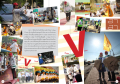
"ทุก ว-Ruay ผู้นำวัฒนธรรมต้นปีวัดเสด็จพระสังฆ์ ออกเดินทางจากต่างประเทศ V-Move พาน้ำมันปันเป็นจุดๆ V-Give น้ำตกความมย มาให้คุณ V-
การเดินทางผ่านวัดเสด็จพระสังฆ์มีความสำคัญที่ต้องตรวจสอบความถูกต้องตามกฎข้อบังคับต่างๆ เพื่อความปลอดภัยของชาวไทยและนักท่องเที่ยว รวมถึงการเข้าร่วมของอาสาสมัครในการทำความสะอาดพื้นที่และอาหารสำหรับผู้ที่
73
ความเข้าใจในธรรมคำสอนของพระพุทธองค์
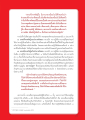
"ธรรมที่เราตรัสรู้ันนั้น มีมากมายเหมือนใบไม้ทั้งผนังป่า ส่วนธรรมที่เรานำมาสั่งสอนนั้น เป็นเพียงส่วนเล็กน้อยเหมือนใบไม้เพียงหนึ่งก่ำมือ สิ่งที่เราตรัสสอนนี้เป็นธรรมเบื้องต้น เพราะประกอบด้วยประโยชน์ในกา
บทความนี้พาเราไปสำรวจธรรมที่พระพุทธองค์ตรัสรู้ แบ่งออกเป็นสองประเภทคือ ธรรมที่เรียกว่าเป็นเบื้องต้นสำหรับการพ้นทุกข์ และธรรมที่ทรงตรัสแต่ไม่ได้นำมาสอน ซึ่งเป็นความรู้เพื่อการบรรลุที่สุดแห่งธรรม ความรู
1
ลิขิตปิติ
ความจริง ความตาย
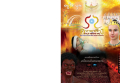
The Truth of Life after Death Exhibition
อะไรตอนจบ หรือจะเห็นตาย