

C : ค้นหาหนังสือธรรมะ หน้า 606 / 733
หน้าหนังสือทั้งหมด
120
The Path of Right Actions in Buddhism
1. Right View
The Buddha taught that Right View is a fiercely accurate understanding of life and the world based on the benchmark of Nirvana, a thorough under…
This text elaborates on essential aspects of Buddhism focusing on Right View, which is the accurate understanding framed by Nirvana and the…
121
The Noble Eightfold Path: Ethical Conduct and Mindfulness
Stealing [adinnādāna]: Taking that which is not given;
Committing adultery [kāmesumicchācarā]: abstaining from sexual relations outside mar…
This text discusses key principles of the Noble Eightfold Path, focusing on ethical conduct such as Right Speech, …
124
Understanding the Inner Bodies and Enlightenment
the centre of the body, in the same way as described earlier, in entering the centre of the Pathama Magga…
This text discusses the progression through successive inner bodies leading to the Dhammakāya, emphasizing the dis…
125
Cultivating Transcendental Knowledge in Buddhism
It is for this reason that the Lord Buddha advocated his monks to cultivate transcendental knowledge in order to put themselves beyond the reach of …
The Lord Buddha encourages monks to attain transcendental knowledge to rise above sensuality and eradicate False View. …
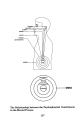
129
images
sounds
scents
tastes
touch
mental phenomena
MIND
perception
filtering
processing
knowing
perception
filterin…
132
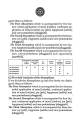
The Four Absorptions in Meditation
guish them as follows:
The First Absorption which is accompanied by five factors: initial application of mind [vitakka], continued application of mi…
This text outlines the four absorptions in meditation, detailing the factors involved in each state. The First Absorption is characterized by five components: initial appli…
136
Understanding the Inner Bodies on the Path to Enlightenment
them and go further through the centre until attaining the Body of Enlightenment — the most subtle of the inner bodies.
The inner bod…
…ous inner bodies that exist between the Paṭhama Magga Sphere and the Body of Enlightenment. These include the Subtle Human Body, Angelic Body, and several Brahma Bodies, all composed of the Five Aggreg…
138
The Path to Enlightenment in Buddhism
grasping [räga], hatred [dosa] and delusion [moha]. When the mind is sufficiently pure to be released from these three defilements, the mind will attain the Formless Brahma Bo…
This text discusses the process of achieving enlightenment in Buddhism, focusing on the overcoming of three main d…
141
Understanding Impermanence, Suffering, and Not-Self
Impermanence [aniccān]: This is the built-in character of objects that are of a nature to change the whole of t…
This text delves into the fundamental Buddhist concepts of impermanence (aniccān), suffering (dukkham), and not-self (anattā) as expressed through t…
142
The Path to Enlightenment: Understanding Dhammakāya
the knowledge arising from cognition may be erroneous.
The knowledge arising from 'knowing', by contrast, de-
pends on the Dhamm…
This text discusses the distinction between knowledge gained through cognition and that which arises from true wis…
143
Understanding the Dhamma Body and the Noble Path
…a Body — not with the human eye or the naked eye.
All the knowledge that brought him to Buddhahood came
by the ‘knowing’ of the Dhamma Body, not by rationale or
reasoning with the logical (human) mi…
The Dhamma Body can only be perceived beyond the human eye, allowing the Buddha to grasp deep truths about existence.…
144
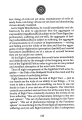
The Components of the Eightfold Path
The Components of the Eightfold Path all arise together
When the factors of the Eightfold Path arise, the…
This text discusses the Eightfold Path, emphasizing how all eight components arise together as illustrated by the …
145
Understanding the Eightfold Path: Right Mindfulness and Right Concentration
fort: doing of evils not yet done, maintainance of evils already done, not doing virtues not yet done and abandoning virtues already mastered.
As …
This excerpt explores the significance of the Eightfold Path, specifically focusing on Right Mindfulness and…

148
see that the six components of conduct are a path ahead which are free of all dangers bringing one surely to one's des…
153
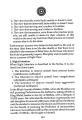
Understanding Right View and Right Intention in Buddhism
[Image contains text and a circular symbol at the top]
4. The view that this world lacks reality or doesn’t…
This text examines the principles of Right View and Right Intention in Buddhism. It highlights the dangers of False Views, such …
155
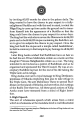
King Asoka: Patron of Buddhism
by inviting 60,000 monks for alms in the palace daily. The king wanted to have the chance to pay respect to a fully-enlightened Buddha and with th…
…oka was a pivotal figure in Buddhism, inviting 60,000 monks for daily alms and yearning to pay respect to a fully-enlightened Buddha. He invited the Naga King to appear as the Buddha for homage, constr…
156
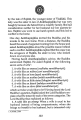
The Tale of Sujāta and the Seven Types of Wives
…e younger sister of Viṣākha. This lady was the sister in law of Aṇṭhapiṇḍika but was very haughty because she inherited from a wealthy family. She had consideration neither for her husband nor her pare…
This narrative recounts the tale of Sujāta, who, despite her wealth, was arrogant and disrespectful in her relationshi…
157
Types of Wives: Characteristics and Comparisons
…en, looking down on her husband — even when her husband is the one to pay her dowry in the first place — having no gratitude to her husband, and even going as far as attempting to kill her husband in s…
This text explores different types of wives and their characteristics, highlighting the negative traits of a wife like an enemy, robber, and boss, and cont…
158
The Nature of Wives in Buddhist Teachings
…e like an slave: A wife who allows herself to be abused, slapped or beaten by her husband without becoming angry or vengeful and without blaming her husband, who is contented to be completely dominated…
This text discusses different types of wives in Buddhist teachings, illustrating how their characteristics influen…
159
The Festival of Fools: A Tale of Wisdom
Once there was a festival which had been organized by fools. It was called the ‘Festival of Fools’ and …
Once there was a Festival of Fools characterized by reckless behavior of drunken townsfolk. A group of …