

F.N. : ค้นหาหนังสือธรรมะ หน้า 267 / 300
หน้าหนังสือทั้งหมด
38
The Consequences of Attachment to Sense Pleasure
O! Monks! Some warriors go to the trouble to erect defences of brick and mortar to stop their enemies being able to climb over, they fill their arsenals full of weapons. However, if the enemy should p
This text discusses how attachment to sense pleasures leads to various forms of suffering and wrongdoing. It illustrates the consequences of indulgence, including violence and crime, and emphasizes th
39
Understanding Self-Mortification in Buddhism
It is for this reason that the Lord Buddha should want to start his sermon by instructing the ‘group of five’ that indulgence of the senses is unsuitable, base, ignoble, without benefit, unsuitable fo
In this text, Lord Buddha teaches that indulgence of the senses is unsuitable for a Buddhist monk and should be avoided. The practice of self-mortification, common among non-Buddhist ascetics, include
40
The Futility of Self-Mortification
Commentorial Metaphors: Self-mortification:
1. Sugar-cane juice and poison: It can be compared to a mixture of sugar-cane juice and poison. In the end such practices will lead to death, and all for no
This text presents a series of metaphors illustrating the perils of self-mortification. Comparing self-harm to poison, stale excrement, and dangerous leaps, it highlights the futility of such practice
43
Understanding the Noble Eightfold Path
Noble Eightfold Path is the most auspicious of all the virtuous teachings of the Lord Buddha.
4. A Wish-fulfilling Jewel: It can be compared to a wish-fulfilling jewel of eight facets.
5. The Chariot
The Noble Eightfold Path is central to Buddha's teachings, likened to a wish-fulfilling jewel. It consists of eight components: Right View, Right Intention, Right Speech, Right Action, Right Livelihoo
44
Understanding Right Intention and Right Speech in Buddhist Practice
subtle defilements¹ [anusaya].
2.1 Right Intention (mundane): At low level Right Inten- tion means having the wholesome intention to be generous, keep the Five Precepts, renounce the world to become a
This text discusses key aspects of Buddhist practice, specifically focusing on Right Intention and Right Speech. Right Intention involves having wholesome intentions such as generosity and the desire
45
The Buddha's Teachings on Right Livelihood and Moral Conduct
the monk's equivalent of Right Livelihood, by avoiding such evils as fortune telling, sacrifices or interpreting dreams, because these are all 'low arts'[tiracchānavijjā]. The Buddha even prohibited m
This text discusses the Buddha's teachings on Right Livelihood, emphasizing the avoidance of 'low arts' such as fortune telling and the prohibition of harmful trades for monks and laypeople. In partic
47
Understanding Right Concentration and the Dhammacakka
oupes, keep the Precepts, meditate or listen to Dhamma sermons. Such determination is a precursor of concentration called 'khaṇika-samādhi'.
7.2 Right Concentration (transcendental): At high level Rig
บทความนี้อธิบายถึงการเจริญสมาธิอย่างถูกต้องซึ่งรวมถึงการเข้าถึงสมาธิในระดับที่สูงขึ้น รวมถึง Dhammacakka ซึ่งเป็นแนวทางในการเข้าถึงนิพพาน โดยอธิบายความสัมพันธ์ระหว่างปัจจัยที่นำไปสู่การตรัสรู้และบทบาท
49
The Artistry Behind Preaching the Four Noble Truths
3
The Four Noble Truths
The Artistry Behind Preaching the Four Noble Truths
In the Dhammacakkapavattana Sutta as in his other sermons, the Lord Buddha explains not only Dhamma subjects, but the relat
In the Dhammacakkapavattana Sutta, the Lord Buddha presents the Four Noble Truths, emphasizing their interconnected nature. Each Noble Truth is not standalone; they influence and clarify one another.
50
Understanding the Noble Truths of Suffering
the 'Noble Truth of the Suffering', the 'Noble Truth of the
Origin of Suffering' and the 'Noble Truth of the Cessation
of Suffering'. In brief, the artistry of the Lord Buddha is to
integrate all four
The teachings of the Lord Buddha encompass the Four Noble Truths, with a significant focus on understanding suffering. Suffering is characterized through various forms — from birth to death, highlight
53
The Noble Truth of the Origin of Suffering
2. Explanation of the Noble Truth of the Origin of Suffering
The Lord Buddha’s explanation of the Origin of Suffering includes all four of the Origin of Suffering’s implications in the light of the Fo
The Lord Buddha explains the Origin of Suffering, emphasizing craving as the root cause affecting all living beings. It identifies two forms of craving: self-centred craving (for personal advantage) a
54
Understanding the Origin of Suffering in Buddhism
2.2 The Origin of Suffering as a Cause
In explaining the Origin of Suffering, the Buddha intended to make clear that the suffering experienced by living beings has craving as its cause. As soon as the
In this examination of the Buddha's teachings, the Origin of Suffering is explained as being rooted in craving, which leads to a cycle of suffering. The relationship between the Origin of Suffering an
56
The Noble Eightfold Path and the Cessation of Suffering
"The wise one who trains himself [yoĝāvācara] should see that the builder is ‘Craving’ who fashions the home that is the physical body of each and every living being, to keep those living beings being
This text delves into the teachings of the Buddha regarding the nature of craving as the cause of suffering and the means of escape through the Noble Eightfold Path. The concept of the 'Elixir of Deat
57
The Noble Truth of the Eightfold Path
4.1 The Path as the Escape from the Cycle of Existence
This is the direct definition of the Noble Truth of the Path to the End of Suffering. Whosoever wishes to traverse the ocean of the Cycle of Exis
This text discusses the Noble Eightfold Path as the essential means to traverse the Cycle of Existence and end suffering. It illustrates the overwhelming nature of this cycle, marked by the suffering
60
The Noble Truth of Suffering
The OCR result from the image reads:
---
**4 The Noble Truth of Suffering**
Every living being is a victim of suffering
The Lord Buddha explained the nature of suffering in detail. The Pali word for
The text delves into the concept of suffering, known as *dukkha*, as articulated by the Lord Buddha. It defines *dukkha* by its roots, explaining the inherent negativity of existence. Without sufferin
61
Understanding Suffering in Buddhism
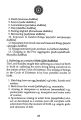
4. Death [marana dukkhā]
5. Sorrow [soka dukkhā]
6. Lamentation [parideva dukkhā]
7. Pain [dukkha dukkhā]
8. Feeling slighted [domañassa dukkhā]
9. Bemoaning [upāyassa dukkhā]
10. Exposure to hateful
บทเรียนของพระพุทธเจ้ามุ่งเน้นไปที่การเข้าใจทุกข์และธรรมชาติของมัน เช่น ความทุกข์จากการเกิด, ความตาย, และอารมณ์ต่างๆ เช่น ความโศกเศร้า การพลัดพราก และความผิดหวัง ความทุกข์เกิดจากการคลั่งไคล้ในaggregate
62
The Suffering of Birth: Understanding the Stages of Embryonic Development
The suffering of birth starts to affect beings without exception from the moment they are conceived. Some beings are fully equipped with sense spheres [āyatanā] from the moment they are born — others
The suffering of birth begins at conception and affects all beings. It varies by the mode of birth, with those born from the womb experiencing more suffering. Mammalian embryonic development shows cha
63
The Suffering of Internment in the Womb
1.1 The Suffering of Internment in the Womb
The foetus is seated upon the faeces of the mother passing through her intestines and has the food being digested in her stomach as a pillow. The foetus is
This text delves into the severe distress endured by a foetus during gestation, likening conditions in the womb to a form of hell due to physical confinement and sensory overload. The foetus experienc
64
Suffering During Birth: The Experiences of the Foetus
suffering of the foetus, like being exposed to a rain of hot ashes. Each time the mother eats something spicy, the whole of the foetus’s body will itch and become swollen with the strength of the spic
This text delves into the intense suffering experienced by the foetus due to maternal actions, particularly when consuming spicy foods, causing skin irritations. It describes 'gabbha parihara mulaka d
66
The Suffering of Birth and Aging in Buddhist Philosophy
hunted to death. All of these forms of suffering could not occur if it wasn't for being born as an animal. The causative relation of animal birth for consequent suffering is said to be the ninth aspec
ในพุทธศาสนา, ความทุกข์จากการเกิดเป็นเรื่องสำคัญ โดยเฉพาะการเกิดเป็นสัตว์และวิญญาณหิวโหย ที่จะต้องเผชิญกับการทนทุกข์จากการไม่สามารถบริโภคได้ ในขณะที่ทุกข์จากการแก่แสดงออกถึงการเสื่อมสภาพของร่างกาย เช่น
67
Understanding Aging: The Unseen Process
2. A Flood or a Storm which carries away forest debris: In just the same way as a flash flood inundates a forest or a storm tears down branches and leaves in a forest and sweeps them away, leaving the
Aging is often unnoticed until its effects become visible, much like debris left after a flood. We realize aging's impact only when physical signs appear, such as tooth loss and wrinkles. This process