

F : ค้นหาหนังสือธรรมะ หน้า 270 / 300
หน้าหนังสือทั้งหมด
117
The Noble Truth of the Cessation of Suffering
The Noble Truth of the Cessation of Suffering: A Conclusion
The Lord Buddha taught that the cessation of suffering can…
The conclusion on the cessation of suffering according to the Buddha highlights the need to extinguish craving through the Noble Eight…
118
Understanding the Mind and Success in Buddhist Practice
and the four different functions of the mind are scattered in their separate directions like a group of peopl…
This text discusses the four functions of the mind and their impact on achieving success in Buddhist practice, as emphasized …
120
The Path of Right Actions in Buddhism
1. Right View
The Buddha taught that Right View is a fiercely accurate understanding of life and the world based on the benchmark of Nirvana, a thorough u…
This text elaborates on essential aspects of Buddhism focusing on Right View, which is the accurate understanding framed by Nirvana and the four…
122
The Journey to Inner Bodies and Enlightenment
(also called the 'astral body' or 'dream body') all the way up to the various bodies of enlightenment.
The meditator can see and consider bodies within the body by setting their attention…
…e journey towards discovering inner bodies, known as the astral or dream body, and various spheres of awareness that lead to enlightenment. It details how focusing attention on the center of the body c…
124
Understanding the Inner Bodies and Enlightenment
the centre of the body, in the same way as described earlier, in entering the centre of the Pathama Magga Sphere,…
…undane and transcendental bodies. It highlights that all worldly bodies, including the human, are influenced by the Three Signs of existence: impermanence, suffering, and not-self. In contrast, bodies …
126
Meditation and Mindfulness: Cultivating Inner Awareness
…t not only can they see the inner bodies in succession — they will be able to see the corresponding feelings at the same time.
For as long as the meditating monk is able to see and consider the feeling…
เมื่อผู้ปฏิบัติธรรมพัฒนาการเข้าถึงระดับที่ลึกซึ้ง ไม่เพียงแต่จะมองเห็นกายภายในที่เกิดขึ้นตามลำดับ แต่ยังสามารถเห็นความรู้สึกที่เกิดขึ้นพร้อมกันได้อีกด้วย พวกเขาจะเห็นและพิจารณาความรู้สึกอย่างต่อเนื่อง
127
Understanding the Mind and Its Layers
are mindful that ‘the mind is distracted’. If the mind is con-
centrated, you are mindful that ‘the mind is …
The text delves into the nature of the mind, describing its four concentric layers: perception, sensory registration, central processi…
130
Understanding Mindfulness in the Mind
mind in the mind, it means mindfulness only of the sphere of central processing — and not the spheres of the mind involved with perc…
The text discusses mindfulness focusing on the central processing of the mind, distinguishing it from perception and cogniti…
131
Mindfulness and Right Concentration in Buddhism
7.4 Mindfulness of the *dhammas* in the *dhammas*
Mindfulness of the *dhammas* in the *dhammas* is to see a…
…enüber Dhammas und die richtige Konzentration im Buddhismus. Die Achtsamkeit richtete sich sowohl auf innere als auch äußere mentale Phänomene, die erforderlich sind, um das subtile menschliche und phy…
133
Understanding the Levels of Absorption in Meditation
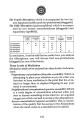
The Fourth Absorption which is accompanied by two factors: happiness [sukhα] and one-pointedness [ekaggat…
This text outlines the five absorptions in meditation, detailing the factors involved in each stage, including joy, happines…
135
Understanding the Pathama Magga Sphere
the other virtues.
For as long as a meditator cultivates the Noble Eightfold
Path purely, completely and according to th…
…s into the Pathama Magga Sphere, an important concept in meditation that arises when the Noble Eightfold Path is fully realized. It explains how the mind can be liberated from external influences throu…
137
Understanding the Bodies of Enlightenment
ment, the Arahatta Body of Enlightenment [Dhammakāya Arahat] and the Subtle Arahatta Body of Enlightenment.
Thus there are ten…
This content discusses the ten types of Bodies of Enlightenment, including the Arahatta Body and Subtle Arahatta Body, emphasizing the bene…
140
Understanding the Dhammakāya and Its Mind
reaching the Dhammakāya and becoming one and the same as the Dhammakāya. The body of the Dhammakāya incorporates layers of perception, sensory registration, central processing and cogn…
The Dhammakāya embodies a body that resembles human perception while its mind can expand significantly, allowing the meditator to observe the eight inner bodies. This process unveils the Three Si…
141
Understanding Impermanence, Suffering, and Not-Self
Impermanence [aniccān]: This is the built-in character of objects that are of a nature to change the whole of the time. Such things as the Five Aggregates of…
This text delves into the fundamental Buddhist concepts of impermanence (aniccān), suffering (dukkham), and not-self (anattā) a…
142
The Path to Enlightenment: Understanding Dhammakāya
the knowledge arising from cognition may be erroneous.
The knowledge arising from 'knowing', by contrast, de-
pends on the …
…his text discusses the distinction between knowledge gained through cognition and that which arises from true wisdom based on the Dhammakāya. It details the bodhisatva's rigorous meditation practice at…
143
Understanding the Dhamma Body and the Noble Path
…man eye or the naked eye.
All the knowledge that brought him to Buddhahood came
by the ‘knowing’ of the Dhamma Body, not by rationale or
reasoning with the logical (human) mind. The Buddha was
able…
…g the Buddha to grasp deep truths about existence. His compassion drove him to teach the Noble Path for the liberation of others, advocating for the Four Foundations of Success. Cultivating virtues lik…
144
The Components of the Eightfold Path
The Components of the Eightfold Path all arise together
When the factors of the Eightfold Path arise, they do so to-
…
This text discusses the Eightfold Path, emphasizing how all eight components arise together as illustrated by the elder monk Koṇḍa…
145
Understanding the Eightfold Path: Right Mindfulness and Right Concentration
fort: doing of evils not yet done, maintainance of evils already done, not doing virtues not yet done…
This excerpt explores the significance of the Eightfold Path, specifically focusing on Right Mindfulness and Right Concentration. It…

148
see that the six components of conduct are a path ahead which are free of all dangers bringing one surely to one's destination.
149
The Noble Eightfold Path on the Mundane Level
8
The Noble Eightfold Path
on the Mundane Level
Practising the Noble Eightfold Path is not just the duty of the saint…
Practicing the Noble Eightfold Path is essential for both monks and laypeople. It provides a framework for achieving happiness …