

Understanding Mindfulness in the Mind : หน้า 130/263
The Buddha’s First Teaching : หน้า 130/263 Explore the concept of mindfulness specifically related to the central processing of the mind, its nature, and the distinction between inner and outer mindfulness.
5 ครั้ง
สรุปเนื้อหา
The text discusses mindfulness focusing on the central processing of the mind, distinguishing it from perception and cognition. It describes the clear nature of the pure mind that becomes tainted by desires and ill will, altering its translucence. Mind changes constantly, arising and extinguishing. Cultivating mindfulness involves observing the mind in both its physical and subtle forms without attachment, allowing clear comprehension of its state. This practice enables one to maintain mindfulness continuously in daily life, free from cravings and worldly attachments. For further insights, visit dmc.tv.
หัวข้อประเด็น
-Mindfulness and the Mind
-Nature of the Pure Mind
-Changes in Mental States
-Cultivating Inner and Outer Mindfulness
-Overcoming Cravings and Attachments
ข้อความต้นฉบับในหน้า
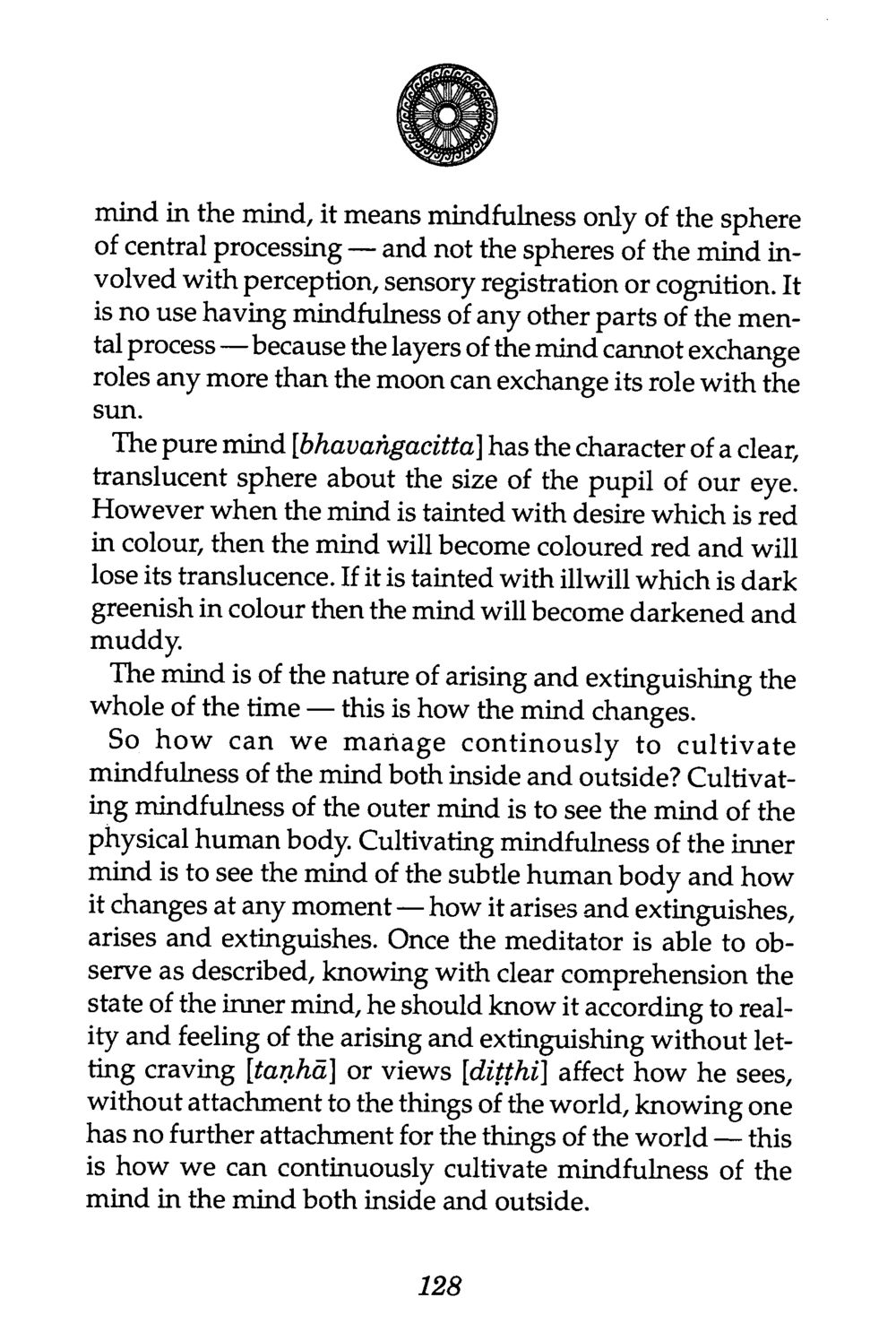
mind in the mind, it means mindfulness only of the sphere of central processing — and not the spheres of the mind involved with perception, sensory registration or cognition. It is no use having mindfulness of any other parts of the mental process — because the layers of the mind cannot exchange roles any more than the moon can exchange its role with the sun.
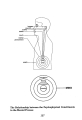
The pure mind [bhavaṅgacitta] has the character of a clear, translucent sphere about the size of the pupil of our eye. However when the mind is tainted with desire which is red in colour, then the mind will become coloured red and will lose its translucence. If it is tainted with illwill which is dark greenish in colour then the mind will become darkened and muddy.
The mind is of the nature of arising and extinguishing the whole of the time — this is how the mind changes.
So how can we manage continually to cultivate mindfulness of the mind both inside and outside? Cultivating mindfulness of the outer mind is to see the mind of the physical human body. Cultivating mindfulness of the inner mind is to see the mind of the subtle human body and how it changes at any moment — how it arises and extinguishes, arises and extinguishes. Once the meditator is able to observe as described, knowing with clear comprehension the state of the inner mind, he should know it according to reality and feeling of the arising and extinguishing without letting craving [tanhā] or views [diṭṭhi] affect how he sees, without attachment to the things of the world, knowing one has no further attachment for the things of the world — this is how we can continuously cultivate mindfulness of the mind in the mind both inside and outside.
128
หน้าหนังสือทั้งหมด

1

2

3
4
5
6
7
8
9
10
11
12
13
14
15
16
17
18

19

20
21
22
23
24
25
26
27
28
29

30

31
32
33
34
35
36
37
38
39
40
41
42
43
44
45
46
47
48

49
50
51
52
53
54
55
56
57
58
59

60
61
62
63
64
65
66
67
68
69
70
71
72
73
74
75
76
77
78
79
80
81
82
83
84
85
86
87
88
89
90
91
92
93
94
95
96
97
98
99
100
101
102
103
104
105
106
107
108
109
110
111
112
113
114
115
116
117
118
119
120
121
122
123
124
125
126
127
128
129
130
131
132
133
134
135
136
137
138
139
140
141
142
143
144
145
146
147

148

149
150
151
152
153
154
155
156
157
158
159
160
161
162
163
164
165
166
167
168
169
170
171
172
173
174
175
176
177
178
179
180
181
182
183

184
185
186
187
188
189
190
191
192
193
194
195
196
197
198
199
200
201
202
203
204
205
206
207
208

209
210
211
212
213
214
215
216
217
218
219
220
221
222
223
224
225
226
227
228
229
230
231
232
233
234
235
236
237
238
239
240
241
242
243
244
245
246
247
248
249
250

251
252
253
254
255
256
257
258
259
260

261

262

263
หนังสือที่เกี่ยวข้อง
Load More