

FU : ค้นหาหนังสือธรรมะ หน้า 58 / 107
หน้าหนังสือทั้งหมด
77
Re-evaluating the Concept of Dhammakāya in the Pali Canon
…wels, who is demonstrating the dhammakāya; having seen him, who is not pleased?
In order to clarify further regarding the precise connotation of dhammakāya in this latter case, it would be useful to loo…
This study revisits the term dhammakāya in the Pali canon, highlighting its significance in Buddhist teachings. By examining the Sambuddha-sutta, the relationship between 'the path' and dhammakāya is
78
Understanding Dhammakāya in Early Theravādin Context
…ut to noble persons of all types, i.e., Buddhas, Paccakabuddhas and noble disciplines. The term may function either as an adjective or a substantive.
As an adjective, dhamma that is the Tathāgata’s body…
…ody and its role in spiritual realization, distancing it from a mere association with teaching. For further insights, visit dmc.tv.
79
Understanding Dhammakāya: A Noble Identity
… in each level can be regarded as being 'sufficient' as a 'complete body' capable of performing the function pertaining to that particular transcendent state.
Dhamma kaya, therefore, represents the re…
…olars like Buddhaghosa and Dhammapala shed light on this concept, viewing Dhammakāya as a complete, functional body in every transcendent state. It symbolizes a deeper understanding of Buddhist doctrine…
81
Understanding Dhammikāya in Buddhist Philosophy
Dhammapāla, like Buddhaghosa, employs the term dhammikāya
mostly as a noun, and relates it either with the Buddha’s mental
qualities and purity,134 with the Enlightenment either of the Buddha135
or hi
…the Buddha's unique qualities, showcasing the connection between his physical body and dhamma-body. Furthermore, he highlights how dhammikāya reflects the relationship between the teachings of the Buddh…
82
Interpretations of Dhammakāya in Pali Commentaries
In addition to the above two commentators, Upasena and Buddhadatta141 are also Pali commentators who lived around the same times.142 Upasena agrees with Buddhagōsha in regard to his interpretations of
…ent and attributes. The distinctions between dhamma-body and physical body are also elaborated. For further insights, visit dmc.tv.
83
Understanding Dhammakāya in Theravāda Buddhism
In a few passages, however, Sāriputta also refers to the term dhammakāya in the sense of the Buddha’s teaching.150
On the whole, traditional Theravādins interpret the term dhammakāya mostly in the se
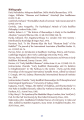
…The text also highlights its usage concerning transcendental dhamma as opposed to verbal teachings. Furthermore, a variety of abbreviations related to Buddhist texts are provided to give context for dee…
84
Bibliography of Buddhist Studies
Bibliography
Dutt, Nalinaksha. Mahayana Buddhism. Delhi: Motilal Banarsidass, 1978.
Geiger, Wilhelm. “Dhamma and Brahman.” Zeitschrift flour buddhismus (1921): 73-83.
Gombrich, Richard. “The Buddha’s
…and modern analyses, highlighting the evolution of Buddhist philosophy and teachings over time. For further exploration of these subjects and resources, additional information can be found at dmc.tv.
87
Buddhist Manuscripts in China: Theravāda Buddhism in Sipsong Panna
…s a country where multiple religious beliefs co-exist. China has its indigenous religious forms (Confucianism, Taoism and folk beliefs), and also the world’s three major religions (Buddhism, Christianit…
…d promoting Theravāda teachings among the Dai population and their relevance in contemporary times. Further exploration reveals the deep roots and ongoing significance of Buddhist practices and beliefs …
90
Buddhist Manuscripts from Sipsong Panna Region
Buddhist manuscripts from the Sipsong Panna region can be divided into four categories. The first category consists of the Dai Pāli Tripiṭaka and Tripiṭaka commentary (三藏琢) which is represented by fiv
…h recent publications listing over 100 Theravada Buddhist manuscripts divided into five categories, further enriching understanding of this region's unique spiritual heritage.
94
Buddhist Manuscript Formats in Dai Region
Volume 98 Khuddaka-nikāya (小阿含经) and Volume 99 Majjhima-nikāya (中阿含经) are all in 5-line to 6-line format manuscripts; Volume 100 Digha-nikāya (长阿含经) is in 4-line to 5-line-format. The jäṭaka Wexiandal
…hey lack essential phonetic elements for accurately representing the Dai language in scripture. For further insights, visit dmc.tv.
96
The Imminent Extinction of Palm-Leaf Manuscripts in Sipsong Panna
…there is no systematic effort to catalogue these manuscripts.
Geographical factors also affect the future of palm-leaf manuscripts in Sipsong Panna. Palm-leaf trees do not grow in many areas in the reg…
…iews reveal the absence of cataloging systems, leading to scattered manuscripts in various temples. Furthermore, geographic restrictions hinder the growth of palm-leaf trees, which are essential for cre…
97
Preservation of Palm-Leaf Scriptures in Dai Buddhism
…he character size is
larger, and the white background contrasts sharply with the black
letters.
A further problem is that increasing amounts of Dai people
are unable to read and write the ancient Dai…
…na due to these educational shifts and the brief ordination periods that limit script learning. The future preservation of these texts may depend on academic interest in Pāli and Dai Dhamma script, as t…
100
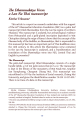
The Dhammakāya Verse: A Lan Na Thai Manuscript
The Dhammakāya Verse:
a Lan Na Thai manuscript
Kitchai Urkasem
This article is a report on research undertaken with the support of the 60th Dhamma chai Education Foundation (DEF) on a palm leaf manu
…titute, emphasizing the importance of such manuscripts in understanding Thai Buddhist heritage. For further details visit dmc.tv.
104
Historical Significance of the Lan Na Palm-Leaf Manuscript
…ter appreciation and understanding of the contemporary Vija dhammakāya practice as well as being useful for the practitioners of meditation.
6 For more information on the life and ritual function of pal…
… dhammakāya verse and its meditation practices, beneficial for both scholars and practitioners. For further insights into palm-leaf manuscripts in Tai regions, publications such as those by Volker Grabo…
114
การบรรลุของพระพุทธเจ้าและอรรถธรรม
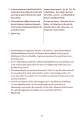
…dhammakāya) is the property (lakhana) of the Lord Buddha. Yogāvacarapputanna: the practitioners are furnished with
honor; tikkhānāena paṭhente sabbānu buddhabhāvaм anusaritabbam: and acute wisdom that a…
ในเนื้อหานี้กล่าวถึงการบรรลุของพระเจ้าพุทธเจ้าและการปฏิบัติธรรมอย่างจริงจังเพื่อนำไปสู่การเข้าถึงนิพพาน โดยมีการเน้นถึงความสำคัญของการทบทวนและสวดบทสวดเพื่อกราบไหว้พระ. พุทธศาสนิกชนถูกกระตุ้นให้ถือปฏิบ
122
An Shigao's Contributions to Meditation Texts
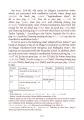
Dao An 道安 (314-385 AD) states An Shigao's translation works which are concerned with meditation include Anban shouyi jing 安般守意經, Da Daodi jing 大道地經 "Yogācārabhumi Sūtra", Da shi er men jing 大十二門經, Xia
… a notable focus on the former, specifically containing seven significant meditation-related texts. Further analysis reveals the impact and survival of these texts in the context of Buddhist scholarship…
124
Meditation Practices Introduced by An Shigao in Eastern Han China
What kind of meditation did An Shigao introduce into Eastern Han China?
An Shigao and other Central Asian translators were welcomed into Eastern Han China (25-220 CE), by the cultured elites who were
…itation style. They provide structured lists of meditation terms, emphasizing the importance of mindfulness in breath counting. Mair (2010) notes that the term 'chanshu' relates to organized categories …
125
Meditation Techniques from An Shigao's Teachings
…scriptures translated by
An Shigao from a Sanskrit text named Anāpānasmrti-sūtra, or the
“Great Mindfulness of Breathing Sutra”.34 The full title of this text
in the Taisho Tripiṭaka is Foshou Da Anban …
…hting the Anban shouyi jing, a crucial scripture translated from Sanskrit. The sutra emphasizes mindfulness of breathing and includes teachings on four objects of contemplation, the meditation on the fi…
132
Daoist Meditation in the Eastern Han Period
…si 存思, or “focusing and observing,” shouyi 守一, or “observe on one,” xingqi 行氣, or “circulating qi,” fuqi 服氣, or “consuming qi,” taixi 胎息, or “fetus breathing,” tunai 吐納, or “expelling the old breath and…
In the Eastern Han period around 148 CE, Daoist meditation practices already existed, with references found in ancient texts like the Tao Te Ching. Practitioners sought immortality through various tec
133
The Practice of Neidan: Achieving Longevity and Immortality
finding is a method of finding illumination by returning to the fundamental order of the cosmos65. This involves fully emptying out the contents of consciousness unti…
The text discusses Neidan, a method for achieving union with the cosmos through deep meditation and consciousness emptying. It examines key concepts such as attaining the One, the empty Way, and the P