

Hi : ค้นหาหนังสือธรรมะ หน้า 177 / 213
หน้าหนังสือทั้งหมด
117
The Noble Truth of the Cessation of Suffering
…ng: A Conclusion
The Lord Buddha taught that the cessation of suffering can
be effected by extinguishing all craving through the prac-
tice of the Noble Eightfold Path — uprooting it irreversibly
from t…
The conclusion on the cessation of suffering according to the Buddha highlights the need to extinguish craving through the Noble Eightfold Path. Once craving is eliminated…
118
Understanding the Mind and Success in Buddhist Practice
…ities efficiently.
By 'all success' Luang Phaw Wat Paknam meant all the sorts of success you can think of, but he emphasized success at the level of transcendental [lokuttara] attainment. If one is ab…
This text discusses the four functions of the mind and their impact on achieving success in Buddhist pr…
120
The Path of Right Actions in Buddhism
…nce and craving.
2. Right Intention
Right Intention refers to the wholesome thoughts or intentions which leads us to be generous, keep the Precepts and meditate. It is intention that is free from vengef…
This text elaborates on essential aspects of Buddhism focusing on Right View, which is the accurate und…
121
The Noble Eightfold Path: Ethical Conduct and Mindfulness
Stealing [adinnādāna]: Taking that which is not given;
Committing adultery [kāmesumicchācarā]: abstaining from sexual relations outside ma…
This text discusses key principles of the Noble Eightfold Path, focusing on ethical conduct such as Rig…
124
Understanding the Inner Bodies and Enlightenment
…transcendental Aggregates [dhammakkhandha]. The knowledge contained in the bodies of enlightenment which allows the meditator to consider the Three Signs in the mundane bodies, also allows them to consi…
This text discusses the progression through successive inner bodies leading to the Dhammakāya, emphasiz…
125
Cultivating Transcendental Knowledge in Buddhism
It is for this reason that the Lord Buddha advocated his monks to cultivate transcendental knowledge in order to …
…rages monks to attain transcendental knowledge to rise above sensuality and eradicate False View. Achieving the First Absorption endows practitioners with joy, happiness, and focused mind. Mindfulness o…
127
Understanding the Mind and Its Layers
…ere in the world. In fact what we do when we project
our mind is to project our subtle body — something which
can be clearly seen by those who have already attained
Dhammakāya. If we have attained Dh…
…, enabling awareness of whether the mind is distracted, concentrated, or liberated. Furthermore, it highlights the ability to project the subtle body at any moment, particularly for those who have attai…
128
The Relationship Between Processing, Cognition, and Mindfulness
…either. Seeing the mind of the physical body is what we can call 'mindfulness of the mind outside' while seeing the mind of the subtle physical body is what we call 'mindfulness of the mind inside'. The…
…ly more complex. Wisdom is vital in understanding inner bodies, as taught by Luang Phaw Wat Paknam, highlighting the varying levels of wisdom associated with different types of bodies—from the subtle hu…
135
Understanding the Pathama Magga Sphere
…ee the dia-
mond clear Pathama Magga Sphere (Dhammaṇupassanā-
satipaṭṭhāna Sphere) at the centre of his or her body. At its
smallest it will be the size of a star. Medium-sized, it will be
the size of t…
This text delves into the Pathama Magga Sphere, an important concept in meditation that arises when the…
137
Understanding the Bodies of Enlightenment
…
Attaining the body in the body brings inestimable benefit to our lives because it is the means by which we can overcome the defilements and it allows us insight into various sorts of higher knowledge w…
This content discusses the ten types of Bodies of Enlightenment, including the Arahatta Body and Subtle…
141
Understanding Impermanence, Suffering, and Not-Self
Impermanence [aniccān]: This is the built-in character of objects that are of a nature to change the whole of the time. Such th…
This text delves into the fundamental Buddhist concepts of impermanence (aniccān), suffering (dukkham),…
142
The Path to Enlightenment: Understanding Dhammakāya
…ust be
decay i.e. cessation [nirodha] and that self-discipline,
meditation and wisdom are the only things that can lead
one to such cessation. All this is seen by the eye of the
Dhammakāya. All this is …
This text discusses the distinction between knowledge gained through cognition and that which arises fr…
144
The Components of the Eightfold Path
…clinging to the Five Aggre-
gates [upādānakhandha] as the first Noble Truth, the crav-
ing [tanhā] which is the cause of such clinging as the sec-
ond Noble Truth, the extinction of craving as the third…
This text discusses the Eightfold Path, emphasizing how all eight components arise together as illustra…
146
Understanding the Eightfold Path
which proposes various moods and situations for its approval.
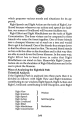
Right Speech and Right Action are the too…
This excerpt delves into the components of the Eightfold Path, highlighting the significance of Right S…
147
The Eightfold Path: Knowledge and Conduct in Meditation
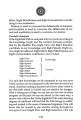
…t
Right Mindfulness
Right Concentration
It is said that knowledge can be compared to our two eyes while conduct can be compared to the two feet on which we stand. A person making a journey has to have …
This text discusses the importance of Right Mindfulness and Right Concentration in meditation, as compo…
150
The Power of Right View
…ew would recollect the virtue of various heretics before throwing the dice with the words "Namo titthiyanam." (Praise be to the heretics!) It turned out that the son from the family of Right View won ev…
In this narrative, the contrast between Right View and False View highlights that those who hold Right Vie…
153
Understanding Right View and Right Intention in Buddhism
[Image contains text and a circular symbol at the top]
4. The view that this world lacks reality or doesn’t exist;
5. The view that the afterworld lacks reality or doesn’t e…
This text examines the principles of Right View and Right Intention in Buddhism. It highlights the dang…
154
The Renunciation of the Bodhisatva
"Oh! When will I be able to leave this prosperous Mithila with its castles and towers, abundance of the four requisites?"
The bodhisatv…
In his quest for enlightenment, the bodhisatva grapples with renouncing the comforts of Mithila, contempl…
155
King Asoka: Patron of Buddhism
…ce daily. The king wanted to have the chance to pay respect to a fully-enlightened Buddha and with this end in mind, invited the Naga King to come up from under the ground and to transform himself into …
King Asoka was a pivotal figure in Buddhism, inviting 60,000 monks for daily alms and yearning to pay respect to a fully-enlightened Buddha. …
156
The Tale of Sujāta and the Seven Types of Wives
by the tale of Sujāta, the younger sister of Viṣākha. This lady was the sister in law of Aṇṭhapiṇḍika but was very haughty because she inherited from a wealt…
This narrative recounts the tale of Sujāta, who, despite her wealth, was arrogant and disrespectful in …