

aggregates : ค้นหาหนังสือธรรมะ
หน้าหนังสือทั้งหมด
76
Understanding the Aggregates of Clinging in Buddhism
attachment and can therefore lead to suffering. The reason that attachment to the Five Aggregates causes suffering is that they belong to the mundane world [lokiya] and are therefore referred to as…
The Aggregates of Clinging plays a pivotal role in Buddhist teachings on suffering, highlighting how attachment to…
141
Understanding Impermanence, Suffering, and Not-Self
… character of objects that are of a nature to change the whole of the time. Such things as the Five Aggregates of the Human Body are changing the whole of the time.
Suffering [dukkham]: This is the characteri…
…of impermanence (aniccān), suffering (dukkham), and not-self (anattā) as expressed through the Five Aggregates of the Human Body. It highlights how these aggregates undergo constant change, create inherent suff…
77
Understanding the Inevitability of Suffering
… ox is the unescapable target for swarms of various biting insects no matter where it may roam, the Aggregates of Clinging are the unescapable prey of all twelve forms of suffering no matter in which realm our …
The text discusses how the Aggregates of Clinging, similar to a large ox attracting insects, are perpetually subject to suffering in all …
111
Understanding the Dhammakāya in Insight Meditation
…makāyas are all transcendental [lokuttara] in nature — that is they are not made up of conventional aggregates [khanda] but are made up of pure aggregates [dhammakhanda] — the physical form, feeling, perception…
… Coarse and Subtle Dhammakāya. It explains that these bodies are transcendental and consist of pure aggregates that are perfected, contrasting with mundane aggregates that lead to rebirth. The discussion emphas…
136
Understanding the Inner Bodies on the Path to Enlightenment
… Brahma Body and the Subtle Formless Brahmā Body. All of these inner bodies are made up of the Five Aggregates [khandha] i.e. corporeality [rūpa], feeling [vedanā], sense-registration (perception) [saññā], ment…
…se include the Subtle Human Body, Angelic Body, and several Brahma Bodies, all composed of the Five Aggregates. Unlike these mundane forms, the Body of Enlightenment is constituted of 'Pure Aggregates' which ar…
218
General Index of Meditation and Mindfulness Concepts
…uffering as 48
aging: as suffering 46, 57, 63-6, 199; relationship to birth, illness and death 68-9
Aggregates of Clinging: 73, {metaphors: archer’s target 73, forest fire 73, insecure house 74, large ox 74, so…
… to meditation and mindfulness practices. It includes terms like absent-mindedness, absorption, and aggregates of clinging, helpful for understanding their applications in spiritual practice. Key examples are p…
26
The Noble Truths and the Path to Nirvana
…ng all defilements from his mind even before the break up of his own psychophysical constituents or aggregates [khandha]. It also prepared him for the day of his death when he would pass away into permanent Nir…
…e Siddhattha to attain enlightenment and Nirvana while alive. The Buddha's insights reveal the Five Aggregates, fundamental to understanding the nature of existence. By examining these concepts across three cyc…
115
The Journey to Nirvana: Understanding Pathama Magga Sphere
… at this point it is worth pausing in order to clarify their definitions:
1. Nirvana with residual aggregates (Sa-upādisesa Nirvana [Nibbāna]) is our experience of Nirvana as a mental state — that is our livin…
…re, leading to further spiritual development and ultimately reaching Nirvana experienced within the aggregates. The concept of Sa-upādisesa Nirvana is clarified, describing it as a mental state recognizing Nirv…
124
Understanding the Inner Bodies and Enlightenment
…es, all the way from the human body to the subtle formless Brahmā-body are all composed of the Five Aggregates [khandha] and are hence subject to the influence of the Three Signs [tilakkhaṇa], namely: impermane…
…ermanence, suffering, and not-self. In contrast, bodies of enlightenment are made of transcendental Aggregates, free from these influences, and align with the Four Noble Truths. The practice is framed as the No…
233
Exploring Suffering and Enlightenment in Buddhist Philosophy
…70; of physical shocks to alization 121; seeing them in the
the womb 60-1; of resentment 70-1; Five Aggregates 109
of separation from loved ones and Three Cycles of Examination &
treasured things 47, 58, 72, 1…
…g, including its origins and manifestations, and the paths to liberation. Concepts such as the Five Aggregates, the Noble Truth of Suffering, and the significance of transcendental states are analyzed in relati…
80
Understanding Dhammakāya and its Significance in Buddhism
…f virtue’ or silakkhandha could refer to the first member of either
the three, four, or five dhamma-aggregates (dhammakkhandhas). See D.I.206, D.III.229, and
D.III.279 for respective examples of these different…
This text examines the term dhammakāya as articulated by Buddhaghosa, linking it to spiritual realities and teachings of the Buddha. It highlights the role of dhamma-vinaya as a guiding principle and
11
The Noble Truths of Suffering
… 71 • Separation from loved ones and
treasured things 72 • Disappointment 72 • Clinging to the Five Aggregates
72 • Metaphors for the Importance of the Aggregates of Clinging 73
5 The Noble Truth of the Origin …
เนื้อหาเกี่ยวกับสัจธรรมทั้งสี่ซึ่งกล่าวถึงทุกข์และวิธีการดับทุกข์ในศาสตร์ของพุทธศาสนา รวมถึงอธิบายความสำคัญของการเข้าใจทุกข์และการพึ่งพาไม่ให้จิตใจเสพติดความสุขชั่วครั้งชั่วคราว การบรรลุถึงสภาวะนิพพาน
75
Understanding Suffering and Attachment
…ur such disappointment in our hearts, it will continue to bring us misery.
13. Clinging to the Five Aggregates [pañcupādānakkhandha-dukkhā] Our psychophysical constituents or aggregates comprise five categories…
…n both material and abstract realms. Additionally, it discusses the concept of clinging to the Five Aggregates, which encompass physical and mental aspects of our being, leading to further suffering. Recognizin…
116
Understanding Nirvana: The Realm Beyond Existence
…really in āyatanā nibbāna — but we are still ‘alive’ in our human body.
2. Nirvana without residual aggregates (Anupādisesa Nirvana [Nibbāna]) is the Nirvana that is a realm of “existence” outside our body and …
…. It describes Nirvana as a transcendent state that can be attained after the cessation of the five aggregates, leading to a state of infinite happiness devoid of suffering. The text emphasizes the uniqueness o…
224
Insights on Suffering and Enlightenment
…nsual indulgence 33
fingernails 59
fire, jumping into a - (metaphor for self-mortification 36)
Five Aggregates: attachment to, suffering of 72-3; captivation 82; non-enfatuaion avoids suffering 74; seeing the T…
…aving. With references to meditative practices, such as the Foundations of Mindfulness and the Five Aggregates, the content highlights how false views and attachments lead to suffering. It also provides metapho…
244
Understanding Buddhist Concepts: Nirvana and Absorptions
…ee fifth absorption) pañcavaggiyā (see Group of Five) pañcupādānakkhandha (see clinging to the Five Aggregates) pañcupādānakkhandha dukkhā (see the suffering of clinging to the [Five] Aggregates) paññā (see wis…
…m of neither-perception-nor-non-perception, Nibbāna, and other related terms. It discusses the Five Aggregates, the levels of heaven, and teachings by the Buddha, including the need for abandonment of evil habi…
81
Understanding the Five Aggregates, Tenfold Path of Wholesomeness, and Four Lofty States of Mind
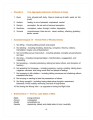
Khandha 5 Five Aggregates (elements, attributes of being)
1. Rupa form, physical self, body. Rupa is made up of earth, wate…
This text delves into three significant aspects of Buddhist philosophy: the Five Aggregates which consist of Rupa (form), Vedana (feeling), Samjna (perception), Sankhara (conception), and Vin…
113
Understanding Dhammakaya Meditation and Mental Progress
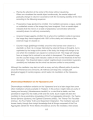
…life and the world. Such insight will allow the meditator to have penetrative knowledge of the Five Aggregates (khandas), the Twelve Sense Spheres (ayatanas), the Eighteen Elements (dhātu), the Twenty-Two Facul…
การทำสมาธิแบบธรรมกายมุ่งเน้นไปที่การวางจิตใจ ณ ศูนย์กลางของร่างกายโดยไม่ต้องมองเห็นภาพภายนอก การตั้งใจภาพที่แท้จริงนำไปสู่การให้ความชัดเจนในจิต เพราะเมื่อจิตอยู่ในสภาวะสงบจะเกิดภาพที่สามารถขยายหรือหรื
145
Understanding the Eightfold Path: Right Mindfulness and Right Concentration
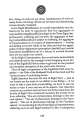
…usness is of a nature of impermanence — arising and falling away the whole of the time and that the aggregates of sense-registration (perception) [saññā] and mental formations [sankhāra] are of a nature of not-…
…specifically focusing on Right Mindfulness and Right Concentration. It emphasizes understanding the aggregates of existence as they relate to the Three Signs: impermanence, suffering, and not-self. Right Intent…
201
The Noble Truths of Suffering and Cessation
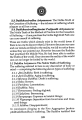
… loved ones and treasured things;
3.1.11 Aḷābha: Disappointment;
In conclusion clinging to the Five Aggregates [pañcupadānakkhandha] is suffering. The Buddha testified that
… Way offers a path to understanding and overcoming suffering, rooted in the recognition of the Five Aggregates, which perpetuate our attachments and suffering.