

um : ค้นหาหนังสือธรรมะ หน้า 50 / 3
หน้าหนังสือทั้งหมด
132
Daoist Meditation in the Eastern Han Period
…ng and observing,” shouyi 守一, or “observe on one,” xingqi 行氣, or “circulating qi,” fuqi 服氣, or “consuming qi,” taixi 胎息, or “fetus breathing,” tunai 吐納, or “expelling the old breath and drawing the new,…
In the Eastern Han period around 148 CE, Daoist meditation practices already existed, with references found in ancient texts like the Tao Te Ching. Practitioners sought immortality through various tec
131
Eastern Han Buddhist Meditation and Daoism
…orld/east-asia.htm.
55 Mair, “What is Geyi, After All?”, 228–243.
56 Ann Heirman and Stephan Peter Bumbacher, The spread of Buddhism (BRILL, 2007), 219.
57 Livia Kohn and Yoshinobu Sakade, Daoist medita…
By the first century CE, Buddhism had begun to take root in China, with translators arriving from Central Asia and India to convert texts into Chinese. They initially faced challenges in accurately co
130
Understanding the Dantian and Its Location
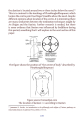
the dantian is located around two or three inches below the navel. 53
This is in contrast to the teachings of PhraMongkolthepmuni, which
locates the centre point two finger breadths above the navel. D
…i's teachings which suggest it lies two finger breadths above. While the locations vary, there are numerous parallels in meditation techniques between An Shigao and Daoist practices. This illustration p…
126
An Shigao's Influence on Anban Sutras
…igao.
**An Shigao and ānāpānasmṛti**
An analysis of An Shigao’s corpus shows that he translated a number of influential sutras which emphasized the meditative practice of breath control, or ānāpānasmṛt…
This content examines An Shigao's translations of Anban sutras, highlighting the distinctions between the Present Da Anban shouyi jing and the Kongo-ji Anban shouyi jing. The text discusses the integr
125
Meditation Techniques from An Shigao's Teachings
breathing in, and count two at the end of breathing out. If you
count any other number than two when it should be two, start
counting over from one. If you count any other number than…
This text delves into meditation practices from An Shigao’s works, particularly highlighting the Anban shouyi jing, a crucial scripture translated from Sanskrit. The sutra emphasizes mindfulness of br
124
Meditation Practices Introduced by An Shigao in Eastern Han China
…ich occurs in Dao’an’s preface to An Shigao’s translation of the Anban shouyi jing, refers to the enumerated categories concerning meditation which is also related to the "counting in breath" meditation…
An Shigao, notable for his translations, played a key role in introducing meditation practices to Eastern Han China (25-220 CE). The prevalent form during this period was breathing meditation, particu
122
An Shigao's Contributions to Meditation Texts
… which are concerned with meditation include Anban shouyi jing 安般守意經, Da Daodi jing 大道地經 "Yogācārabhumi Sūtra", Da shi er men jing 大十二門經, Xiao shi er men jing 小十二門經, Da Anban jing 大安般經, Siwei jing 思維經 a…
Dao An (314-385 AD) highlighted the works of An Shigao, particularly those focused on meditation, including texts like the Anban shouyi jing and Chanxing faxiang jing. Many of these translations have
121
The Influence of An Shigao on Mindfulness Breathing Meditation in Eastern Han China
…re,” Institute for Cultural Interaction Studies, Kansai University 1, The International Academic Forum for the Next Generation Series (March 31, 2010): 127.
------------------------
12 中雲華,“中國早期禪法的流傳和特點…
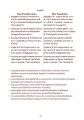
This paper examines An Shigao's role in introducing the Indian mindfulness breathing meditation technique, ānāpānasmṛti, into Eastern Han China. The phrase「息中具有四大。 而心在中」suggests that the mind should f
115
สุขภิถิจิตปาโถ
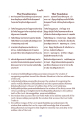
…onamante ukbhoi pañitehi jānuḳāni paripajjati kosovattuguṇho sovaññavaṇṇo
2. kapcanasabhatajoco sukhumachavitāyarajjojalam buddhasakāye anupalimpatī ekekakomo ekalokamo nilomakup
3. pepasu jāṭāni nilāni…
บทความนี้สำรวจเรื่องสุขภิถิจิตและการสร้างสุขด้วยการปฏิบัติธรรมในลักษณะต่างๆ การดูแลจิตใจด้วยปฏิจจสมุปบาทและการฝึกสติ ทำให้สามารถมีสุขภาพจิตที่ดี สามารถเชื่อมโยงกับความสุขในชีวิตประจำวันได้อย่างมีประสิ
109
ความฉลาดในการรู้จักประโยชน์อย่างมีเหตุผลสู่การหลุดพ้นสูงสุด
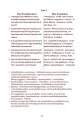
…-fold virtues partaking of enlightenment (bodhipakkhiyadhamma) is the sublime teeth of the Lord. Satumaggañānaāna pāvaracatuḍham: the wisdom that accesses the Four Noble Paths is the sublime eyeteeth of…
บทความนี้พูดถึงความฉลาดในการรู้จักประโยชน์ไปสู่การหลุดพ้นสูงสุด โดยเปรียบเทียบองค์ประกอบต่างๆ ของความฉลาดในพระพุทธศาสนากับคุณลักษณะของพระเจ้าที่มีการเปรียบเทียบกับริมฝีปาก ดั้งฟัน และลิ้น ซึ่งแสดงถึงค
106
พุทธศาสนาและมรรคผล
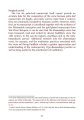
…tanadvayam; Lokiyalokūttarāṇaṁa pavaroṭṭhadvayam; Sattatiṁsabodhipakkhiyaṇaṁa pavarasubhadanṭā,
Catumaggāṇaṁa pavaracatuḍdhaṁ; Catusaccāṇaṁa pavarajivhā; Appatihattāṇaṁa pavarahanukam; Anuttaravimokkha…
บทความนี้สำรวจแนวคิดทางพุทธศาสนาเช่นการเข้าถึงนibbana การพัฒนาปัญญาและวิธีการที่ทำให้บรรลุผลในด้านจิตใจและจิตวิญญาณ ตามหลักการของพุทธศาสนา เช่น สั่งสมปัญญา แอปฏิบัติและความเข้าใจเกี่ยวกับธรรมะและการใช
104
Historical Significance of the Lan Na Palm-Leaf Manuscript
… see Volker Grabowsky, “Tai manuscripts in the Dhamma script domain: surveying, preservation and documentation”, part 1, Manuscript Cultures, Autumn/Winter 2008, pp. 16-23.
7 Coedes' article, Adyar Libr…
The Lan Na palm-leaf manuscript's dating is uncertain due to its fragility, but it has been recited by devout Buddhists since the 16th century, alongside evidence from the Phitsanulok inscription and
103
The Historical Significance of Dhammakāya Verse in Thai Buddhism
… Tham Suea, Changwat Phitsanulok, northern Thailand. This inscription was given the identification number of 54 in the Corpus of Thai Inscriptions, and published under the name “Inscription of dhammakāy…
The dhammakāya verse has been recognized in the Lan Na regions for centuries, with historical inscriptions confirming its existence dating back to the 16th century, specifically at Wat Tham Suea in Ph
102
Wisdom and the Dhammakāya in Buddhist Teachings
…er, the text personifies the dhammakāya as the body of the Buddha, attributing the dhammakāya with human-like characteristics. The dhammakāya is described as the inner quality of a Buddha as opposed to …
The text highlights unique qualities of wisdom exclusive to Buddhas, including omniscience and the ten intellectual powers. It discusses the dhammakāya as the embodiment of a Buddha's inner wisdom, di
101
Understanding the Pāli Verses and Buddhist Doctrine
…cribed with Pāli verses and a commentary in Tai Yuan.4 The final leaf of the manuscript is an addendum, inscribed with a stanza of the Dvatiṃsa-mahāpuruśa-lakkhaṇa. The text is thirty stanzas long and c…
The manuscript presents Pāli verses and commentary in Tai Yuan, summarizing Buddhist doctrines about the Buddha's physical body and wisdom. It includes thirty stanzas …
100
The Dhammakāya Verse: A Lan Na Thai Manuscript
…d in 1979 by the Institute of Social research, Chiang Mai University, and given the identification number 79 029 11 027-029. There is no trace of a date on the manuscript.
¹ Kitchai Urkasem (Chulalongk…
…ipt, consisting of a bundle of ten palm leaves, is housed at Wat Pasak Noi in Chiang Mai and was documented by the Institute of Social Research in 1979. The author's academic affiliations include Chulal…
98
Preserving Palm-Leaf Manuscripts in Southwestern China
Conclusion
Numerous palm-leaf and sa-paper manuscripts exist in the Dai regions in Southwestern China. These Buddh…
In Southwestern China, palm-leaf and sa-paper manuscripts are crucial for studying ancient Buddhism, showcasing the influence of Theravāda Buddhism. The recent collection efforts by the local governme
97
Preservation of Palm-Leaf Scriptures in Dai Buddhism
…one Palm-Leaf scripture in
the Hall to read, and found it very hard to see clearly the dense and
numerous small letters. In contrast, Chinese and sa-paper texts are
much easier to read because both t…
This text discusses the decline in donations of traditional palm-leaf scriptures in favor of more accessible and readable texts printed on Chinese and sa-paper. Reasons include cost, legibility, and t
96
The Imminent Extinction of Palm-Leaf Manuscripts in Sipsong Panna
…ng Panna
Buddhism in Sipsong Panna is characterised by its manuscript culture. However, today the number of the palm-leaf manuscripts being produced in the region is in decline. If this decline continu…
This text discusses the worrying decline of palm-leaf manuscripts in Sipsong Panna, where Buddhist manuscript culture is rich but facing imminent extinction. Key reasons include the autonomous nature
95
Dai Buddhist Manuscripts in Yunnan's Dehong Prefecture
… copied (sa-paper manuscripts) or inscribed (palm-leaf manuscripts) by Buddhist monks after they resume secular life. The process of recopying Buddhist manuscripts is closely related to the Buddhist rit…
This text discusses the unique tradition of Buddhist manuscripts among the Dai people in Dehong Autonomous Prefecture of Yunnan, where various types of manuscripts are produced. Most texts utilize sa-