

Focus : ค้นหาหนังสือธรรมะ หน้า 30 / 35
หน้าหนังสือทั้งหมด
285
Untitled Book Page
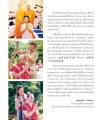
เมื่อได้รับการตามที่หลวงพ่อธัมโมโพสน รู้สึกถูกจริงกับตัวเอง พอจึงรู้สึกโล่ง โปร่ง เบาสบาย มีความสุข และพบว่าตนเองเปลี่ยนแปลงไปเยอะ จากเมื่อก่อน ใครขัดใจอะไรไม่ได้ เพราะตัวเราเต็มไปด้วยกลิ่น แต่งแตะแต่
This summary provides an overview of the main ideas and concepts presented in the book, focusing on key themes and insights. It highlights important discussions, character developments, and ess…

286
The Art of Mindfulness
ิRETREAT
ผลลัพธ์ คือ
หลังจบโครงการ
บางคนถึงกับร้องไห้
ซาบซึ้ง แล้วบอกว่า...
เขาไม่เคยมีความสุขสงบ
แบบนี้มาก่อน
"นฤดล สนฺติ ปริ สุข"
ซึ่งแปลว่า
"สุขอันยิ่งกว่าใจหยุดนิ่งไม่มี"
… overall well-being. Mindfulness techniques are detailed to help individuals manage stress, improve focus, and attain a sense of peace. Readers will learn about meditation practices, the significance of be…
5
Advanced Concepts in Buddhism
which are unnecessarily caught up with Thai culture have been minimized or omitted.
The content of this book is more advanced than the for- going titles in the series 'Buddhism in Plain English'. This
…dhism in Plain English' series, offers advanced insights into Buddhism's higher spiritual training, focusing on the renunciation of mundane life. It discusses the common misconceptions people have about li…
6
The Awakening of Siddhartha Gotama
people see the signs of receding youth and health and respond with disgust, especially at the sight of a corpse. Siddhatha Gotama’s witness of these events was different, however. Confronted by the in
…espair, he considers life like a battle where fighting offers a chance at survival. Unlike many who focus solely on their personal or familial interests, Siddhartha recognizes a greater suffering faced by …
8
The True Nature of the Buddha's Enlightenment
the Buddha’s enlightenment dealt entirely with meditation focussed outside the body. Then, as now, almost all success was attributed to ideas and strategies — but …
Siddhattha Gotama's enlightenment was rooted in meditation that transcended mere conceptualization. He recognized that achieving true liberation demanded a harmonious blend of theory and inner virtue.
12
The Noble Eightfold Path: Key Concepts and Insights
…al Mindfulness 173 • Right Concentration 174 • The Supporting Role of Right Concentration 174 • The Focussing Role of Right Concentration 174
9 The Enlightenment of the Buddha's First Disciple ............…
The Noble Eightfold Path is a fundamental Teaching of Buddhism aimed at overcoming suffering. It consists of eight essential practices: Right View, Right Intention, Right Speech, Right Action, Right L
42
The Noble Eightfold Path and the Factors of Enlightenment
kings must accept with obeisance. This is because the Noble Eightfold Path is a supreme and noble practice.
2. A Wide Ocean: It can be compared to the wide ocean into which all rivers must flow. The
… guiding practitioners towards spiritual growth and liberation. The Four Foundations of Mindfulness focus on being aware of the body, feelings, mind, and mental phenomena. The Four Strivings emphasize avoi…
44
Understanding Right Intention and Right Speech in Buddhist Practice
subtle defilements¹ [anusaya].
2.1 Right Intention (mundane): At low level Right Inten- tion means having the wholesome intention to be generous, keep the Five Precepts, renounce the world to become a
This text discusses key aspects of Buddhist practice, specifically focusing on Right Intention and Right Speech. Right Intention involves having wholesome intentions such a…
45
The Buddha's Teachings on Right Livelihood and Moral Conduct
the monk's equivalent of Right Livelihood, by avoiding such evils as fortune telling, sacrifices or interpreting dreams, because these are all 'low arts'[tiracchānavijjā]. The Buddha even prohibited m
…lop and maintain virtues. Right Mindfulness is categorized into mundane and transcendental aspects, focusing on wholesome thoughts and the cultivation of the Four Foundations of Mindfulness, which help con…
46
Mindfulness Practices in Buddhism
1. mindfulness of the body [kāyunupassanāsatipaṭṭhāna]: Continuously seeing and knowing the body in the body — that is to see and know the subtle inner bodies that lie hidden within our physical body:
…ntal phenomena and physical existence. The right concentration aids in developing determination and focus for a profound understanding of these aspects of mindfulness, enhancing spiritual growth. More insi…
50
Understanding the Noble Truths of Suffering
the 'Noble Truth of the Suffering', the 'Noble Truth of the
Origin of Suffering' and the 'Noble Truth of the Cessation
of Suffering'. In brief, the artistry of the Lord Buddha is to
integrate all four
The teachings of the Lord Buddha encompass the Four Noble Truths, with a significant focus on understanding suffering. Suffering is characterized through various forms — from birth to death,…
70
Understanding Suffering: The Dukkha of Illness and Dying
in its place. Even the Buddha and the enlightened ones are
subject to the suffering of illness — so who are we to over-
look the misery of illness?
4. Suffering as a result of Dying [marana dukkhā]
Al
This text delves into the concepts of suffering in Buddhism, particularly focusing on the pain associated with illness and the inevitable reality of death. It elucidates how all b…
73
Understanding Types of Suffering in Buddhism
parideva dukkha
The Buddha characterized this form of suffering as that which produces tears of anguish whenever we are unable to give up our attachment to something. Again the cause might be the dece
… insights illuminate the complexities of human emotion and suffering in Buddhist philosophy, with a focus on the need to address and understand our emotional pain to foster healing and peace.
76
Understanding the Aggregates of Clinging in Buddhism
attachment and can therefore lead to suffering. The reason that attachment to the Five Aggregates causes suffering is that they belong to the mundane world [lokiya] and are therefore referred to as ‘A
…al for plant life, a forest fire consuming all in its path, and an archer's target representing the focus of suffering. Therefore, enlightenment necessitates recognizing these aggregates, as explained in t…
80
The Three Forms of Craving in Buddhism
The Three forms of Craving
The Lord Buddha taught that there are three sorts of craving: craving for sense-pleasure [kāmaṭhaṇa], craving for the form realms [bhavatānha] and craving for the formless r
…s. 2) Craving for the Form Realms (bhavatānha) involves the desire for rebirth in the Brahma-world, focusing on attaining form-absorptions (jhāna) to escape suffering. Each craving illustrates how attachme…
86
Understanding Craving and Suffering in Buddhism
ing after such wealth, even though it is acquired by honest
means, is still subject to suffering because it contains craving which is the origin of suffering. Even the craving for the
Brahmā-world and
…and suffering. The Buddha identified craving as a primary source of suffering, urging meditators to focus on the danger of such desires. True liberation comes from extinguishing the Three Cravings through …

94
The Nature of Suffering and the Pursuit of Happiness
which they try to derive happiness are themselves of the
nature of suffering. The suffering of such people, at root
comes from their search for sense-pleasure and sense-ob-
jects. Even the suffering t
…fortunes. To achieve true salvation, one must diligently minimize attachment to these pleasures and focus on cultivating a pure mind.
96
Understanding the Root of Suffering
up, but to get rid of the suffering in a way that it will not grow up again, it is not enough simply to cut off the branches and the twigs — the tree must be completely uprooted — that is craving, the
…er (craving) is eliminated, the lion (the person suffering) remains at risk. The Buddha's teachings focus on uprooting cravings as the necessary step to achieve true liberation from the cycles of suffering…
97
Understanding Craving and Suffering in Buddhism
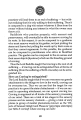
practices will lead them to an end of suffering — but without realizing that it is only adding to their suffering. Thus it is compared to a dog who seizes whatever it likes from the owner without tak
… tackle in their journey towards enlightenment. To effectively reduce suffering, practitioners must focus on uprooting their attachments, ultimately leading to deeper understanding and liberation from the …
99
Understanding Sensual Attachment and Overcoming Cravings
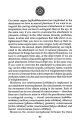
Our sense organs [aijhattikäyatana] are implicated in the attachment we have to sensual pleasures. If we want to extinguish the craving arising because of attachment to visual temptations, then we hav
…mell, taste, touch, and mind - holds its own consciousness linked to pleasure. Practitioners should focus on extinguishing craving at these points. For visual attachments, one needs to address the visual o…