

The Noble Eightfold Path and the Factors of Enlightenment : หน้า 42/263
The Buddha’s First Teaching : หน้า 42/263 Exploring the Noble Eightfold Path and its significance in achieving enlightenment through the various Factors of Enlightenment.
0 ครั้ง
สรุปเนื้อหา
The Noble Eightfold Path is presented as a supreme practice in Buddhism, comparable to a vast ocean into which all rivers flow, embodying the essential Factors of Enlightenment. It comprises the Four Foundations of Mindfulness, Four Strivings, Four Foundations of Success, Five Faculties, Five Powers, and Seven Factors of Enlightenment. Each of these elements plays a crucial role in guiding practitioners towards spiritual growth and liberation. The Four Foundations of Mindfulness focus on being aware of the body, feelings, mind, and mental phenomena. The Four Strivings emphasize avoiding evils, abandoning past transgressions, developing new virtues, and maintaining existing ones. The Four Foundations of Success relate to the initial will, application, continued effort, and reflective review. The Five Faculties empower practitioners through confidence, energy, mindfulness, concentration, and wisdom. Finally, the Seven Factors of Enlightenment encapsulate the essential qualities needed for spiritual awakening. With these components, the Noble Eightfold Path serves as an invaluable guide in the pursuit of Nirvana and true liberation from suffering. DMC.tv provides further insights into these teachings.
หัวข้อประเด็น
-Noble Eightfold Path
-Factors of Enlightenment
-Buddhist Teachings
-Spiritual Practice
-Development of Mindfulness
-Path to Nirvana
-Four Foundations
ข้อความต้นฉบับในหน้า
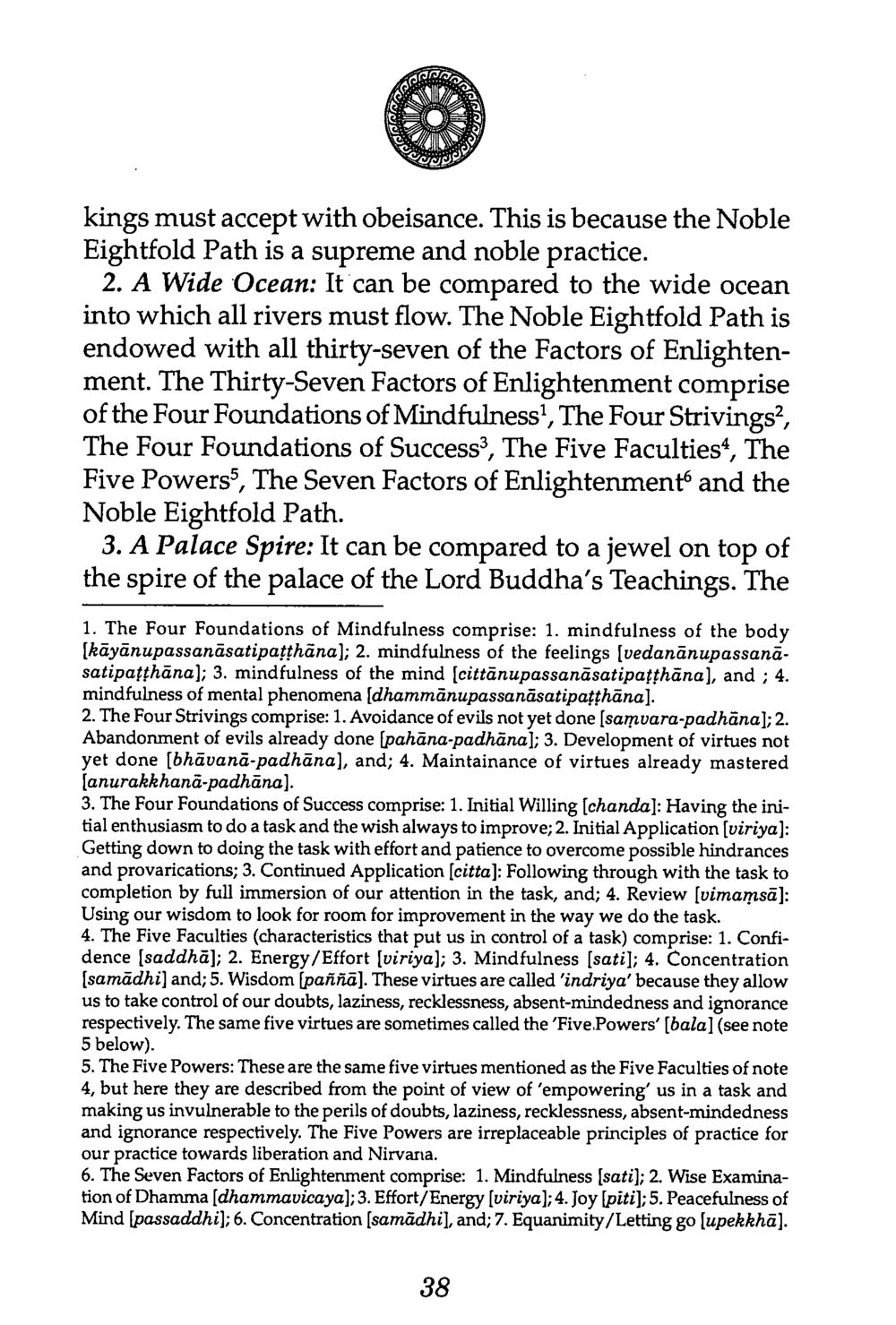
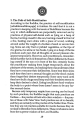
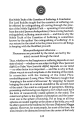
kings must accept with obeisance. This is because the Noble Eightfold Path is a supreme and noble practice.
2. A Wide Ocean: It can be compared to the wide ocean into which all rivers must flow. The Noble Eightfold Path is endowed with all thirty-seven of the Factors of Enlightenment. The Thirty-Seven Factors of Enlightenment comprise of the Four Foundations of Mindfulness¹, The Four Strivings², The Four Foundations of Success³, The Five Faculties⁴, The Five Powers⁵, The Seven Factors of Enlightenment⁶ and the Noble Eightfold Path.
3. A Palace Spire: It can be compared to a jewel on top of the spire of the palace of the Lord Buddha’s Teachings. The
────────────────────────────────────────────────────────────────────────────────
¹. The Four Foundations of Mindfulness comprise: 1. mindfulness of the body [kāyānupassanāsatipaṭṭhāna]; 2. mindfulness of the feelings [vedanānupassanā-satipaṭṭhāna]; 3. mindfulness of the mind [cittānupassanāsatipaṭṭhāna], and ; 4. mindfulness of mental phenomena [dhamānupassanāsatipaṭṭhāna].
². The Four Strivings comprise: 1. Avoidance of evils not yet done [sāvura-padhāna]; 2. Abandonment of evils already done [pāhana-padhāna]; 3. Development of virtues not yet done [bhāvanā-padhāna], and; 4. Maintenance of virtues already mastered [anurakkhaṇā-padhāna].
³. The Four Foundations of Success comprise: 1. Initial Willing [chanda]; Having the initial enthusiasm to do a task and the wish always to improve; 2. Initial Application [viriya]; Getting down to doing the task with effort and patience to overcome possible hindrances and provacations; 3. Continued Application [citta]; Following through with the task to completion by full immersion of our attention in the task, and; 4. Review [vimaṃsa]; Using our wisdom to look for room for improvement in the way we do the task.
⁴. The Five Faculties (characteristics that put us in control of a task) comprise: 1. Confidence [saddhā]; 2. Energy/Effort [viriya]; 3. Mindfulness [sati]; 4. Concentration [samādhi] and; 5. Wisdom [paññā]. These virtues are called 'indriya' because they allow us to take control of our doubts, laziness, recklessness, absent-mindedness and ignorance respectively. The same five virtues are sometimes called the ’Five Powers’ [bala] (see note 5 below).
⁵. The Five Powers: These are the same five virtues mentioned as the Five Faculties of note 4, but here they are described from the point of view of ’empowering’ us in a task and making us invulnerable to the perils of doubts, laziness, recklessness, absent-mindedness and ignorance respectively. The Five Powers are irreplaceable principles of practice for our practice towards liberation and Nirvana.
⁶. The Seven Factors of Enlightenment comprise: 1. Mindfulness [sati]; 2. Wise Examination of Dhamma [dhammanavicaya]; 3. Effort/Energy [viriya]; 4. Joy [pīti]; 5. Peacefulness of Mind [passaddhi]; 6. Concentration [samādhi], and; 7. Equanimity /Letting go [upekkhā].
หน้าหนังสือทั้งหมด

1

2

3

4

5

6

7

8

9
10
11

12

13

14

15

16

17

18

19

20

21
22

23
24

25
26
27
28

29

30

31
32
33

34

35

36

37

38

39

40
41

42

43

44
45
46

47

48

49
50

51
52

53
54

55
56

57
58

59

60

61

62
63
64

65
66

67

68
69

70

71

72
73

74

75
76

77

78

79
80

81
82

83

84

85

86

87
88
89

90
91

92
93

94

95

96

97
98
99
100

101
102

103

104
105

106

107

108

109

110

111

112

113
114

115

116
117

118

119
120

121
122

123

124
125

126

127

128

129
130

131

132
133

134

135
136
137

138

139

140

141

142

143

144

145

146

147

148

149

150

151
152

153

154

155

156

157

158

159
160

161

162

163

164

165
166

167

168

169

170

171

172

173
174
175
176

177
178

179
180

181

182
183

184

185

186

187

188

189

190

191

192
193

194

195

196

197

198
199

200
201

202

203
204
205
206

207

208

209
210

211

212

213

214

215

216

217

218

219

220

221

222

223

224

225

226

227

228

229

230

231

232

233

234

235

236

237

238

239

240

241

242

243

244

245

246

247

248

249

250

251

252

253

254
255

256

257
258

259

260

261

262

263
หนังสือที่เกี่ยวข้อง
Load More