

Understanding the Root of Suffering : หน้า 96/263
The Buddha’s First Teaching : หน้า 96/263 Explore the concept that true freedom from suffering requires uprooting cravings, not just treating symptoms.
0 ครั้ง
สรุปเนื้อหา
The text discusses how to effectively eliminate suffering by addressing its root cause: craving. It likens the relationship of craving to suffering to a lion hunted by a hunter, emphasizing that unless the hunter (craving) is eliminated, the lion (the person suffering) remains at risk. The Buddha's teachings focus on uprooting cravings as the necessary step to achieve true liberation from the cycles of suffering. Unlike other ascetics who attempt self-mortification, which only compounds suffering, the Buddha's method is to confront the underlying issue directly. This approach calls for practitioners to follow the Buddha's example in seeking liberation.
หัวข้อประเด็น
-Craving as the root of suffering
-The lion and hunter analogy
-Buddha's teachings on cessation of suffering
-Comparison between Buddhas and other ascetics
-Importance of addressing root causes in spiritual practice
ข้อความต้นฉบับในหน้า
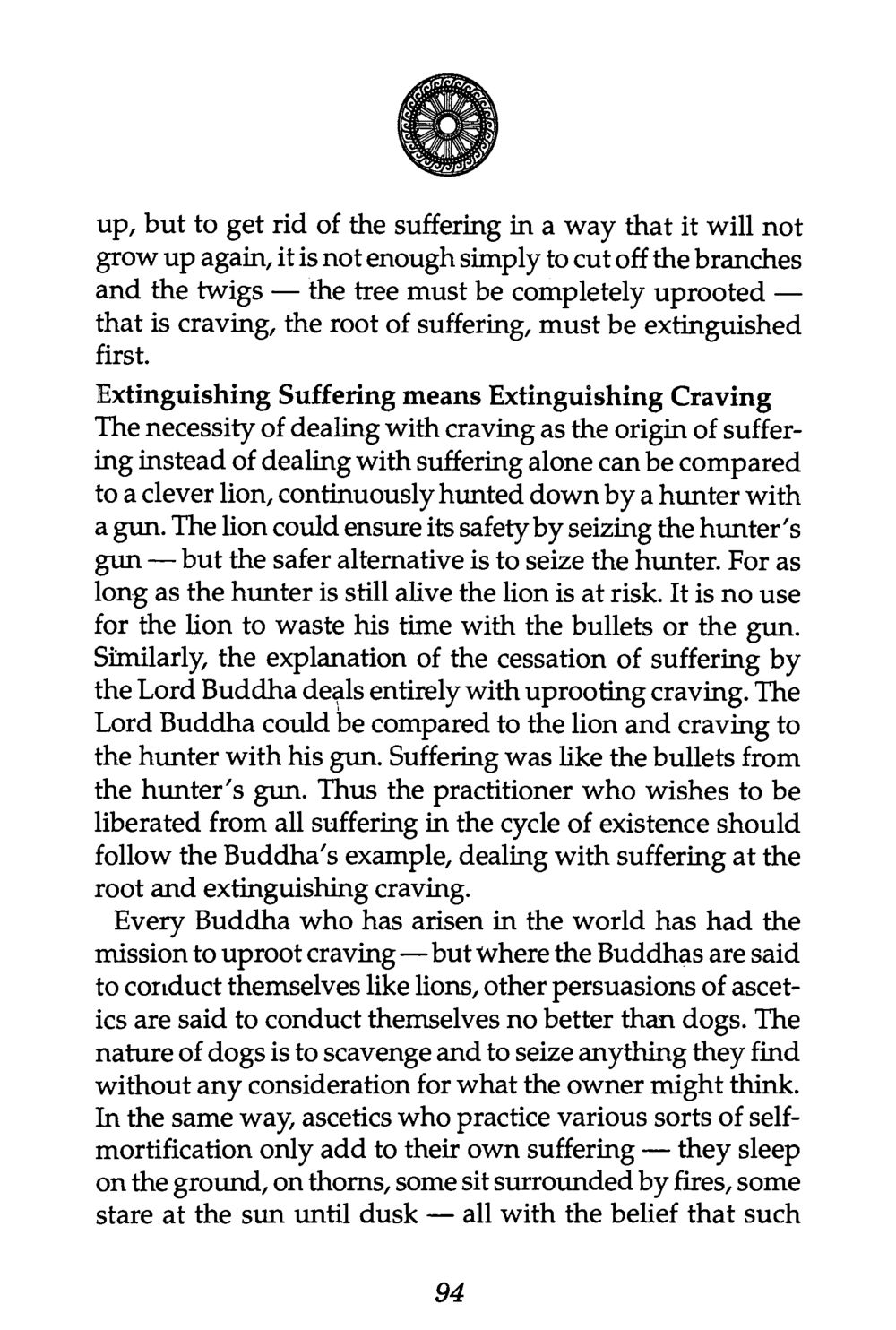
up, but to get rid of the suffering in a way that it will not grow up again, it is not enough simply to cut off the branches and the twigs — the tree must be completely uprooted — that is craving, the root of suffering, must be extinguished first.
**Extinguishing Suffering means Extinguishing Craving**
The necessity of dealing with craving as the origin of suffering instead of dealing with suffering alone can be compared to a clever lion, continuously hunted down by a hunter with a gun. The lion could ensure its safety by seizing the hunter’s gun — but the safer alternative is to seize the hunter. For as long as the hunter is still alive the lion is at risk. It is no use for the lion to waste his time with the bullets or the gun. Similarly, the explanation of the cessation of suffering by the Lord Buddha deals entirely with uprooting craving. The Lord Buddha could be compared to the lion and craving to the hunter with his gun. Suffering was like the bullets from the hunter’s gun. Thus the practitioner who wishes to be liberated from all suffering in the cycle of existence should follow the Buddha’s example, dealing with suffering at the root and extinguishing craving.
Every Buddha who has arisen in the world has had the mission to uproot craving — but where the Buddhas are said to conduct themselves like lions, other persuasions of ascetics are said to conduct themselves no better than dogs. The nature of dogs is to scavenge and to seize anything they find without any consideration for what the owner might think. In the same way, ascetics who practice various sorts of self-mortification only add to their own suffering — they sleep on the ground, on thorns, some sit surrounded by fires, some stare at the sun until dusk — all with the belief that such
94
หน้าหนังสือทั้งหมด
1
2
3
4
5
6
7
8
9
10
11
12
13
14
15
16
17
18
19
20
21
22
23
24
25
26
27
28
29
30
31
32
33
34
35
36
37
38
39
40
41
42
43
44
45
46
47
48
49
50
51
52
53
54
55
56
57
58
59
60
61
62
63
64
65
66
67
68
69
70
71
72
73
74
75
76
77
78
79
80
81
82
83
84
85
86
87
88
89
90
91
92
93
94
95
96
97
98
99
100
101
102
103
104
105
106
107
108
109
110
111
112
113
114
115
116
117
118
119
120
121
122
123
124
125
126
127
128
129
130
131
132
133
134
135
136
137
138
139
140
141
142
143
144
145
146
147
148
149
150
151
152
153
154
155
156
157
158
159
160
161
162
163
164
165
166
167
168
169
170
171
172
173
174
175
176
177
178
179
180
181
182
183
184
185
186
187
188
189
190
191
192
193
194
195
196
197
198
199
200
201
202
203
204
205
206
207
208
209
210
211
212
213
214
215
216
217
218
219
220
221
222
223
224
225
226
227
228
229
230
231
232
233
234
235
236
237
238
239
240
241
242
243
244
245
246
247
248
249
250
251
252
253
254
255
256
257
258
259
260
261
262
263
หนังสือที่เกี่ยวข้อง
Load More