

REF : ค้นหาหนังสือธรรมะ หน้า 67 / 79
หน้าหนังสือทั้งหมด
120
The Path of Right Actions in Buddhism
…e Truths, and practice for the removal of ignorance and craving.
2. Right Intention
Right Intention refers to the wholesome thoughts or intentions which leads us to be generous, keep the Precepts and med…
…ractions. Lastly, it introduces Right Action, stressing the importance of taking ethical actions by refraining from killing living beings. For further exploration, visit dmc.tv.
123
Understanding Suffering and the Subtle Human Body
…educed one's suffering by loosening the fetters of 'clinging' [upādāna], there will be a feeling of refreshedness, joy and happiness which arises from within the mind — giving the meditator the inspirati…
This text discusses why most people suffer due to attachment to their physical bodies and possessions, despite intellectually understanding Buddha's teachings on impermanence. The author emphasizes th
131
Mindfulness and Right Concentration in Buddhism
…entration of mind that can enter upon the Absorptions at these four levels are what the Lord Buddha referred to as ’Right Concentration’.
There are two ways in which the Absorptions can be described: …
Dieser Abschnitt behandelt die Achtsamkeit gegenüber Dhammas und die richtige Konzentration im Buddhismus. Die Achtsamkeit richtete sich sowohl auf innere als auch äußere mentale Phänomene, die erford
132
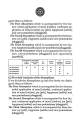
The Four Absorptions in Meditation
guish them as follows:
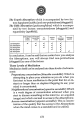
The First Absorption which is accompanied by five factors: initial application of mind [vitakka], continued application of mind [vicāra], joy [pīti], happiness [sukha] and one-p
…ach absorption represents a progressive state of concentration and emotional balance, exploring the refined qualities of the mind as one deepens their meditation practice. For more insights, visit dmc.tv…
133
Understanding the Levels of Absorption in Meditation
The Fourth Absorption which is accompanied by two factors: happiness [sukhα] and one-pointedness [ekaggatα].
The Fifth Absorption [pañcamaajahana] which is accompanied by two factors: one-pointedness
…, meditation levels are categorized into preliminary, neighborhood, and access concentration, which reflect the progression toward deeper states of absorption. Each level represents a step towards achiev…
140
Understanding the Dhammakāya and Its Mind
…kāya Gotrabhu, this distance measures twenty fathoms (forty metres)—and the size increases with the refinement of each new Dhammakāya attained in sequence. A ‘mind’ which can be expanded in this way is k…
The Dhammakāya embodies a body that resembles human perception while its mind can expand significantly, allowing the meditator to observe the eight inner bodies. This process unveils the Three Signs o
145
Understanding the Eightfold Path: Right Mindfulness and Right Concentration
… lives, but at the same time, the faculty of Right View constantly monitors the events of our lives reflecting "this set of phenomena belongs to the sensual sphere", "this set of phenomena belongs to the…
This excerpt explores the significance of the Eightfold Path, specifically focusing on Right Mindfulness and Right Concentration. It emphasizes understanding the aggregates of existence as they relate
154
The Renunciation of the Bodhisatva
…ht in this way for four months before he was able to fulfill his renunciation. Such thinking can be referred to as 'the intention to remove oneself from sensual desire'.
When the bodhisatva had renounc…
In his quest for enlightenment, the bodhisatva grapples with renouncing the comforts of Mithila, contemplating his intentions for four months. Upon retreating into the forest, he meditates and develop
156
The Tale of Sujāta and the Seven Types of Wives
by the tale of Sujāta, the younger sister of Viṣākha. This lady was the sister in law of Aṇṭhapiṇḍika but was very haughty because she inherited from a wealthy family. She had consideration neither fo
… nurturing. Through an engaging dialogue, Sujāta learns about seven archetypes of a wife, prompting reflection on the significance of kindness, compassion, and respect within marital relationships. This …
160
Abstention from Killing in Buddhism
…irst he thought to hack the snake with the machete, but recalling that he had taken the Precepts he refrained. When
¹. DhsA. p.103
². Mangaladipani Part II, v.158
…an Cakkana, who chooses to release a terrified rabbit instead of killing it, and another layman who refrains from killing a python after remembering his commitment to the Five Precepts. These narratives …
161
The Power of Right Action and Compassion
the snake started to crush him in his coils, he thought again of killing the snake, but remembering his Precepts he threw down the knife. He thought to himself, that if he should die, at least he woul
…sponses into a life guided by wisdom and kindness. Ultimately, these teachings encourage readers to reflect on their actions and intentions, fostering a peaceful coexistence with all beings. Explore more…
165
Understanding Right Livelihood and Wrong Trade
hardly be able to find anyone to praise them;
4. They will spend forthcoming lifetimes in hell.
Having heard the Buddha’s teaching, Khema attained
stream-entry, never committing adultery again
This ex
In Buddhist teachings, Right Livelihood refers to earning a living that upholds ethical values and avoids harmful practices. It specifically hi…
167
Understanding Wrong Livelihood and Its Varieties
…rth one kahapana. Together they are worth two kahapanas, the price of the big deer. The gangster therefore exchanges the big deer for the small one. Meanwhile the hunter is not smart enough to keep up wi…
… deception, such as forgers passing off fake gold and customers manipulating prices in markets, all reflecting the moral implications of dishonesty in commerce. These examples serve to illustrate broader…
169
Understanding Right Livelihood and Right Effort in Buddhism
… berries and its mouth pink like coral. The bird had a red aura too. Noticing his own beauty in the reflection of a pond,
The text discusses the principles of Right Livelihood and Right Effort in Buddhism, exemplified by the bodhisattva's encounter with a greedy merchant. The merchant's greed leads to his demise, contras
170
The Foundations of Right Effort in Spiritual Practice
he realized the risk of continuing to live near the haunts of men so he fled secretly from the flock at night to the Himavanta forest, finding safe cave as a home on a golden hill in Dandika. Every mo
…e practice of a hermit who maintained his serene life in Himavanta forest for 700 years, while also referencing the story of a bodhisattva who renounced wealth for spiritual growth. The importance of a c…
171
The Transformative Journey of Animals and a Hermit
…own in search of dainties. On entering the village the bear had received many blows before fleeing. Reflecting on his injuries, the bear saw that his own stupidity was the reason for his hurt and resolve…
…used by his own foolishness while searching for food outside his safe environment. The hermit, too, reflects on his past arrogance that prevented his spiritual growth. Together, they seek redemption and …
178
The Three Cycles of Examination in Buddhism
The Three Cycles of Examination comprise:
1. Saccānāna: Knowledge of the existence of each Noble Truth over which the Lord Buddha had unequaled personal knowledge and which he could teach to others wi
…ge of each truth’s existence; Kiccanānā addresses the necessary actions toward each truth; Katañāna reflects on the completion of needed actions. The twelve stages of the Cycle emerge from this framework…
187
Transportation of Communities in Buddhist Scriptures
to transport the community from one continent to another or even one world to another. In the time of the Buddha, the scriptures report that people and the Universal Monarch were transported from anot
… a weapon against cravings and a vehicle for liberation from the Cycle of Existence. The historical references also connect to the Mahābhārata and the Bharatayuddha. It suggests insights into the existen…
198
Adapting Teaching Practices Through the Middle Way
…cording to reality;
What then was the “means”, the “device”, or the “where-withal” which the Buddha referred to which the Group of Five were lacking before their enlightenment? The Buddha was not yet to …
In this exploration of the Middle Way as explained by Luang Phaw Wat Paknam, we learn about its significance in achieving insight and reality perception. The Buddha emphasizes the importance of the 'i
200
The Middle Way and the Four Noble Truths
…ble Truths, which leads to complete extinction.
SECTION 3: THE FOUR NOBLE TRUTHS
The aforementioned reference to "sambodhāya" concerning the knowledge of the Four Noble Truths is now expanded upon in mor…
This text discusses the Middle Way as taught by the Tathāgata, emphasizing the importance of Right Speech, Action, Livelihood, Effort, Mindfulness, and Concentration as a means to attain insight and e