

human : ค้นหาหนังสือธรรมะ หน้า 32 / 47
หน้าหนังสือทั้งหมด
73
Understanding Types of Suffering in Buddhism
parideva dukkha
The Buddha characterized this form of suffering as that which produces tears of anguish whenever we are unable to give up our attachment to something. Again the cause might be the dece
…onal states can drive individuals towards negativity. These insights illuminate the complexities of human emotion and suffering in Buddhist philosophy, with a focus on the need to address and understand ou…
74
Understanding Resentment and Suffering in Buddhism
about a certain thing. These are all the characteristics of resentment which will bring us misery for as long as we still harbour it in our hearts.
9. Bemoaning [upāyassa sukkha]
The Buddha characteri
…ifests outwardly, and bemoaning lingers in the heart even after tears have dried. The comparison of human emotions to a pot of boiling oil illustrates how these feelings can be contained or overflow into t…
81
Understanding Ascetic Practices and the Pursuit of Brahmā Realms
…1. Ascetics subscribing to this dogma believe that Brahma is the Ultimate Truth. Thus, having taken human birth, they spend all their time trying to develop the absorptions in order to try to be born in th…
Ascetics who follow specific dogmas may recollect their past lives and aspire to be reborn in the Form-Brahmā world, striving for the Ultimate Truth. They believe that by enhancing their meditation pr
82
Understanding Craving in Buddhism
…g reborn in the Formless Brahmā world will release them from suffering — thus all their time in the human world is spent trying to develop the formless absorptions in order to try to be born in the Formles…
This text delves into the Buddhist concept of craving, specifically how its pursuit influences rebirth and suffering. It discusses the misinterpretation by ascetics aiming for the Formless Brahmā real
84
The Dangers of Craving in Buddhism
four unfortunate realms [abhāyabhūmi]. Just as the swift currents of a river tend to sweep away all things to the ocean that fall within its reach, desire will tend to pull all beings who entertain it
…cluding killing, as individuals pursue happiness through sensory pleasures. The extensive nature of human desire is highlighted, suggesting that its magnitude may be insurmountable. Craving is described as…
110
Understanding the Dhamma Body and Its Levels
… take us to our destination.
All the various inner spheres and bodies all the way from the Physical Human Body inwards to the Dhamma Body are all nested within one another at the seventh base of the mind. …
This text delves into the concept of the Dhamma Body, highlighting its intricate structure composed of multiple layers, each representing a different level of spiritual refinement. Luang Phaw Wat Pakn
113
Understanding the Dhamma Body and Its Significance
…
finitively disconnected from all the inner bodies nested at
the seventh base of the mind, from the human physical body
to the Dhammakāya Anāgāmi Body and became perma-
nently united with the Dhammakāya Ar…
The Dhamma Body, or Dhammakāya, represents the essence of Buddhism, highlighting the journey towards enlightenment. By attaining the Dhamma Body, individuals can free themselves from defilements such
116
Understanding Nirvana: The Realm Beyond Existence
same happiness to us as if we were really in āyatanā nibbāna — but we are still ‘alive’ in our human body.
2. Nirvana without residual aggregates (Anupādisesa Nirvana [Nibbāna]) is the Nirvana that is…
This text delves into the concepts of Āyatanā Nibbāna and Anupādisesa Nibbāna, explaining that Nirvana exists beyond the physical realm and is not bound by worldly elements. It describes Nirvana as a
137
Understanding the Bodies of Enlightenment
…o travel on the central axis through the inner bodies.
The defilements associated with the physical human body comprise covetousness [abhijjhā], vengefulness [byāpāda] and False View [micchā diṭṭhi]. When …
This content discusses the ten types of Bodies of Enlightenment, including the Arahatta Body and Subtle Arahatta Body, emphasizing the benefits of attaining inner bodies for personal growth. Meditator
194
Choosing the Right Disciples in Buddhism
… Ālára had made significant progress in his medi-
tation because he had already attained the subtle human
body, the angelic body, the Brahmā body and the form-
less Brahmā body. He would be almost on the b…
Through his past lifetimes and pursuit of Perfection, the Buddha dedicated six years to discover the Dhamma. Acknowledging the difficulty others may have in understanding, he chose his first disciples
207
The Liberation and Enlightenment of Koññña
…e Dhammaikāya, Koñañña was able to use the Dhamma-kāya to see and know the Four Noble Truths in the human physical body. The outcome of his attainment (and hence of the Dhammacakkapavattana Sutta) was that…
This text discusses Koññña's journey towards enlightenment through focusing his mind and understanding the Four Noble Truths. His liberation from the Cycle of Existence is emphasized, marking the sign
219
Understanding Suffering and Enlightenment in Buddhism
…; {meta-
cakkavattana Sutta chanted 11 phors, house 65; withering flower in
Astral Body (see Subtle Human the sun 66}; mindfulness of 42; seen
Body) by the wise as but excrement 90; storehouse of unwholeso…
This text delves into key Buddhist teachings regarding suffering, attachment, and the process of attaining enlightenment. It analyzes various forms of suffering, including the suffering associated wit
222
Understanding Dhammakāya and Defilements in Meditation
… of Dhammakāya Sotapana 136-
7; of Form-Brahma Body 135-6; of
Formless-Brahma Body 136; of
Physical Human Body 135
defilements: arahants free of 101;
Dhamma Body free from 112; invul-
nerable to as result …
The text provides an in-depth examination of the Dhammakāya concept, explaining various levels such as Dhammakāya Anāgāmi, Gotrabhu, and Sakidāgāmi. It discusses the nature of defilements and how arah
223
Exploring Dhammakāya and the Eightfold Path
…ffering of ill- dha’s, explained by Dhammakāya
ness 66] 111; the Buddha’s 15
Dream Body (see Subtle Human Enlightenment, Seven Factors of 38
Body) equanimity 38, 130, 131, 135
dream, enjoyable - {metaphor …
This text delves into the Dhammakāya tradition, highlighting key components of the Eightfold Path and its teachings on defilements, enlightenment, and the nature of suffering. Concepts are illustrated
229
Exploring Key Buddhist Concepts and Practices
…ition 102; respected commentarian 102-3; sixteen tasks of 207 physical deeds, wholesome 40 Physical Human Body: defilements of 135 physical shocks to the womb, suffering of 60-1 pig wallowing in dung - {me…
This text delves into various aspects of Buddhist philosophy, focusing on the teachings and practices associated with the Dhammakāya Tradition founded by Phra Mongkothpumuni. It highlights the signifi
231
Exploring Self-Mortification and Sensual Indulgence
self-mortification 19, 27, 35-7, 103, causes lamentation 32; causes one
105, 194-5: dominates contemporainary spiritual thought 194-5; examples of practice 35; fruitless 19; {metaphors, grasshopper le
…chment to sense pleasures. The document also addresses desire and craving as significant factors in human suffering and the path toward liberation. Specific practices, their fruitlessness, and their unprof…
246
Fundamental Concepts in Buddhist Psychology
rasa-saṅchetana (gasticatory volition: see sense volition)
rasa-saṃnā (gasticatory sense registration: see sense registration)
rasa-tanḥa (gasticatory craving: see sense craving)
rasa vicāra (ga
…derstanding of the Four Noble Truths. These elements contribute to a comprehensive understanding of human sensory experience and their implications on mental clarity and spiritual practice. This knowledge …
256
Techniques for Effective Meditation
… until attaining the sphere of Dhamma, one continues with meditation by passing through the refined human body (astral body), the angelic body, the form-Brahma body and the formless-Brahma body until attai…
This text discusses key meditation techniques, emphasizing the importance of neutrality and visualization in practice. It advises against craving and worries during meditation, focusing instead on mai
3
No Content Provided
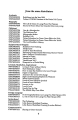
…Vanijja Sutta
9789749058718 Fruits of True Monkhood
9789749099612 Reforming Society means Reforming Human Nature
9789748277707 Man’s Personal Transformation
9789749313558 Manual of Peace
978974923035 Visud…
No summary available due to lack of text input.
37
Understanding the Impact of Climate Change
ruined temple was an uncommon occurrence in rural Suphan Buri. Eventually the large congregation attracted the prying eyes of the Supan Buri authorities who mistook the gathering for a nascent uprisin
This book delves into the complex dynamics of climate change, examining its impact on ecosystems, human health, and economies. It presents scientific evidence, case studies, and actionable solutions to m…