

self-awareness : ค้นหาหนังสือธรรมะ หน้า 7 / 38
หน้าหนังสือทั้งหมด

59
Child Development through Activities at YUWA CAMP
Doing activities together, each child’s character will be observed. A child may like to work on his or her own while another enjoys team work. Therefore, the children will learn how to cope with peopl
At YUWA CAMP, children engage in activities that encourage socialization, teamwork, and personal growth. They learn to cope with different personalities while practicing Buddhist principles like perse
66
Understanding Paccekabuddhas: Characteristics and Dhamma
These verses describe the Paccekabuddhas as ones possessed of supreme purity, wisdom, wakefulness, composure, and having the ability for seeing and knowing. In other words, they are full of realizing
These verses highlight the qualities of Paccekabuddhas, emphasizing their supreme purity, wisdom, and self-enlightenment capacity. The term ‘mahatadhamma’ refers to the great dhammas that relate to th

36
Understanding the Eightfold Path
Forth, the truth of the path to cessation of suffering or "Magga" in Pali. อธิษัขข้อที่ 4 คือ ทางแห่งการพ้นทุกข์ หรือมรรค
There is a path to the end of suffering and a gradual path of self-improvement
บทความนี้อธิบายถึงมรรคหรือทางแห่งการพ้นทุกข์ในพุทธศาสนา ซึ่งคืออริยมรรค 8 ที่นำไปสู่การสิ้นสุดของทุกข์และการพัฒนาตนเองอย่างค่อยเป็นค่อยไป มันอยู่ระหว่างความพอใจมากเกินไปและการอดทนเกินไป ในการเปรียบเที
17
Insights from Luang Por: Buddha, Jesus, and Meditation
Suzanne Jeffrey
within you!"
Jon, obviously not afraid of the hard questions, asks, "Could you tell me what you think is the difference between Buddha and Jesus?"
Luang Por says, "Buddha teaches th
In this engaging discussion, Luang Por provides insights on the differences between Buddha and Jesus, emphasizing Buddha's teachings on proving everything versus Jesus' acceptance. He articulates the
27
The Concept of the Unknown Factor in Human Belief
Luang Por: "Humans are categorized into two groups: either believing that the Unknown Factor exists, or believing that it does not exist. There are, of course, atheists, who say that the possibility e
Luang Por categorizes humans into two groups based on belief in the Unknown Factor, discussing atheists inclusively in those who believe. He elaborates on those who perceive this factor as necessary f
15
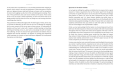
Understanding the Eternal Punishment of Life and the Role of Educators
In this prison there is punishment. It is not normal punishment like whipping or torture, which comes to an end; the punishment in this prison goes on forever and ever. Ageing, sickness, death and bir
This content discusses the perpetual punishment of existence, highlighting how suffering is inherent in our lives through age, sickness, and basic needs. It emphasizes the necessity for mindful teachi
45
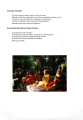
The Importance of Moral Education in Teaching
Only with moral education can human beings eliminate conflicts, selfish and greedy tendencies and practices so that man may truly coexist with mindful and peaceful consideration for each other. This s
This text emphasizes the necessity of moral education to eliminate selfish and greedy tendencies, enabling peaceful coexistence. It discusses the role of various types of teachers—parents, school teac
22
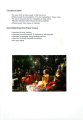
Formation of Good Habits
Formation of Habits
* The work which is done in each of the five rooms
* Attitude toward the consumption of the four necessities in these rooms
* The way to consume the four necessities in these rooms
This text discusses the various aspects of habit formation, emphasizing the importance of attitude towards life's necessities, manners in living and working together, and one's approach to livelihood.
26
Formation of Habits
Formation of Habits
. The work which is done in each of the five rooms
. Attitude toward the consumption of the four necessities in these rooms
. The way to consume the four necessities in these rooms
This text discusses the formation of habits in various aspects of life, focusing on the work done in different areas and attitudes towards basic necessities. It emphasizes the importance of good habit
26
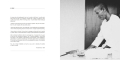
The Journey of Self-Discovery Through Meditation
stung when the bedbugs bit me, but I would not kill them. I would catch them and put them in a spittoon covered with a piece of paper so they could not get away. When morning came, I would release the
The author shares her lifelong passion for cleanliness and orderliness, rooted in a disciplined upbringing at Wat Paknam. Through meditation, she recalls past lives that have contributed to her self-t
27
Understanding Yourself: The Journey Within
7. LOOK WITHIN YOURSELF
I look at myself. I look through myself. I understand "me" clearly.
I look into my physical self to find my human nature until I thoroughly understand it. Then I look deeper in
This text encourages individuals to look within themselves for true understanding rather than focusing on others. It highlights the journey of self-discovery through examining both physical and spirit
70
Understanding Buddhism: A Cosmic Religion
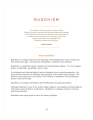
BUDDHISM
‘The religion in the future will be a cosmic religion.
It should transcend a personal God and avoid dogma and theology.
Covering both the natural and the spiritual, it should be based on
Buddhism, founded by the Buddha over 2,500 years ago, emphasizes freedom from suffering and is based on logical, practical principles. This religion transcends blind faith and superstitions, making it
107
परम ध्यान और आत्मा का केंद्र
(sleeps).
Luang Phaw Wat Paknam explained that the ability to bring our mind to a standstill at this centre of the body is what we call ‘majjhima’ or ‘centering’. When the mind comes to a standstill
लुआंग फॉ वट पाकनम ने समझाया कि शरीर के केंद्र पर ध्यान लाने की क्षमता को 'मध्यम' कहा जाता है। यह वह बिंदु है जहाँ मन सद्भाव में आता है, और इसे अच्छे या बुरे के संदर्भ में नहीं रखा जा सकता है। इसके द्व
108
The Path to Spiritual Enlightenment
center of the Sphere of Concentration, the Sphere of Wisdom [paññā] will be attained. When we bring the mind to a standstill at the centre of the Sphere of Wisdom, the Sphere of Liberation [vimutti] w
This text outlines the spiritual progression as defined by the teachings of the Buddha, emphasizing the importance of concentration, wisdom, and the journey towards liberation. It explains how by brin
140
Understanding the Dhammakāya and Its Mind
reaching the Dhammakāya and becoming one and the same as the Dhammakāya. The body of the Dhammakāya incorporates layers of perception, sensory registration, central processing and cognition in just th
The Dhammakāya embodies a body that resembles human perception while its mind can expand significantly, allowing the meditator to observe the eight inner bodies. This process unveils the Three Signs o
196
The Dangers of Sensual Pleasures and Self-Mortification
1.1 Kāmasukhallikāyunāga: indulgence in the various sensual pleasures is harmful in the following ways:
1.1.1 Hino: It makes the mind coarse and clouded;
1.1.2 Gammo: (this word literally means "house
In Buddhist teachings, indulgence in sensual pleasures is deemed harmful as it clouds the mind, encourages a household life, collects defilements, and is ultimately unprofitable. Similarly, self-morti
206
Knowledge of the Path to Cessation of Suffering
3.8.1 Dukkhanirodhagāminī Saccāṇa: Knowledge of the existence of Path to the Cessation of Suffering.
3.8.2 Dukkhanirodhagāminī Kiccaṇāṇa: Knowledge of what must be done in relation to Path to the Ces
This text discusses the twelve stages of the Cycle of Examination derived from the Four Noble Truths and their relation to enlightenment. It elaborates on the three circuits: knowledge of existence, k
215
The Tathāgata and the Cycle of Enlightenment
Yāva kivāñca me bhikkhave, imesu "O! Monks! If the Tathāgata had not fully com-
catusu ariyassaccevaṁ tiparivattaṁ completed these three cycles with their twelve com-
dvaḍasākāraṁ yathābhuṭṭaṁ nān
In this text, the Buddha addresses monks, emphasizing that he has fully completed the three cycles of truth, which affirms his status as a fully self-enlightened Buddha. He claims that this enlightenm
221
Understanding Suffering and the Cycle of Existence
conditioning, stopping, Cessation of suffering 93-4 {metaphor, lion and
Suffering as 51-2; suffering as 47 hunter 94); responsible for keeping
conduct 145-6 being in cycle of rebirth 80; retin-
confu
This text delves into the nature of suffering, including its definitions and categorizations. It discusses the Cycle of Existence and how attachment leads to rebirth. The text highlights the importanc
228
Understanding Nibbāna and the Noble Truths
natal wind 61
neighbourhood concentration 43,
neither-perception-nor-non-perception, absorption of 193
nibbāna, anupadisesa 21, 112, 114;
ayatana 21, 102, 112, 114; sa
upādisesa 21, 112, 113-4
Nirvana
This text delves into key concepts in Buddhist philosophy, particularly Nibbāna and the Noble Truths. It discusses the interrelation of teachings, the significance of practicing the Middle Way to atta