

1 : ค้นหาหนังสือธรรมะ หน้า 694 / 704
หน้าหนังสือทั้งหมด
16
Understanding the Dhammacakka Pavattana Sutta
…s Late Holiness the Supreme Patriarch of Thailand Phra Ariya-vamsāgatasānā (Wās Wasan Mahathera) on 18 March 1989.
The Sāratthasamuccaya itself is a translation of a text composed some 800 years ago.…
The Dhammacakka Pavattana Sutta holds significant importance in Buddhist ceremonies, especially during Asālha Pūjā Day when monks chant it for laypeople's benefit. Unfortunately, finding unabridged co
18
The Heir to the Buddha’s Teaching
…ravakhun (Phra Phadet Dattajeewo)
Vice-Abbot: Wat Phra Dhammakaya
Pathumthani Province, Thailand
19 August 1994
This book envisions the student of Dhamma as an 'heir' to the Buddha's Teaching, emphasizing the need to understand and instill these teachings in future generations. The author expresses gratitude to
106
Understanding the Middle Way in Dhamma Practice
… are practicing the Middle Way in the sermon he gave on the Dhammacakkapavattana Sutta on 3 January 1955. He explained that the word ‘Middle’ in the term ‘Middle Way’ is indeed used in a very profound …
In his sermon on the Dhammacakkapavattana Sutta, Luang Phaw Wat Paknam elucidates the profound significance of the Middle Way, urging practitioners to find stillness at the body’s central point. This
109
Attaining the Angelic Body through the Middle Way
… of vehicle to another in order to reach our destination (as described in the Rathavīṇita Sutta M.i.145ff.) — we might hire a taxi from our home to the river shore, from there we cross the river on a f…
The text discusses the attainment of the Angelic Body through a process of concentration and the sequential progression from the Coarse Human Body to various forms of Brahmā bodies, culminating in the
113
Understanding the Dhamma Body and Its Significance
…filement. Whether it be greed, hatred
or delusion and all the higher and lower fetters [saṁyojana]
111
The Dhamma Body, or Dhammakāya, represents the essence of Buddhism, highlighting the journey towards enlightenment. By attaining the Dhamma Body, individuals can free themselves from defilements such
114
The Path to Nirvana: Understanding the Dhammakāya
…elf able to work earnestly achieving all your goals without tiring yourself in the process, without
112
This text discusses the purification of the mind through the teachings of the Buddha, emphasizing the importance of the Dhammakāya Arahat Body and the attainment of enlightenment. The Pathama Magga re
117
The Noble Truth of the Cessation of Suffering
…e
of the mind. Our mind is composed of perception, filtering,
processing and knowing (see diagram p.127) which each have
the form of consecutively nested spheres in the mind. The
outermost sphere is th…
The conclusion on the cessation of suffering according to the Buddha highlights the need to extinguish craving through the Noble Eightfold Path. Once craving is eliminated, suffering cannot return. Ou
124
Understanding the Inner Bodies and Enlightenment
… transcendental and eternal Noble Fruition they are aiming for.
___________________________________
122
This text discusses the progression through successive inner bodies leading to the Dhammakāya, emphasizing the distinction between mundane and transcendental bodies. It highlights that all worldly bod
125
Cultivating Transcendental Knowledge in Buddhism
…ation of mind [vicāra], joy [pīti], happiness [sukha] and one-pointedness [ekaggatā] (see also page 130ff.). The seeing and consideration of the bodies within the body continuously in this way is what …
The Lord Buddha encourages monks to attain transcendental knowledge to rise above sensuality and eradicate False View. Achieving the First Absorption endows practitioners with joy, happiness, and focu
127
Understanding the Mind and Its Layers
…of sensory registration, the layer of central processing
and the layer of cognition (see diagram p.127). The outer-
most layer is the sphere of perception (sometimes called the
bodily sphere) and is…
The text delves into the nature of the mind, describing its four concentric layers: perception, sensory registration, central processing, and cognition. It explains how mindfulness operates at each le
130
Understanding Mindfulness in the Mind
…s is how we can continuously cultivate mindfulness of the mind in the mind both inside and outside.
128
The text discusses mindfulness focusing on the central processing of the mind, distinguishing it from perception and cognition. It describes the clear nature of the pure mind that becomes tainted by d
132
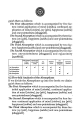
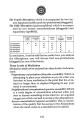
The Four Absorptions in Meditation
…tion of mind [vicāra]
joy [pīti]
happiness [sukha]
one-pointedness [ekaggatā]
equanimity [upekkhā]
1st Absorption ✔ ✔ ✔ ✔ ✔
2nd Absorption
3rd Absorption
4th Absorption
This text outlines the four absorptions in meditation, detailing the factors involved in each state. The First Absorption is characterized by five components: initial application of mind (vitakka), co
133
Understanding the Levels of Absorption in Meditation
…------------|------------|-------------------|----------------------------|---------------------|
| 1st Absorption | ✔ | ✔ …
This text outlines the five absorptions in meditation, detailing the factors involved in each stage, including joy, happiness, one-pointedness, and equanimity. Importantly, one-pointedness is a consis
141
Understanding Impermanence, Suffering, and Not-Self
…ledge arising from cognition depends upon the six senses [āyatana] rather than wisdom, therefore
139
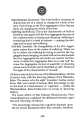
This text delves into the fundamental Buddhist concepts of impermanence (aniccān), suffering (dukkham), and not-self (anattā) as expressed through the Five Aggregates of the Human Body. It highlights
149
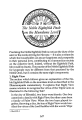
The Noble Eightfold Path on the Mundane Level
… may be different from that practised by the Noble Ones, but it contains the same eight components.
1. Right View
The section which follows gives an explanation of the Noble Eightfold Path on the munda…
Practicing the Noble Eightfold Path is essential for both monks and laypeople. It provides a framework for achieving happiness and societal harmony. This path consists of eight components, beginning w
151
The Tale of the Ogres and the Boy
…ddha then taught that a person
who wants to cultivate recollection should recollect the
following:
149
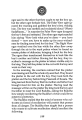
In this tale, two ogres discuss eating a boy but are interrupted when the boy wakes. The True View ogre insists they help him instead. They transform into the boy's parents to bring him food and leave
153
Understanding Right View and Right Intention in Buddhism
…ght Intention
When Right Intention is described in the Suttas, it is analysed into three types:
1. The Intention to remove oneself from sensual desire [nekkhamma saṅkappa]
2. The Intention to rem…
This text examines the principles of Right View and Right Intention in Buddhism. It highlights the dangers of False Views, such as denying the reality of this world or the afterlife, and emphasizes th
157
Types of Wives: Characteristics and Comparisons
…ho goes together through thick and thin — a wife with such characteristics is a wife like a friend;
155
This text explores different types of wives and their characteristics, highlighting the negative traits of a wife like an enemy, robber, and boss, and contrasting them with the positive traits of a wi
160
Abstention from Killing in Buddhism
4.1 Abstention from killing
Evil actions can be abstained from in any of the following three different …
This text discusses various ways one can abstain from killing, highlighting three methods: spontaneous abstention, preemptive abstention through the Five Precepts, and transcendent abstention. Illustr
166
Dirty Practices in Retail Measurement
1. *Double scales:* having one set of scales which underweighs and another which overweights. The ret…
This text discusses various deceptive practices used by dishonest retailers to gain unfair profits through manipulation of weights and measures. Techniques include double scales that underweigh when b