

B.L.I.A. : ค้นหาหนังสือธรรมะ หน้า 519 / 644
หน้าหนังสือทั้งหมด
180
The Life of Koṇḍañña and His Journey to Enlightenment
If you look back at the life history of Koṇḍañña, you will remember him as being the youngest amongst the eight brahmin soothsayers selected to interpret the bodily marks of Prince Siddhattha shortly
The narrative recounts the life of Koṇḍañña, a notable figure among brahmin soothsayers who predicted Prince Siddhattha's future enlightenment. As the only soothsayer to accurately foretell Siddhattha
181
The Path to Liberation in Buddhism
the defilements from their minds and to attain liberation.
The conclusion we can draw from seeing Koṇḍañña at-
tain stream-entry after a relatively short teaching (and also
from seeing the rebirth of
The text discusses how Koṇḍañña attained stream-entry through accumulated wholesome deeds from past lives, emphasizing the importance of good deeds in the present. It highlights that contact with the
182
The Path to Nirvana: Konḍaṇṅa's Journey
It is interesting to consider that although the Buddha taught the same sermon to all five monks in the Pañcavaggiya, it was only Konḍaṇṅa who attained stream-entry as a result. The reason for the diff
In the Pañcavaggiya, the Buddha's teachings resonated uniquely with Konḍaṇṅa, who attained stream-entry due to his extensive past merits and dedication. Born as Mahākāla, a rice-farmer during Vipassi
183
Awakening Through Practice: The Path to Sainthood
The Perfections which he had built up for himself from the past, together with the good deeds of his present lifetime added up to a level of Perfections superior to those of his contemporary monks. Co
In the narrative of Koṇḍañña's journey, we see how individual Perfections and good deeds lead to his early awakening, inspiring both him and his companions to deeper faith and dedication in their prac

184
The Path to Sainthood According to Buddhism
Whenever the Buddha arises in the world and our Perfections are sufficiently developed, we too may be the first disciple to attain Sainthood in that Buddha’s dispensation, in the same way as Koṇḍañña.
The text discusses the possibility of achieving Sainthood when the Buddha arises and our Perfections are fully developed, exemplified by Koṇḍañña. If not, there's potential for rebirth in heavenly rea
185
Exploration of the Dhammacakkapavattana Sutta
Appendix A.
Dhammacakkapavattana Sutta
for Pursuers of Perfection
1. Introduction
In this Appendix we delve a little deeper into the meaning of the Dhammacakkapavattana Sutta. The Dhammacakkapava
In this appendix, we explore the Dhammacakkapavattana Sutta and its complexities for modern readers. The Sutta serves as a brief but profound insight, showing how the Dhamma represents a path to enlig
186
The Jewelled Wheel of the Universal Monarch
UPOSATHA DAYS (full-moon and new moon days). The Universal Monarch is endowed with seven forms of jewels by which he can rule the world:
1. A jewelled wheel;
2. A jewelled elephant;
3. A jewelled hors
This text discusses the essential attributes of the Jewelled Wheel bestowed upon the Universal Monarch. Among seven jewels, the Jewelled Wheel stands out for its double function as an invincible weapo
187
Transportation of Communities in Buddhist Scriptures
to transport the community from one continent to another or even one world to another. In the time of the Buddha, the scriptures report that people and the Universal Monarch were transported from anot
This text discusses the transportation of the community during the time of Buddha, where beings from Uttarakururūpa were brought to Jambudīpa via the Jewelled Wheel of the Universal Monarch. After the
188
Understanding the Dhammacakka Pavattana Sutta
[vāddha-saṃsāra] on the levels of the Sensual Plane, the Form Plane and the Formless Plane so that we can enter upon Nirvana.
Thus in the inauguration of the Dhamma to the world, these two reasons are
The Dhammacakka pavattana Sutta marks the inaugural teaching of the Buddha, delivered at Isipatana Deer Park two months post-enlightenment. This Sutta introduces foundational concepts in Dhamma, empha
189
The Path to Enlightenment: Insights from Bahiya Dārucīriya
people cite examples of enlightenment such as that of Bahiya Dārucīriya who, in his final lifetime didn’t appear to mediate, but could become enlightened just by hearing a few words from the Buddha at
In examining the enlightenment of Bahiya Dārucīriya, it is essential to recognize his previous lifetimes where he dedicated himself to achieving enlightenment through intense meditation. Alongside fel
190
Bahiya and Konḍañña: Paths to Enlightenment
With those words alone, Bahiya was able to become an arahat. However, there are those, both in Thailand and abroad who look at examples such as that of Bahiya and come to the conclusion that you don't
This text delves into the spiritual journeys of Bahiya and Konḍañña, highlighting how Bahiya attained arahatship with minimal guidance, raising questions about the necessity of meditation for enlighte
191
The Significance of the Dhammacakka Pavattana Sutta
Siddhattha's footsteps. When Siddhattha was training him-self under the auspices of Ālara and Udaka it was Koṇḍañña who was also to train himself in Siddhattha's footsteps. Thus, Koṇḍañña, along with
The Dhammacakka Pavattana Sutta is pivotal in Buddhism, offering a master-plan for all subsequent teachings by the Buddha. It was delivered to a group of five adept meditators, setting a clear framewo
194
Choosing the Right Disciples in Buddhism
so many lifetimes in his past of pursuing Perfections, still
had to waste six years in the discovery of the Dhamma, stak-
ing his own life for the knowledge — how much harder
would it be for others to
Through his past lifetimes and pursuit of Perfection, the Buddha dedicated six years to discover the Dhamma. Acknowledging the difficulty others may have in understanding, he chose his first disciples
198
Adapting Teaching Practices Through the Middle Way
how to adapt the teaching for our personal practice. How-ever, if we look at how Luang Phaw Wat Paknam explained these same words, compiled from sermons he gave on many occasions:
SECTION 2: THE MIDDL
In this exploration of the Middle Way as explained by Luang Phaw Wat Paknam, we learn about its significance in achieving insight and reality perception. The Buddha emphasizes the importance of the 'i
200
The Middle Way and the Four Noble Truths
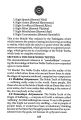
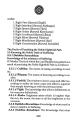
3. Right Speech [Sammā Vācā]
4. Right Action [Sammā Kammanta]
5. Right Livelihood [Sammā Ājīva]
6. Right Effort [Sammā Vāyāma]
7. Right Mindfulness [Sammā Sati]
8. Right Concentration [Sammā Samādhi]
This text discusses the Middle Way as taught by the Tathāgata, emphasizing the importance of Right Speech, Action, Livelihood, Effort, Mindfulness, and Concentration as a means to attain insight and e
202
The Noble Truth of the Origin of Suffering
all that way from the top of our head to the tips of our toes,
we are full of suffering — he had seen and known it for him-
self as a result of having the wherewithal to see and know
the nature of rea
The text delves into the Buddha's teachings on suffering, challenging ancient beliefs that linked suffering to divine punishment or fate. Instead, he identifies craving as the root cause of suffering,
203
Buddhist Teachings on Cessation of Suffering
सual realms of existence;
3.2.2.2 Bhavaṭanāḥ: Craving for the pleasure of the "form-absorptions" or for the Brahmā-world;
3.2.2.3 Vibhaṭanāḥ: Craving for the pleasure of the "formless-absorptions"
This text delves into the Buddhist concepts of craving and the cessation of suffering. It describes various forms of craving and how they lead to rebirth, as well as the Noble Truth of cessation where
204
The Noble Eightfold Path and Its Fruits
earlier:
1. Right View [Sammā Ditthi]
2. Right Intention [Sammā Saṅkappa]
3. Right Speech [Sammā Vāca]
4. Right Action [Sammā Kammanta]
5. Right Livelihood [Sammā Ājīva]
6. Right Effort [Sammā Vāyāma]
The Noble Eightfold Path consists of eight practices aimed at ethical and mental development, leading to enlightenment. The path includes Right View, Intention, Speech, Action, Livelihood, Effort, Min
206
Knowledge of the Path to Cessation of Suffering
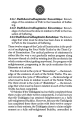
3.8.1 Dukkhanirodhagāminī Saccāṇa: Knowledge of the existence of Path to the Cessation of Suffering.
3.8.2 Dukkhanirodhagāminī Kiccaṇāṇa: Knowledge of what must be done in relation to Path to the Ces
This text discusses the twelve stages of the Cycle of Examination derived from the Four Noble Truths and their relation to enlightenment. It elaborates on the three circuits: knowledge of existence, k
207
The Liberation and Enlightenment of Koññña
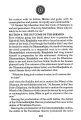
the cosmos with its deities, Mārās and gods, with its contemplatives and priests, its royalty and commonfolk."
"O! Monks! My liberation from the Cycle of Existence is real and permanent. This is my fi
This text discusses Koññña's journey towards enlightenment through focusing his mind and understanding the Four Noble Truths. His liberation from the Cycle of Existence is emphasized, marking the sign