

Samadhi : ค้นหาหนังสือธรรมะ หน้า 2 / 3
หน้าหนังสือทั้งหมด
32
Dhamma-kāya in the Pali Canon
Dhamma-kāya in the Pali Canon¹
Chanida Jantrasrisalai
I. Why ‘Dhamma-kāya’ in the ‘Pali Canon’?
The term dhamma-kāya/dharmakāya appears in Buddhist literature of different schools. Previous scholars
The study investigates the term dhamma-kāya as presented in the Pali Canon, aiming to provide a comprehensive analysis that has been overlooked in previous studies. While many references have been mad
80
Understanding Dhammakāya and its Significance in Buddhism
mental qualities128 or purity,129 or identifies it with realities to be
attained or experienced spiritually by noble disciples through the
penetration of the noble paths.130 In one instance, he connec
This text examines the term dhammakāya as articulated by Buddhaghosa, linking it to spiritual realities and teachings of the Buddha. It highlights the role of dhamma-vinaya as a guiding principle and
84
Bibliography of Buddhist Studies
Bibliography
Dutt, Nalinaksha. Mahayana Buddhism. Delhi: Motilal Banarsidass, 1978.
Geiger, Wilhelm. “Dhamma and Brahman.” Zeitschrift flour buddhismus (1921): 73-83.
Gombrich, Richard. “The Buddha’s
This bibliography encompasses significant scholarly works in Buddhist studies, offering insights into various aspects such as the early Buddhist philosophy, the concept of Dharmakāya, and teachings of
102
Wisdom and the Dhammakāya in Buddhist Teachings
Some of the qualities or forms of wisdom listed in the text are exclusive to Buddhas such as omniscience (sabbaññutāna), intrepdity (vesārajjanāna), and the ten supreme intellectual powers of a Buddha
The text highlights unique qualities of wisdom exclusive to Buddhas, including omniscience and the ten intellectual powers. It discusses the dhammakāya as the embodiment of a Buddha's inner wisdom, di
564
หลรรษฐานธรรมาภายในคัมภีร์พุทธโบราณ 1 ฉบับวิชาการ
หลรรษฐานธรรมาภายในคัมภีร์พุทธโบราณ 1 ฉบับวิชาการ
Gernet, Jacques. 1996. A History of Chinese Civilization. 2nd ed.
Cambridge: Cambridge University Press.
Glass, Andrew, and Mark Allon. 2007. Four Gāṇ
เอกสารนี้นำเสนอการศึกษาคัมภีร์พุทธโบราณและวรรณกรรมที่มีชื่อเสียง อาทิ การวิเคราะห์และพิจารณาเอกสารด้านพุทธศาสตร์ เช่น Sūtras และ Manuscripts ที่มีความสำคัญในด้านการศึกษาและประวัติศาสตร์ของพุทธศาสนา อ้
576
หลักฐานธรรมาภายในคัมภีร์พุทธโบราณ
… Civilizations, University of Pennsylvania.
Yamabe, Nobuyoshi. 1999. "The Sutra on the Ocean-like Samadhi of the
เนื้อหานี้นำเสนอหลักฐานธรรมะจากคัมภีร์พุทธโบราณผ่านการอ้างอิงต่างๆ ที่สำคัญ เช่น งานของ Thomas Watters เกี่ยวกับการเดินทางของ Yuan Chwang ในอินเดีย และการศึกษาแนวคิดต่างๆ ในวรรณกรรมมหายาน เช่น 'The Li
88
เหรียญญานและอักษรอินเดียในพุทธศาสนา
เหรียญญาน หรือ awakening
อาคาร
มัชฌิมปฏิปทา
Qizil หรือ Kizil 克孜爾羌
Röllicke
ภาราปราสาท
Khadalik
Domoko Oasis
เป็นอักษรอินเดียใช้บนทีคีวัดพุทธศาสนาแบนตอนใงของตอขออกริสถานตอนในอคแรก() (Ea
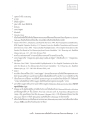
เนื้อหานี้สำรวจเหรียญญานและอักษรอินเดียที่ใช้ในทีคีวัดพุทธศาสนาในตะวันออกของจีน ซึ่งเปลี่ยนแปลงและพัฒนาตามประวัติศาสตร์ ตัวอย่างงานวิจัยของดร.ชนิดา จันทร์ศรีโสภและผลงานต่างๆ ที่เกี่ยวข้องทำให้เห็นภาพข
155
Digital Dictionary of Buddhism and Related Works
…en Ji 福嚴佛學院第八屆初級部學生論文集 (June 1999): 651–682.
Yamabe, Nobuyoshi. 1999. “The Sutra on the Ocean-like Samadhi of the Visualization of the Buddha: The Interfusion of the Chinese and Indian Cultures in Central A…
This compilation features key works in early Chinese Buddhism, including the Digital Dictionary of Buddhism edited by A. Charles Muller, and significant contributions from scholars such as Jan Nattier
50
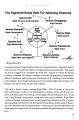
The Eightfold Noble Path for Attaining Dhamma
… Livelihood
6. Samma Wayama - Right Effort and Diligence
7. Samma Sati - Right Mindfulness
8. Samma Samadhi - Right Concentration
Inner Peace
Inner Light
Attainment of Dhamma
The Eightfold Noble Path consists of eight practices that guide individuals towards the attainment of Dhamma. Each aspect emphasizes practical and mindful approaches to living, including Right View, R

164
Meetings With A Dhamma Master
…nd, to Core Values and how habits relate to those values, to the definitions of words like Kamma andsamadhi and Kilesa. But most of all, of course, we talk about meditation. The What? Why? And How? of the Dh…
…on includes discussions on the Nature of the Mind, habits, and essential Buddhist terms like Kamma, samadhi, and Kilesa. The teachings aim to make the Dhamma accessible and applicable to readers' lives. Suza…
54
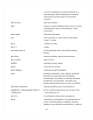
Meditation and Buddhist Concepts
…sions are not real; they
don't belong to us.
สมาทาน
to undertake; observance; acceptance
สมาธิ
(Samadhi) concentration; one-pointedness of
mind; mental discipline; meditative practice
leading to one-poin…
เนื้อหานี้เสนอความรู้เกี่ยวกับการทำสมาธิ และแนวคิดทางพุทธศาสนา โดยชี้ให้เห็นถึงการฝึกฝนจิตใจให้มีสมาธิเป็นหนึ่งเดียว ความสำคัญของการมีสติในปัจจุบัน และอธิบายความหมายของคำต่างๆ เช่น สมะ, สติ, สบาย, และ
55
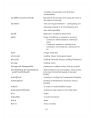
ความหมายและการปฏิบัติสมาธิในพุทธศาสนา
…ต์บุตรชาพระรัตนตรัย
สร้าง
สะสมเสบียง
สะอาด
สภากระ
complete concentration and absorbed contemplation
Samadhi is the process of focusing the mind at the center of the body.
even and equal treatment -- particip…
เนื้อหานี้กล่าวถึงความสำคัญของสมาธิในการพัฒนาจิตใจ โดยการสร้างบารมีและทำความดี นอกจากนี้ยังอธิบายเกี่ยวกับการประกอบศาสนกิจ เช่น สวดมนต์ และการสร้างวัดให้เป็นสถานที่สักการะ เพื่อส่งเสริมความดีและสร้างค
78
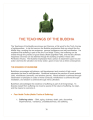
The Teachings of the Buddha
…hat lead to self-liberation. Buddhists embrace the practice of moral restraint (sila), mindfulness (samadhi), and wisdom (panna). Moral restraint is achieved through observation of precepts or codes of moral…
The Teachings of the Buddha, known as Dhamma, emphasize the Middle Way, avoiding extremes of indulgence and self-mortification. Central to Buddha's teachings are the Four Noble Truths, which acknowled
8
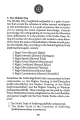
The True Nature of the Buddha's Enlightenment
the Buddha’s enlightenment dealt entirely with meditation focussed outside the body. Then, as now, almost all success was attributed to ideas and strategies — but as a result of countless past lifetim
Siddhattha Gotama's enlightenment was rooted in meditation that transcended mere conceptualization. He recognized that achieving true liberation demanded a harmonious blend of theory and inner virtue.
25
The Middle Way: A Path to Liberation
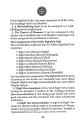
3. The Middle Way
The Middle Way [majjhima paṭipadā] is a path of practice that avoids the extremes of either sensual indulgence or self-mortification. It is a path of practice that is conducive to ta
The Middle Way [majjhima paṭipadā] serves as a balanced path in Buddhism, steering clear of both sensual pleasures and self-mortification. This approach is aimed at tempering the mind, achieving supre
43
Understanding the Noble Eightfold Path
Noble Eightfold Path is the most auspicious of all the virtuous teachings of the Lord Buddha.
4. A Wish-fulfilling Jewel: It can be compared to a wish-fulfilling jewel of eight facets.
5. The Chariot
The Noble Eightfold Path is central to Buddha's teachings, likened to a wish-fulfilling jewel. It consists of eight components: Right View, Right Intention, Right Speech, Right Action, Right Livelihoo
105
Rediscovery of the Dhammakāya Tradition
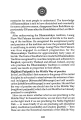
mentaries for most people to understand. The knowledge of Dhammakāya is said to have diminished and eventually for some unknown reason, disappeared from Buddhism approximately 500 years after the Pari
The Dhammakāya tradition, once diminished in Buddhism, was revitalized by Luang Phaw Wat Paknam who dedicated his life to its teachings. His outreach efforts led to the tradition being acknowledged in
107
परम ध्यान और आत्मा का केंद्र
(sleeps).
Luang Phaw Wat Paknam explained that the ability to bring our mind to a standstill at this centre of the body is what we call ‘majjhima’ or ‘centering’. When the mind comes to a standstill
लुआंग फॉ वट पाकनम ने समझाया कि शरीर के केंद्र पर ध्यान लाने की क्षमता को 'मध्यम' कहा जाता है। यह वह बिंदु है जहाँ मन सद्भाव में आता है, और इसे अच्छे या बुरे के संदर्भ में नहीं रखा जा सकता है। इसके द्व
108
The Path to Spiritual Enlightenment
center of the Sphere of Concentration, the Sphere of Wisdom [paññā] will be attained. When we bring the mind to a standstill at the centre of the Sphere of Wisdom, the Sphere of Liberation [vimutti] w
This text outlines the spiritual progression as defined by the teachings of the Buddha, emphasizing the importance of concentration, wisdom, and the journey towards liberation. It explains how by brin
118
Understanding the Mind and Success in Buddhist Practice
and the four different functions of the mind are scattered in their separate directions like a group of people unable to work as a team — they cannot pool their abilities efficiently.
By 'all succes
This text discusses the four functions of the mind and their impact on achieving success in Buddhist practice, as emphasized by Luang Phaw Wat Paknam. He speaks on the importance of reaching a state o