

self : ค้นหาหนังสือธรรมะ หน้า 12 / 36
หน้าหนังสือทั้งหมด

95
Understanding Merit and Its Impact on Life
… who is angry or hateful. When we are happy and content with ourselves, we project a personality of self-confidence and social grace. For this reason, merit can indeed change our personality to be more pl…
…ral part of our personality, bringing satisfaction and contentment while enhancing social grace and self-confidence. It cannot be transferred, as it belongs solely to the individual. By performing good de…
26
The Acrobat's Journey
…e in playing with her son.
The husband came to the conclusion that the songs she sang were about
himself, and asked her, "Do you refer to me?"
"Yes, I refer to you." "In that case I will run away and leav…
…r carts. Despite his efforts, the acrobat remains indifferent, prompting him to learn acrobatics himself. His journey of self-improvement leads him to proclaim his own exhibitions in Rajagaha, seeking her…

12
Erkenne dein wahres Selbst
In order to know your true self;
make your mind neutral: be still,
detached from any frame of knowledge
that you have ever he…
Um dein wahres Selbst zu erkennen, ist es wichtig, deinen Geist neutral zu machen und still zu sein. Lass alle bisherigen Vorstellungen und erlernten Kenntnisse hinter dir. Wenn du dies schaffst, wirs

30
The Middle Way: Balancing Sensual Indulgence and Self-Mortification
the harmfulness of the extremes of sensual indulgence and self-mortification, and advocated the following of the Middle Way or Noble Eightfold Path, the ‘group of…
This text discusses the risks associated with extreme sensual indulgence and self-mortification, underscoring the importance of following the Middle Way or Noble Eightfold Path. It …

31
Dhammacakkappavattana Sutta: The Sermon
…tly avoid the two extremes of practice, namely:
1. Sensual indulgence [kamasukhallikanuyoga]
2. Self-mortification [attakilamathānu yoga]
1. Indulging in sensual pleasures [kamasukhallikanuyoga]
…
… monks, emphasizing the importance of avoiding the two extremes in practice: sensual indulgence and self-mortification. Sensual indulgence is characterized by attachment to the pleasures of the five sense…
53
The Noble Truth of the Origin of Suffering
…niversal initiator and the elaborator of Suffering with all living beings as its victims. Craving itself can be divided into two sorts:
. 2.1.1. Self-centred craving [attattathanā]: The craving for advant…
…hasizing craving as the root cause affecting all living beings. It identifies two forms of craving: self-centred craving (for personal advantage) and retinue-centred craving (for the benefit of loved ones…
86
Understanding Craving and Suffering in Buddhism
…us meditation on the Three Universal Characteristics [ti-lakhana] — impermanence, suffering and not-self — and reflection on the virtues of the Triple Gem, with the
practice of meditation by calm and insi…
…, and maintaining awareness of the Three Universal Characteristics—impermanence, suffering, and not-self. By understanding and reflecting on these truths, practitioners can strive toward escaping the cycl…
90
Understanding the Pursuit of Happiness and the Cycle of Existence
… happiness via sense pleasure only
experience happiness at the moment before suffering mani-
fest itself. As soon as suffering becomes manifest, such peo-
ple are often so shocked that they cannot even co…
This text discusses the fleeting nature of happiness derived from sense pleasures and the inevitable suffering that follows. It compares individuals ensnared by cravings to a rabbit caught in a hunter
96
Understanding the Root of Suffering
…nsideration for what the owner might think. In the same way, ascetics who practice various sorts of self-mortification only add to their own suffering — they sleep on the ground, on thorns, some sit surro…
…ary step to achieve true liberation from the cycles of suffering. Unlike other ascetics who attempt self-mortification, which only compounds suffering, the Buddha's method is to confront the underlying is…
111
Understanding the Dhammakāya in Insight Meditation
…id to have reached the stage of Insight [vipassanā] — because only then are you able to see for yourself that the aggregates are subject to the Three Characteristics of impermanence [aniccā], suffering [d…
…ion allows one to perceive the Three Characteristics of existence: impermanence, suffering, and not-self. The 'Dhamma' eye represents the ability to see things in their true form, understanding the origin…
112
Understanding the Dhamma Body and Overcoming Mental Defilements
…int of liberation from those things, and attaining permanence [niccaṃ], happiness [sukhaṃ] and true self [attā] — a true self that is the embodiment of happiness (with no trace of suffering) and unchangab…
The passage discusses the limitations of human senses in perceiving mental defilements such as greed, hatred, and delusion. It highlights the importance of the Dhamma Body in providing insight into th
118
Understanding the Mind and Success in Buddhist Practice
…ha' as 'extinguishing' — and in such a case he taught that you can attain extinction by cultivating self-discipline [sīla], concentration [samādhi] and wisdom [paññā] — and that there is no other way of a…
…as essential in this process, representing both 'stopping' and 'extinguishing' craving. Cultivating self-discipline, concentration, and wisdom are crucial steps toward attaining the Dhammakāya, which lead…
122
The Journey to Inner Bodies and Enlightenment
…w sphere brighter and clearer than the last will appear at the centre which is called the sphere of self-discipline. In the same way, the sphere of concentration, the sphere of wisdom, the sphere of liber…
…tence beyond the physical body. As the meditator attains different spheres, they gain insights into self-discipline, wisdom, and liberation. This process allows individuals to perceive that life extends b…
124
Understanding the Inner Bodies and Enlightenment
…nfluence of the Three Signs [tilakkhaṇa], namely: impermanence [anicca], suffering [dukkha] and not-self [anattā]. None of these bodies transcend the mundane level of existence — they are worldly [lokiya]…
…cluding the human, are influenced by the Three Signs of existence: impermanence, suffering, and not-self. In contrast, bodies of enlightenment are made of transcendental Aggregates, free from these influe…
138
The Path to Enlightenment in Buddhism
…e first level of Buddhist sainthood—who has managed to release themselves from the lower fetters of self-view [sakkayaditthi], doubt [vicikicchä] and attachment to rites and rituals [silabbatapamäda].
Hav…
…hrough different bodies. Further stages lead to becoming a Sotäpana, a stream-enterer who overcomes self-view, doubt, and attachment to rituals. Finally, the journey continues to the Sakidägämi Body, mark…
142
The Path to Enlightenment: Understanding Dhammakāya
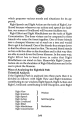
…craving as its cause, that because of arising there must be
decay i.e. cessation [nirodha] and that self-discipline,
meditation and wisdom are the only things that can lead
one to such cessation. All this…
…hood. All insights were realized through the eye of the Dhammakāya, demonstrating the importance of self-discipline and wisdom in Buddhism. For more insights, visit dmc.tv.
146
Understanding the Eightfold Path
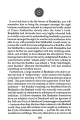
… One of those friends sees a champac blossom out of reach on a tree and would like to get it for himself. One of the friends thus stoops down so that the others can stand on him. The second friend stands …
…and Concentration work together to attain goals. The path can be analyzed into three parts: wisdom, self-discipline, and ethical conduct, emphasizing the interplay of these elements in spiritual practice.…
180
The Life of Koṇḍañña and His Journey to Enlightenment
… first to attain “stream-entry” and to bear witness to the fact that the Buddha was indeed a “Fully Self-Enlightened Buddha” [Sammā Sambuddho] who had attained something never before known.
Furthermore, a…
…t, Koṇḍañña became the first to achieve 'stream-entry', validating the Buddha's status as the Fully Self-Enlightened One. This momentous event also led many Brahmās, considered high attainments in other t…
223
Exploring Dhammakāya and the Eightfold Path
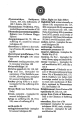
…8-9]
dishonest: trading practices, 163- enemy: trusting a - {metaphor for
5; consumer practices 165 self-mortification 36-7; wife like a 154-5
divine-abilities 118 enlightenment: of Brahmās as re-
dog: a…
This text delves into the Dhammakāya tradition, highlighting key components of the Eightfold Path and its teachings on defilements, enlightenment, and the nature of suffering. Concepts are illustrated
257
Benefits of Meditation
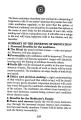
…The Mind: the mind will feel at ease — calm and peaceful. Memory will also improve;
● Personalilty: self-confidence will be improved. The true nature of calm will become apparent. Anger will diminish, lea…
…ge and happiness now and in the afterlife. Benefits include a calm mind, improved memory, increased self-confidence, diminished anger, enhanced daily life quality, better decision-making, and harmonious f…