

text : ค้นหาหนังสือธรรมะ หน้า 19 / 166
หน้าหนังสือทั้งหมด
10
Exploring the Dhammacakkapavattana Sutta and the Four Noble Truths
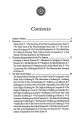
Contents
Author's Preface ............................................................................................................... 9
1 Overview ................................................
This text delves into the Dhammacakkapavattana Sutta, highlighting its key teachings on the paths of sensual …
36
The Hardships of Earning a Living
ways: for example, some are farmers, some run businesses, some tend dairy cattle, some are soldiers, some are civil servants, some are elephant trainers, some are horse trainers. No matter which way o
This text discusses the various livelihoods people engage in, from farming to business and training animals, …
57
The Noble Truth of the Eightfold Path
4.1 The Path as the Escape from the Cycle of Existence
This is the direct definition of the Noble Truth of the Path to the End of Suffering. Whosoever wishes to traverse the ocean of the Cycle of Exis
This text discusses the Noble Eightfold Path as the essential means to traverse the Cycle of Existence and en…
64
Suffering During Birth: The Experiences of the Foetus
suffering of the foetus, like being exposed to a rain of hot ashes. Each time the mother eats something spicy, the whole of the foetus’s body will itch and become swollen with the strength of the spic
This text delves into the intense suffering experienced by the foetus due to maternal actions, particularly w…
74
Understanding Resentment and Suffering in Buddhism
about a certain thing. These are all the characteristics of resentment which will bring us misery for as long as we still harbour it in our hearts.
9. Bemoaning [upāyassa sukkha]
The Buddha characteri
This text delves into the characteristics of resentment as a source of misery and describes the Buddha's teac…
83
Understanding Attachment: Lessons from the Lord Buddha
characterized by the Lord Buddha as being attached to the things we like. It is like a monkey trapped by glue in a monkey trap. Normally it sticks to the trap when it sits down, and trying to prise it
This text discusses the concept of attachment as characterized by the Lord Buddha. It compares attachment to …
87
The Cycle of Existence and Three Spheres
suffering completely, with no more attachment for the Three Spheres¹. Put another way, their practice entails extinguishing the three sorts of craving which keep them prisoner in the thirty-one realms
This text discusses the concept of craving as the root cause of rebirth in the Cycle of Existence, using a st…
102
Overcoming Craving through the Noble Eightfold Path
[phottabhba-vitaka] and thought-conception concerning of the mental objects [dhamma-vitaka].
Moreover, the discursive thought [vicāra] concerning our sensual objects arising from the aforementioned se
This text explores how discursive thoughts about sensory objects lead to attachment and suffering. Each of th…
116
Understanding Nirvana: The Realm Beyond Existence
same happiness to us as if we were really in āyatanā nibbāna — but we are still ‘alive’ in our human body.
2. Nirvana without residual aggregates (Anupādisesa Nirvana [Nibbāna]) is the Nirvana that is
This text delves into the concepts of Āyatanā Nibbāna and Anupādisesa Nibbāna, explaining that Nirvana exists…
120
The Path of Right Actions in Buddhism
1. Right View
The Buddha taught that Right View is a fiercely accurate understanding of life and the world based on the benchmark of Nirvana, a thorough understanding of all four Noble Truths, and pra
This text elaborates on essential aspects of Buddhism focusing on Right View, which is the accurate understan…
136
Understanding the Inner Bodies on the Path to Enlightenment
them and go further through the centre until attaining the Body of Enlightenment — the most subtle of the inner bodies.
The inner bodies between the Paṭhama Magga Sphere and the Body of Enlightenment
This text delves into the various inner bodies that exist between the Paṭhama Magga Sphere and the Body of En…
153
Understanding Right View and Right Intention in Buddhism
[Image contains text and a circular symbol at the top]
4. The view that this world lacks reality or doesn’t exist;
5.…
This text examines the principles of Right View and Right Intention in Buddhism. It highlights the dangers of…
158
The Nature of Wives in Buddhist Teachings
7. A wife like an slave: A wife who allows herself to be abused, slapped or beaten by her husband without becoming angry or vengeful and without blaming her husband, who is contented to be completely
This text discusses different types of wives in Buddhist teachings, illustrating how their characteristics in…
163
The Story of Khujutara and Khema
money any more. She used the whole 1,000 kahapanas to buy flowers for Sammavadi and the courtesans. Seeing that there were more flowers than usual, the courtesans asked Khujutara whether the king had
This text narrates the story of Khujutara, who uses all her money for good after understanding the teachings …
166
Dirty Practices in Retail Measurement
1. *Double scales:* having one set of scales which underweighs and another which overweights. The retailer uses the underweighing scales when buying stock and the overweighing scales when selling stoc
This text discusses various deceptive practices used by dishonest retailers to gain unfair profits through ma…
187
Transportation of Communities in Buddhist Scriptures
to transport the community from one continent to another or even one world to another. In the time of the Buddha, the scriptures report that people and the Universal Monarch were transported from anot
This text discusses the transportation of the community during the time of Buddha, where beings from Uttaraku…
215
The Tathāgata and the Cycle of Enlightenment
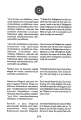
Yāva kivāñca me bhikkhave, imesu "O! Monks! If the Tathāgata had not fully com-
catusu ariyassaccevaṁ tiparivattaṁ completed these three cycles with their twelve com-
dvaḍasākāraṁ yathābhuṭṭaṁ nān
In this text, the Buddha addresses monks, emphasizing that he has fully completed the three cycles of truth, whi…
216
The Proclamation of the Supreme Dhamma
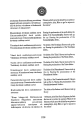
anuttaram dhammacakkam payattitam Dhamma which cannot be denied by any priest or
appattvattiyam samanaena ya brahman-
ena ya devena va maena va brahmuna
va kenaci va lokasminti".
Bhummanam devanam sa
In this text, we witness the proclamation of the Dhamma that cannot be denied by any priest or god. The text det…
219
Understanding Suffering and Enlightenment in Buddhism
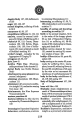
Angelic Body 107, 122; defilements by attaining Dhammakaya 111 of 135
bemoaning, as suffering 47, 58, 71,
anger 135, 136, 137 199; relationship to sorrow and lam-
animal kingdom, suffering of birth en
This text delves into key Buddhist teachings regarding suffering, attachment, and the process of attaining en…
220
Exploring the Path to Enlightenment in Buddhism
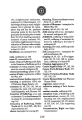
101; enlightenment mechanism, chanting, Dhammacakkapavattana explained by Dhammakaya 111; Sutta 10-11, 209-16 knowledge arising to reach enlightenment 140-1; practice 94, metaphors: dog and lion 94; g
This text delves into various aspects of Buddhism, focusing on the mechanisms of enlightenment through chanti…