

understanding : ค้นหาหนังสือธรรมะ หน้า 45 / 52
หน้าหนังสือทั้งหมด
97
Understanding Craving and Suffering in Buddhism
practices will lead them to an end of suffering — but without realizing that it is only adding to their suffering. Thus it is compared to a dog who seizes whatever it likes from the owner without tak
…ce suffering, practitioners must focus on uprooting their attachments, ultimately leading to deeper understanding and liberation from the cycle of suffering.
98
Exploring Sensual Delights and the Six Sense Organs
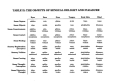
TABLE II: THE OBJECTS OF SENSUAL DELIGHT AND PLEASURE
| | Eyes | Ears | Nose | Tongue | Body Skin
…per craving and conceptual thought, ultimately influencing our experiences of pleasure and delight. Understanding these connections can enhance mindfulness and the experience of being present in the moment. Explor…
99
Understanding Sensual Attachment and Overcoming Cravings
Our sense organs [aijhattikäyatana] are implicated in the attachment we have to sensual pleasures. If we want to extinguish the craving arising because of attachment to visual temptations, then we hav
…other senses. This work is foundational in striving toward enlightenment and reducing suffering. By understanding the relationship between our senses and objects of our perception, along with the role of conscious…
100
Understanding Sensual Attachments in Practice
previous factors — senses, sense objects and sense-con- sciousness — is implicated in the attachment we have to sensual pleasures. Again, each of the six senses has its own channel of sense-contact th
…ctile, and mental contact, feelings, and perceptions—that are crucial for overcoming attachment. By understanding these connections, practitioners can better navigate their cravings and cultivate a deeper awarenes…
101
Understanding Sensory Craving and Attachment
registration is implicated in the attachment we have to sensual pleasures. Again, each of the six senses has its own channel of sense-volition therefore there are a further six areas in which the prac
… of craving and thought-conception that practitioners must address to extinguish these cravings. By understanding and working to release attachments associated with each sensory channel, one can achieve greater fr…
106
Understanding the Middle Way in Dhamma Practice
In terms of practice however, Luang Phaw Wat Paknam explained how we can know we are practicing the Middle Way in the sermon he gave on the Dhammacakkapavattana Sutta on 3 January 1955. He explained t
…g our human form from birth to death. As we practice, it is vital to return to this center for true understanding and enlightenment, facilitating our connection to life’s continuity, consciousness, and stillness.
110
Understanding the Dhamma Body and Its Levels
reach the station, from there we take the train to the airport and eventually take the aeroplane that will take us to our destination.
All the various inner spheres and bodies all the way from the Phy
…tinctions between these levels arise from the presence of subtle defilements, which are integral to understanding one’s spiritual journey. Ultimately, the goal is the purest form of the Dhamma Body, free of all de…
111
Understanding the Dhammakāya in Insight Meditation
called the ‘Coarse Dhammakāya Arahant’ or the ‘Subtle Dhammakāya Arahant’ — the latter two being the bodies of enlightenment of the arahant. The Dhammakāyas are all transcendental [lokuttara] in natur
… suffering, and not-self. The 'Dhamma' eye represents the ability to see things in their true form, understanding the origins of defilements.
119
The Noble Truth of the Path to the Cessation of Suffering
The Noble Truth of the Path to the Cessation of Suffering
The final of the four Truths of the Noble Ones taught by the Lord Buddha was the Path to the Cessation of Suffering (or the Noble Eightfold P
…, as it leads to the ultimate goal of overcoming defilements and desires on the journey to Nirvana. Understanding and applying these principles is essential for anyone seeking spiritual enlightenment and liberatio…
121
The Noble Eightfold Path: Ethical Conduct and Mindfulness
Stealing [adinnādāna]: Taking that which is not given;
Committing adultery [kāmesumicchācarā]: abstaining from sexual relations outside marriage.
5. Right Livelihood
The Lord Buddha taught his monks
…ht Mindfulness which is centered on awareness of the body, feelings, mind, and mental phenomena. By understanding and applying these principles, one can live a more mindful and ethical life, aligning with the teac…
122
The Journey to Inner Bodies and Enlightenment
(also called the 'astral body' or 'dream body') all the way up to the various bodies of enlightenment.
The meditator can see and consider bodies within the body by setting their attention to the centr
…ss allows individuals to perceive that life extends beyond physical existence, encouraging a deeper understanding of life and a detachment from the physical body. Ultimately, it describes the transformative experi…
123
Understanding Suffering and the Subtle Human Body
wealth. As the majority of sorts of suffering concerns material things, having attained the subtle human body, the mind, being unified with the subtle human body, is safely withdrawn beyond the reach
…st people suffer due to attachment to their physical bodies and possessions, despite intellectually understanding Buddha's teachings on impermanence. The author emphasizes that true resolution of suffering comes f…
125
Cultivating Transcendental Knowledge in Buddhism
It is for this reason that the Lord Buddha advocated his monks to cultivate transcendental knowledge in order to put themselves beyond the reach of sensuality [kāma], unwholesomeness [akusalamadhaṃma]
…s arising from within. Observing these feelings, both internal and external, is pivotal to profound understanding and spiritual growth. For more information, visit dmc.tv.
127
Understanding the Mind and Its Layers
are mindful that ‘the mind is distracted’. If the mind is con-
centrated, you are mindful that ‘the mind is concentrated’.
If the mind is liberated, you are mindful that ‘the mind is
liberated’. If
…btle body at any moment, particularly for those who have attained Dhammakāya, allowing for a deeper understanding of one's mental states. The insights provide a framework for comprehending complex mental processes…
128
The Relationship Between Processing, Cognition, and Mindfulness
processing and cognition are nested together inseparably and as a unit take the form of the subtle physical body. If the four faculties are separated, the subtle physical body will die immediately — a
…ntal states, with insight into the mind inside being significantly more complex. Wisdom is vital in understanding inner bodies, as taught by Luang Phaw Wat Paknam, highlighting the varying levels of wisdom associa…
131
Mindfulness and Right Concentration in Buddhism
…e inner bodies, he will also see their associated spheres of Dhamma. With each new attainment, the understanding of reality at that level will arise too, allowing wisdom to develop successively — the wisdom that …
Dieser Abschnitt behandelt die Achtsamkeit gegenüber Dhammas und die richtige Konzentration im Buddhismus. Die Achtsamkeit richtete sich sowohl auf innere als auch äußere mentale Phänomene, die erford
133
Understanding the Levels of Absorption in Meditation
The Fourth Absorption which is accompanied by two factors: happiness [sukhα] and one-pointedness [ekaggatα].
The Fifth Absorption [pañcamaajahana] which is accompanied by two factors: one-pointedness
…bsorptions. This guide serves as a roadmap for those looking to deepen their meditation practice by understanding the essential components and stages involved. For more insights, visit dmc.tv.
134
The Importance of Meditation in Buddhism
Meditation is the focussing of the mind on a single object and abiding in a single mood without distraction or restlessness, or being caught up in external influences on mood. Meditation is thus of gr
…g meditation within these practices, one can effectively tread the path to enlightenment and deeper understanding of Dhamma teachings. This foundational aspect of meditation underpins not only individual spiritual…
141
Understanding Impermanence, Suffering, and Not-Self
Impermanence [aniccān]: This is the built-in character of objects that are of a nature to change the whole of the time. Such things as the Five Aggregates of the Human Body are changing the whole of t
… how these aggregates undergo constant change, create inherent suffering, and lack a true self. The understanding of these principles is accessible only through the eye of the Dhammakāya, which transcends ordinary…
142
The Path to Enlightenment: Understanding Dhammakāya
the knowledge arising from cognition may be erroneous.
The knowledge arising from 'knowing', by contrast, de-
pends on the Dhammakāya — it is knowledge based on
true wisdom such as the Four Noble Trut
…ments during the night, showcasing the bodhisatva's progression through recollection of past lives, understanding rebirth according to karma, and eradicating mental defilements before achieving Buddhahood. All ins…