

FORM : ค้นหาหนังสือธรรมะ หน้า 30 / 36
หน้าหนังสือทั้งหมด
17
Dhamma Practice and Understanding in Dhammacakkapavattana Sutta
…spite of the present author's respect for the original use of language, to leave it in its original form would frustrate young people in their ongoing studies of Dhammacakkapavattana Sutta. The present au…
This work addresses the challenges of understanding the Dhammacakkapavattana Sutta due to its original language and scarce resources. The author adapts complex passages to modern language while mainta
26
The Noble Truths and the Path to Nirvana
…: 1. Corporeality [ rūpakhandha]; 2. Feeling [vedanākhanda]; 3. Perception [saññākhanda]; 4. Mental Formations [saṅkhārakhanda], and; 5. Consciousness [viññāṇakhanda].
21
…examining these concepts across three cycles, the Buddha attained enlightenment, affirming the transformative power of the Supreme Dhamma. The Eightfold Path is likened to a precious jewel, guiding practi…
27
Understanding the Four Noble Truths in Buddhism
… accrued during the twelve stages of the cycle of examination in three cycles can be shown in table form as shown in Table I.
The attainment of all twelve of the stages of the cycle of examination, are …
…lding a comprehensive understanding essential for spiritual growth. The elucidation of these truths forms the foundation of the Buddha's teachings, encouraging practitioners toward enlightenment. For more…
38
The Consequences of Attachment to Sense Pleasure
O! Monks! Some warriors go to the trouble to erect defences of brick and mortar to stop their enemies being able to climb over, they fill their arsenals full of weapons. However, if the enemy should p
This text discusses how attachment to sense pleasures leads to various forms of suffering and wrongdoing. It illustrates the consequences of indulgence, including violence and…
39
Understanding Self-Mortification in Buddhism
It is for this reason that the Lord Buddha should want to start his sermon by instructing the ‘group of five’ that indulgence of the senses is unsuitable, base, ignoble, without benefit, unsuitable fo
…e avoided. The practice of self-mortification, common among non-Buddhist ascetics, includes extreme forms of self-denial that lead to physical harm without any benefit. These practices range from fasting …
45
The Buddha's Teachings on Right Livelihood and Moral Conduct
…entrate one's mind to see and know four aspects of reality:
---
¹. Low Arts [tiracchānavijjā] are forms of knowledge or practice which stand in the way of the Path to Nirvana. They include charms to att…
This text discusses the Buddha's teachings on Right Livelihood, emphasizing the avoidance of 'low arts' such as fortune telling and the prohibition of harmful trades for monks and laypeople. In partic
47
Understanding Right Concentration and the Dhammacakka
…ining neighbourhood concentration [upacāra-samādhi] and access concentration [appāna-samādhi] — the former means concentrating the mind to the degree that it is so stable that it rests on the brink of the…
บทความนี้อธิบายถึงการเจริญสมาธิอย่างถูกต้องซึ่งรวมถึงการเข้าถึงสมาธิในระดับที่สูงขึ้น รวมถึง Dhammacakka ซึ่งเป็นแนวทางในการเข้าถึงนิพพาน โดยอธิบายความสัมพันธ์ระหว่างปัจจัยที่นำไปสู่การตรัสรู้และบทบาท
48
Understanding Dhammacakkapavattana Sutta
mon wouldn't have been called 'Dhammacakkapavattana Sutta' if only the Four Noble Truths or Dependent Origina-
tion or the Factors of Enlightenment were important — thus by the name of the sermon, we
…Dependent Origination, and the Factors of Enlightenment. The sermon illustrates how these teachings form a coherent whole, akin to a wheel crafted by a wheelwright. Students are encouraged to delve deeper…
51
Understanding Suffering in Buddhism
… [piyehi vipayoga] : This is the suffering arising when one is separated from the beings and mental formations we love.
1.1.12 Disappointment [yam piccham na labhati] : This is the suffering with the ch…
This text explores the concept of suffering as taught by the Buddha, outlining twelve types of suffering including feeling slighted, bemoaning losses, and separation from loved ones. It highlights how
53
The Noble Truth of the Origin of Suffering
…e to oneself, such as one’s wife and children.
If one is unfulfilled in either or both of these two forms of craving, then one will suffer from continuous misery. Even if one gets everything one wants, it…
… of Suffering, emphasizing craving as the root cause affecting all living beings. It identifies two forms of craving: self-centred craving (for personal advantage) and retinue-centred craving (for the ben…
54
Understanding the Origin of Suffering in Buddhism
…ion of desire [kilesākāma] with an object of desire [vatthukāma]. Mind-side sensuality comes in the form of defilements which cause attachment such as grasping ṛāga], greed [lobha] and jealousy [icchā]. O…
In this examination of the Buddha's teachings, the Origin of Suffering is explained as being rooted in craving, which leads to a cycle of suffering. The relationship between the Origin of Suffering an
60
The Noble Truth of Suffering
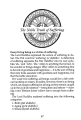
The OCR result from the image reads:
---
**4 The Noble Truth of Suffering**
Every living being is a victim of suffering
The Lord Buddha explained the nature of suffering in detail. The Pali word for
…t suffering, beings would not experience hardship; however, all beings inevitably encounter various forms of suffering. The Buddha identifies three primary categories of suffering: birth, aging, and illne…
61
Understanding Suffering in Buddhism
… e.g. prokaryotic organisms e.g. mosquitos and some sorts of worms;
4. Spontaneous arising in adult form [opāṭika] who are as developed as a sixteen-year old complete with adornment from the moment of bir…
บทเรียนของพระพุทธเจ้ามุ่งเน้นไปที่การเข้าใจทุกข์และธรรมชาติของมัน เช่น ความทุกข์จากการเกิด, ความตาย, และอารมณ์ต่างๆ เช่น ความโศกเศร้า การพลัดพราก และความผิดหวัง ความทุกข์เกิดจากการคลั่งไคล้ในaggregate
62
The Suffering of Birth: Understanding the Stages of Embryonic Development
… from the womb, the suffering is correspondingly more than for those arising spontaneously in adult form, or those arising in dampness or moisture.
For the mammals, for the first seven days after concepti…
…bryo's state every seven days, culminating in the differentiation of limbs and senses. This gradual formation process highlights the significant suffering the fetus endures in the womb, making it challeng…
63
The Suffering of Internment in the Womb
1.1 The Suffering of Internment in the Womb
The foetus is seated upon the faeces of the mother passing through her intestines and has the food being digested in her stomach as a pillow. The foetus is
…into the severe distress endured by a foetus during gestation, likening conditions in the womb to a form of hell due to physical confinement and sensory overload. The foetus experiences not only the stenc…
66
The Suffering of Birth and Aging in Buddhist Philosophy
hunted to death. All of these forms of suffering could not occur if it wasn't for being born as an animal. The causative relation of a…
ในพุทธศาสนา, ความทุกข์จากการเกิดเป็นเรื่องสำคัญ โดยเฉพาะการเกิดเป็นสัตว์และวิญญาณหิวโหย ที่จะต้องเผชิญกับการทนทุกข์จากการไม่สามารถบริโภคได้ ในขณะที่ทุกข์จากการแก่แสดงออกถึงการเสื่อมสภาพของร่างกาย เช่น
75
Understanding Suffering and Attachment
…ve categories: corporeality [rūpakhanda], feelings [vedanākhanda], perception [saññākhanda], mental formations [saṅkhāra-khandha] and consciousness [viññāṇakhanda]. The first aggregate is always physical,…
This text delves into the various forms of suffering as described in Buddhist teachings. It highlights how separation from loved ones and …
79
The Noble Truth of the Origin of Suffering
The Noble Truth of the Origin of Suffering
After explaining the Noble Truth of Suffering, Lord Buddha continued with an explanation of the origin of suffering. He pointed to craving as the origin of
…s craving for rebirth keeps beings trapped in a continuous cycle of existence, experiencing various forms of suffering including birth, old age, illness, and death. The allure of sense pleasures further b…
82
Understanding Craving in Buddhism
knowledge of such ascetics are the Formless Brahma Realms — knowledge gained as the result of developing the formless absorptions [arûpajhâ…
…uit influences rebirth and suffering. It discusses the misinterpretation by ascetics aiming for the Formless Brahmā realms and highlights craving as the root of all suffering. The wise comprehend the thre…
84
The Dangers of Craving in Buddhism
…t as to be beyond words. Supposing all the craving in existence were to manifest itself in concrete form as a tree or as a mountain, such a tree or a mountain would have to be so large that it is not cert…
This text discusses the profound impact of craving on beings, illustrating how it drives them towards hell realms and unwholesome actions. The Buddha's teachings emphasize that craving can lead to sin