

UN : ค้นหาหนังสือธรรมะ หน้า 142 / 162
หน้าหนังสือทั้งหมด
189
The Path to Enlightenment: Insights from Bahiya Dārucīriya
…ew words from the Buddha at the roadside. Therefore, they come to the conclusion that meditation is unnecessary for enlightenment and that there is no necessity for themselves to practice meditation. Wh…
…to achieving enlightenment through intense meditation. Alongside fellow monks, he spent days on a mountain plateau, vowing to attain nirvana before leaving. Despite starvation, their determination showc…
190
Bahiya and Konḍañña: Paths to Enlightenment
…kapavattana Sutta, it is necessary to give a few words of explanation about the meditational backgrounds of the 'group of five'.
If you look into the history of Konḍañña, you find that he has an extraor…
…ns about the necessity of meditation for enlightenment. It explores Konḍañña's extraordinary background, from his studies in various academic schools to his role in Prince Siddhattha's life, foreseeing …
191
The Significance of the Dhammacakka Pavattana Sutta
Siddhattha's footsteps. When Siddhattha was training him-self under the auspices of Ālara and Udaka it was Koṇḍañña who was also to train himself in Siddhattha's fo…
… by the Buddha. It was delivered to a group of five adept meditators, setting a clear framework for understanding the Dhamma. The thoroughness of Ānanda's records provides essential context for the teac…
194
Choosing the Right Disciples in Buddhism
…of the Dhamma, stak-
ing his own life for the knowledge — how much harder
would it be for others to understand? He would have to con-
sider his first disciples carefully, because if his first sermon
gav…
… Buddha dedicated six years to discover the Dhamma. Acknowledging the difficulty others may have in understanding, he chose his first disciples with great care. Decisions were made based on Dhamma, not …
196
The Dangers of Sensual Pleasures and Self-Mortification
1.1 Kāmasukhallikāyunāga: indulgence in the various sensual pleasures is harmful in the following ways:
1.1.1 Hino: It ma…
…harmful as it clouds the mind, encourages a household life, collects defilements, and is ultimately unprofitable. Similarly, self-mortification creates unnecessary suffering and restricts spiritual esca…
197
The Middle Way: Buddha's Revolutionary Teaching
tered to liberate themselves from suffering, but because the strongest spiritual trend of the time was the practice of self-mortification, many went astray or perished in their quest. Having tormented
…ation from suffering. It highlights that both sensual indulgence and extreme self-mortification are unprofitable paths. The Buddha introduced the Middle Way as a revolutionary doctrine, providing a corr…
198
Adapting Teaching Practices Through the Middle Way
… nature to bestow the means of knowing according to reality. It was not that the Group of Five were unaware of the reality of the world around them — but they lacked the “inner knowing” to understand th…
…reality perception. The Buddha emphasizes the importance of the 'inner eye' and 'inner knowing' for understanding reality, suggesting that previous practitioners possessed some inner experience. This te…
200
The Middle Way and the Four Noble Truths
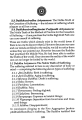
…ess called ‘suffering’, but that suffering has a cause. To us, in the present day, this might not sound very startling — but to people of ancient times, it would have been revolutionary thinking because…
… the existence of suffering; and Samudaya Aryasacca, which identifies the causes of suffering. This understanding is crucial for those seeking to achieve supreme sainthood, highlighting the revolutionar…
201
The Noble Truths of Suffering and Cessation
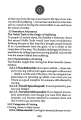
…over them). However because our eyes and our minds are blind to the reality, we fail to notice them unless they are pointed out. However because the Buddha had practised the Middle Way, He had been able…
…ion of suffering can be achieved through the practice of the Noble Eightfold Path. These truths are universal, yet often overlooked due to our blindness to reality. The Buddha's realization through the …
202
The Noble Truth of the Origin of Suffering
…th would have been revolutionary
thinking because at that time they thought people became
ill as a punishment from the gods, or as a result of the
conjunction of the stars. The Buddha challenged all the…
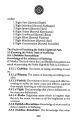
…o the Buddha's teachings on suffering, challenging ancient beliefs that linked suffering to divine punishment or fate. Instead, he identifies craving as the root cause of suffering, outlining its three …
204
The Noble Eightfold Path and Its Fruits
…filements to be overcome definitively;
3.5.1.5 Áloko: Brightness arises which is brighter than the sun, the moon, the stars or all the brightness in the universe.
3.5.2 Dukkha Kiccaṁāna: Knowledge of wh…
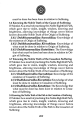
…ech, Action, Livelihood, Effort, Mindfulness, and Concentration. Practicing this path leads to profound insights and the realization of the nature of suffering (Dukkha). The knowledge gained includes un…
205
Understanding the Noble Truths and the Path to Cessation of Suffering
must be done has been done in relation to Suffering.
3.6 Knowing the Noble Truth of the Cause of Suffering
O! Monks! As a result of practising this Noble Eightfold Path, which gave rise to vision, ins
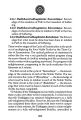
…actice of the Noble Eightfold Path, monks gain insights into these core concepts. It emphasizes the understanding of what must be done to address suffering and recognizes that these actions have already…
206
Knowledge of the Path to Cessation of Suffering
…s in their entirety, the Tathāgata dares to claim enlightenment as a fully self-enlightened Buddha, unexcelled in
This text discusses the twelve stages of the Cycle of Examination derived from the Four Noble Truths and their relation to enlightenment. It elaborates on the three circuits: knowledge of existence, k
208
The Proclamation of Deities in Buddhist Cosmology
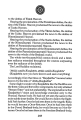
to the deities of Yāma Heaven.
Hearing the proclamation of the Tavātma deities, the deities of the Yāma Heaven proclaimed the news to the deities of Tusita Heaven.
Hearing the proclamation of the Yāma
…ausing a cosmic event. This gains the attention of the Lord Buddha, referring to Koṇḍaṇā's emerging understanding. Koṇḍaṇā achieves realization yet only attains 'Stream-Entry' at this stage. His insight…

209
Understanding Arahantship in Buddhism
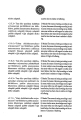
he would become an arahund. Having done the three cycles for each of the Four Noble Truths in each of the Four Inner Bodies, …
… and the Four Inner Bodies. It discusses the teachings of Luang Phaw Wat Paknam and emphasizes that understanding these foundational principles is crucial for progressing in Buddhism. All Buddha's subse…
213
Understanding Suffering and Its Origin
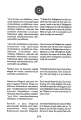
aloko udāpadi. must be done in relation to Suffering.
<3.5.3> Ta
This text discusses the detailed understanding of suffering as articulated by monks. It highlights the arising of wisdom, knowledge, an…
215
The Tathāgata and the Cycle of Enlightenment
…si. Neva attained enlightenment as a fully self-enlightened
tāvaṁ bhikkhave, sadevake loke Buddha unexcell in the cosmos with its deities,
samarake sabrahmakae sāssamā- Māras and gods, with its cont…
… the Wheel of Dhamma at Isipatana, which signifies the beginning of his teachings on liberation and understanding of existence. It underscores the themes of liberation, understanding the nature of exist…
216
The Proclamation of the Supreme Dhamma
…nnot be denied by any priest or
appattvattiyam samanaena ya brahman-
ena ya devena va maena va brahmuna
va kenaci va lokasminti".
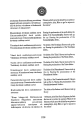
Bhummanam devanam saddam sutva Hearing the proclamation of the earth de…
…res in the Deer Park of Isipatana. As they hear the Dhamma, they echo its message, illustrating its universal significance and the impact of the Buddha setting in motion the supreme Wheel of Dhamma. Thi…
217
The Moment of Enlightenment
brahmunā vā kenaci vā lokasminṭi”.
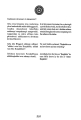
Itīha tena khaṇena tena muhuṭṭena yava brahmalokā saddo abbhuaggacchi. A…
…a-Kondañña. This narrative highlights a pivotal point in spiritual attainment, emphasizing the profound effects of enlightenment as it reverberates across the universe, demonstrating the intersection of…
218
General Index of Meditation and Mindfulness Concepts
Appendix C:
General Index
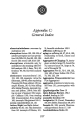
absent-mindedness: overcome by meditation 124
absorption: factors 123, 129-132; of neither-perception-nor-non-perception 193; fifth 131; first 85, 123, 129; fourth 129; sec
…ices. It includes terms like absent-mindedness, absorption, and aggregates of clinging, helpful for understanding their applications in spiritual practice. Key examples are provided for each term to ill…