

UN : ค้นหาหนังสือธรรมะ หน้า 85 / 162
หน้าหนังสือทั้งหมด
5
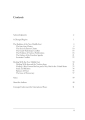
Understanding the Dynamics of the New Middle East
… 30
Dealing With Iran and the Nuclear Issue 31
Finding a Way Forward for Iraq and a Way Out for the United States 33
Israel and Palestine 34
Balance of Power 35
The Issue of Democracy 37
Notes 39
About…
…d the challenges of promoting democracy in these areas. The discussions highlight the importance of understanding sectarian conflicts and the failures of previous agendas aimed at promoting freedom. The…

6
Acknowledgments
Acknowledgments
The authors would like to thank Jessica Mathews, George Perkovich, Michele Dunne, and Thomas Carothers for their comments and suggestions. Andrew Ng and Mohammed Herzzallah helpe…
…able contributions and support from individuals such as Jessica Mathews, George Perkovich, Michele Dunne, and Thomas Carothers for their insights. It also recognizes Andrew Ng and Mohammed Herzzallah fo…
7
A Changed Region: The Transformation of the Middle East Post 9/11
A Changed Region
After September 11, 2001, the Bush administration launched an ambitious policy to forge a new Middle East, with intervention in Iraq as the driver of the …
…t the actual outcomes have largely diverged from these goals, leading to increased instability in countries like Iraq, which, despite U.S. troop presence, remains a divided and violent state. The power …
8
Challenges of U.S. Democracy Promotion in the Middle East
There has been no successful democratic revolution in any Middle Eastern country. Instead, the democratic openings advocated and supported by the United States have either led t…
This text discusses the lack of successful democratic revolutions in the Middle East, largely due to U.S. policies that have often led to sectarian division and the empowerment of Islamist groups. It
9
Challenges of U.S. Policy in the Middle East
…letely overshadowed by belligerent White House statements that U.S. policy toward Iran would remain unchanged, raising the specter of war. Although analysts agreed that the NIE’s conclusions effectively…
The U.S. faces significant challenges in the Middle East with three clusters of countries: Iran-Iraq, Lebanon-Syria, and the Palestinian-Israeli conflict. The ongoing tensions with Ira…
10
The Reality of the New Middle East
The Reality of the New Middle East
The first step toward the formulation of a new policy is to understand the realities of the new Middle East as it is now. The three clusters of countries — Iran–I…
The new Middle East is defined by three country clusters: Iran–Iraq, Lebanon–Syria, and Palestine–Israel, intertwined with issues such as nuclea…
12
Political Dynamics in Iraq Post-2007
the United States during 2007 has helped reduce violence, there has not been any corresponding political p…
Post-2007, the United States achieved a reduction in violence in Iraq, yet significant political progress remains elu…
13
The Complex Dynamics of Sunni Politics in Iraq
nizations with local roots. They understand the importance and advantages of a decentralized system. They appear to have very little re…
This text examines the intricate dynamics of Sunni political groups in Iraq amid changing power structures. Local organizations show a preference fo…
18
The Complex Relationship Between Syria and the United States
but set aside its criticism when this was in its interest. It was never in agreement with the United States and sought other allies, but never became so antagonistic as to provoke a strong America…
The text explores the evolving relationship between Syria and the United States, highlighting key moments such as the leadership transition from Hafez al-Assad to Basha…
19
Realities of the New Middle East
…ia could be coaxed and pressured into adopting more pragmatic policies. Revived U.S. efforts to relaunch the Israeli-Palestinian peace process, culminating in the Annapolis meeting in November 2007, ren…
…ivisions, mirroring the tensions from the civil war era. Instances of political paralysis in Beirut underscore the ongoing struggles within the state, showcasing the complexity of the region's power dyn…
20
The Complex Dynamics of Lebanese Politics and the Israeli-Palestinian Conflict
…ame the Cedar Revolution, marked, in effect, the rise of an anti-Syrian coalition encouraged by the United States and France. Inevitably, Syria responded by rallying its remaining allies in the country,…
… and led to a paralysis in the Lebanese government. The piece concludes with the assertion that the United States' approach has not resolved the underlying divisions or conferred long-term stability in …
22
The Bush Administration's Approach to Israeli-Palestinian Peacemaking
… of the processes it encouraged—supporting long-delayed parliamentary elections, but then trying to undermine the outcome. And undermining Palestinian institutions could hardly be reconciled with expect…
…administration exhibited a lack of interest in the peace process and instead directed policies that undermined Israeli-Palestinian negotiations, proposing a sequence of reform before peace that proved i…
24
Diplomatic Challenges in the Middle East
…become nearly impossible. Pushed by so-called moderate Arab governments that made it clear that the United States was more likely to get their support on Iraq if it relanced the peace process, the admin…
…ian conflict, particularly during the Bush administration's attempt to revitalize the peace process under challenging circumstances. It critiques the assumption held by the administration that a two-sta…
25
Nuclear Proliferation in the Middle East: Challenges and Implications
…ious facility in Syria. But the issue of Israel’s nuclear weapons is perennially off the table. The United States, along with most other countries in the world, has been concerned about the development …
This text discusses the complex dynamics of nuclear proliferation in the Middle East, particularly focusing on Israel's alleged nuclear capabilities and Iran's nuclear program. It highlights the risks
26
The Complex Dynamics of Iran's Nuclear Aspirations
…ns on entities that supply goods or services for Iran’s conventional weapons programs and provided funding to organizations seeking to promote democracy—that is, opposed the regime—in that country. Fina…
The text discusses Iran's unwavering commitment to its nuclear program, spurred by various factors, including U.S. sanctions, th…
27
Realties of the New Middle East
REALTIES OF THE NEW MIDDLE EAST 21
otherwise unwelcome consequences..... And another message should be equally clear: leaders who abandon the pursu…
…e complexities and challenges in the New Middle East, particularly regarding nuclear ambitions of countries like Saudi Arabia and Egypt, and the decline of the U.S. freedom agenda since it faced critici…
28
The New Middle East: Democracy vs. Stability
…commodating the lack of freedom in the Middle East did nothing to make us safe—because in the long run, stability cannot be purchased at the expense of liberty,” he proclaimed in a speech at the Nationa…
…s the challenges of reconciling democracy promotion with national security needs, especially amidst unstable political landscapes. For more insights, visit dmc.tv.
29
The Impact of U.S. Pressure on Egyptian Democratic Reform
… a more detailed explanation of the American approach to democratic reform in a speech in Cairo in June 2005. In January 2006, the United States went further: it canceled a meeting planned to launch neg…
In a speech in Cairo in June 2005, Rice underscored U.S. democratic reform measures. The U.S. reacted to Egypt's governance by …
30
The Dynamics of Secular and Islamist Parties in Arab Politics
…sts.
Almost by default, Islamist parties have emerged as the core of the opposition in most Arab countries. Paradoxically, the possibility of democratic reform now depends to a great extent on Islamist…
In Arab societies, secular opposition has struggled against longstanding authoritarian regimes that repress liberal ideologies, while conservative social attitudes limit their political expression. A
31
Political Dynamics and Sectarian Tensions in the Middle East
…the freedom agenda brought into the open the extent to which the political situation in most Arab countries makes quick transitions to democracy in the region impossible. Even if the United States manag…
The text discusses the complexities faced in promoting democracy in Arab nations, highlighting the influence of incumbent regimes resistant to political reform. It notes that, despite potential allies