

ศาสนาในทรรศนะของไอน์สไตน์ : หน้า 134/138
วารสารกัลยาณมิตร ปี 2529 ฉบับที่ 9 : หน้า 134/138 ศาสนา ในทรรศนะ ของไอน์สไตน์ หยุดคิด ๑ นาที เพื่อชีวิตมีคุณค่า ไอน์สไตน์เองเขียนไว้ว่า “ถ้ามีศาสนาใดที่เข้ากันได้กับ แนวคิดทางวิทยาศาสตร์สมัยใหม่ ศาสนานั้นก็คือ พุทธศาสนา การฟื้นฟูพุทธศาสนาให้ทันสมัยไม่ได้ เริ่มขึ้นที่อินเดีย แต่ที่พม่าและลั
0 ครั้ง

สรุปเนื้อหา
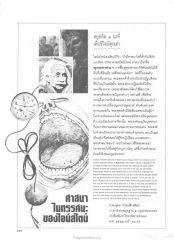
ศาสนา ในทรรศนะ ของไอน์สไตน์ หยุดคิด ๑ นาที เพื่อชีวิตมีคุณค่า ไอน์สไตน์เองเขียนไว้ว่า “ถ้ามีศาสนาใดที่เข้ากันได้กับ แนวคิดทางวิทยาศาสตร์สมัยใหม่ ศาสนานั้นก็คือ พุทธศาสนา การฟื้นฟูพุทธศาสนาให้ทันสมัยไม่ได้ เริ่มขึ้นที่อินเดีย แต่ที่พม่าและลังกา โดยที่ไม่ยอมรับ ระบบชั้นวรรณะ พระพุทธเจ้าจึงทรงเป็นนักปฏิรูปสังคม ที่ยิ่งใหญ่ในสมัยนั้น พระองค์ทรงปฏิเสธลัทธิให้คน หลงเชื่องมงาย และทรงสั่งสอนให้คนใช้อิสรภาพ ของตนที่จะสำรวจปัญหาต่าง ๆ อย่างเสรี เพื่อที่จะ บรรลุถึงความจริงด้วยตนเอง พระพุทธองค์ไม่ยอมรับว่า พวกพราหมณ์ถือกุญแจประตูสวรรค์ สำหรับพระองค์ ทุกคนเสมอกัน พระพุทธเจ้ามิได้เพียงแต่ทรงเป็นผู้นำ ในระบบสังคมแบบใหม่ แต่พระองค์ยังทรงเป็นบุคคลแรก ที่วางระเบียบในสาขาวิชานั้น พระองค์ทรงเป็นบุคคลแรก ที่ประก
หัวข้อประเด็น
- ศาสนาในทรรศนะของไอน์สไตน์
ข้อความต้นฉบับในหน้า
๑๒๖
ศาสนา
ในทรรศนะ
ของไอน์สไตน์
หยุดคิด ๑ นาที
เพื่อชีวิตมีคุณค่า
ไอน์สไตน์เองเขียนไว้ว่า “ถ้ามีศาสนาใดที่เข้ากันได้กับ
แนวคิดทางวิทยาศาสตร์สมัยใหม่ ศาสนานั้นก็คือ
พุทธศาสนา การฟื้นฟูพุทธศาสนาให้ทันสมัยไม่ได้
เริ่มขึ้นที่อินเดีย แต่ที่พม่าและลังกา โดยที่ไม่ยอมรับ
ระบบชั้นวรรณะ พระพุทธเจ้าจึงทรงเป็นนักปฏิรูปสังคม
ที่ยิ่งใหญ่ในสมัยนั้น พระองค์ทรงปฏิเสธลัทธิให้คน
หลงเชื่องมงาย และทรงสั่งสอนให้คนใช้อิสรภาพ
ของตนที่จะสำรวจปัญหาต่าง ๆ อย่างเสรี เพื่อที่จะ
บรรลุถึงความจริงด้วยตนเอง พระพุทธองค์ไม่ยอมรับว่า
พวกพราหมณ์ถือกุญแจประตูสวรรค์ สำหรับพระองค์
ทุกคนเสมอกัน พระพุทธเจ้ามิได้เพียงแต่ทรงเป็นผู้นำ
ในระบบสังคมแบบใหม่ แต่พระองค์ยังทรงเป็นบุคคลแรก
ที่วางระเบียบในสาขาวิชานั้น พระองค์ทรงเป็นบุคคลแรก
ที่ประกาศความเสมอภาคและภราดรภาพของคน พระสงฆ์
ไม่ทำตนเป็นคนกลางระหว่างพระเจ้าและคน พระเป็นแต่
เพียงผู้นำซึ่งช่วยคนให้รู้จักปฏิบัติตน แนวสอนทาง
พุทธศาสนาสอนว่า คนกำหนดแนวชีวิตของตนเอง
โลกของคนไม่ขึ้นอยู่กับกฎทางวัตถุ แต่ขึ้นกับหลักธรรม
อันแท้จริงของกฎแห่งกรรม”
Einstein himself wrote that if there is any religion which is acceptable to the
modern scientific mind it is Buddhism, The modern rebirth of Buddhism did
not begin in India, but in Burma and Ceylon, By rejecting the caste system,
Buddha became the greatest social reformer of his age, He repudiated
authoritarian doctrines and restored man's total freedom to investigate all
problems independently and to arrive at truth by his own offorts. Buddha denied
that the Brahmins held the keys of the gates of heaven, To him all men are
equal, Buddha was not only the earliest leader of the new social system but he
was also the first in the field to elaborate it, It was he who first proclaimed the
equality of men and their universal brotherhood Buddhist monks do not
pretend to be mediators between God and man. They are only leaders who wish
to help people on the way to self-redemption. The doctrine of Buddhism teaches
that man determines his own destiny Man's world is not dominated by
physical laws but by the immutable ethical law of Karma
ศ.ดร.อุดม วโรตม์สิกขดิตถ์
ภาษาอังกฤษมูลฐาน ๒ กรุงเทพมหานคร
โรงพิมพ์มหาวิทยาลัยรามคำแหง
พ.ศ. ๒๕๒๒ หน้า ๓๑-๓๓
หน้าหนังสือทั้งหมด
1
2
3
4
5
6
7
8

9

10
11
12
13
14
15
16
17
18
19
20
21
22
23
24
25
26
27
28
29
30
31
32
33
34
35
36
37
38
39
40
41
42
43
44

45
46
47

48
49

50
51
52
53
54
55
56
57
58
59
60
61

62
63
64
65
66
67
68
69
70
71
72
73
74
75
76
77
78
79
80
81
82
83
84
85
86
87
88
89
90
91
92
93
94
95

96
97
98
99
100
101
102

103

104
105
106
107
108
109
110
111
112

113
114
115
116
117
118
119

120
121
122
123
124
125
126
127
128
129
130
131
132
133
134
135

136
137
138
หนังสือที่เกี่ยวข้อง
Load More