

Understanding Sensory Terms in Buddhism : หน้า 241/263
The Buddha’s First Teaching : หน้า 241/263 A comprehensive exploration of sensory terms related to olfactory and gustatory consciousness in Buddhist teachings.
0 ครั้ง
สรุปเนื้อหา
This text delves into various sensory terms found in Buddhist scriptures, particularly focusing on olfactory and gustatory experiences. It covers concepts such as gandha (smell), jihvā (taste), and their associated feelings and consciousness. Additionally, it discusses the implications of sensory indulgence and its impact on spiritual development. Key terms examined include gāha (nose), gāha vedanā (olfactory feeling), and more. The exploration helps clarify the role of these sensations in understanding the Buddhist path and the importance of mindfulness in relation to the senses. For further insights, visit dmc.tv.
หัวข้อประเด็น
- Sensory terminology in Buddhism
- Olfactory and gustatory consciousness
- Role of senses in spiritual practice
- Harm of sensual indulgence
- Key Buddhist concepts related to senses
ข้อความต้นฉบับในหน้า
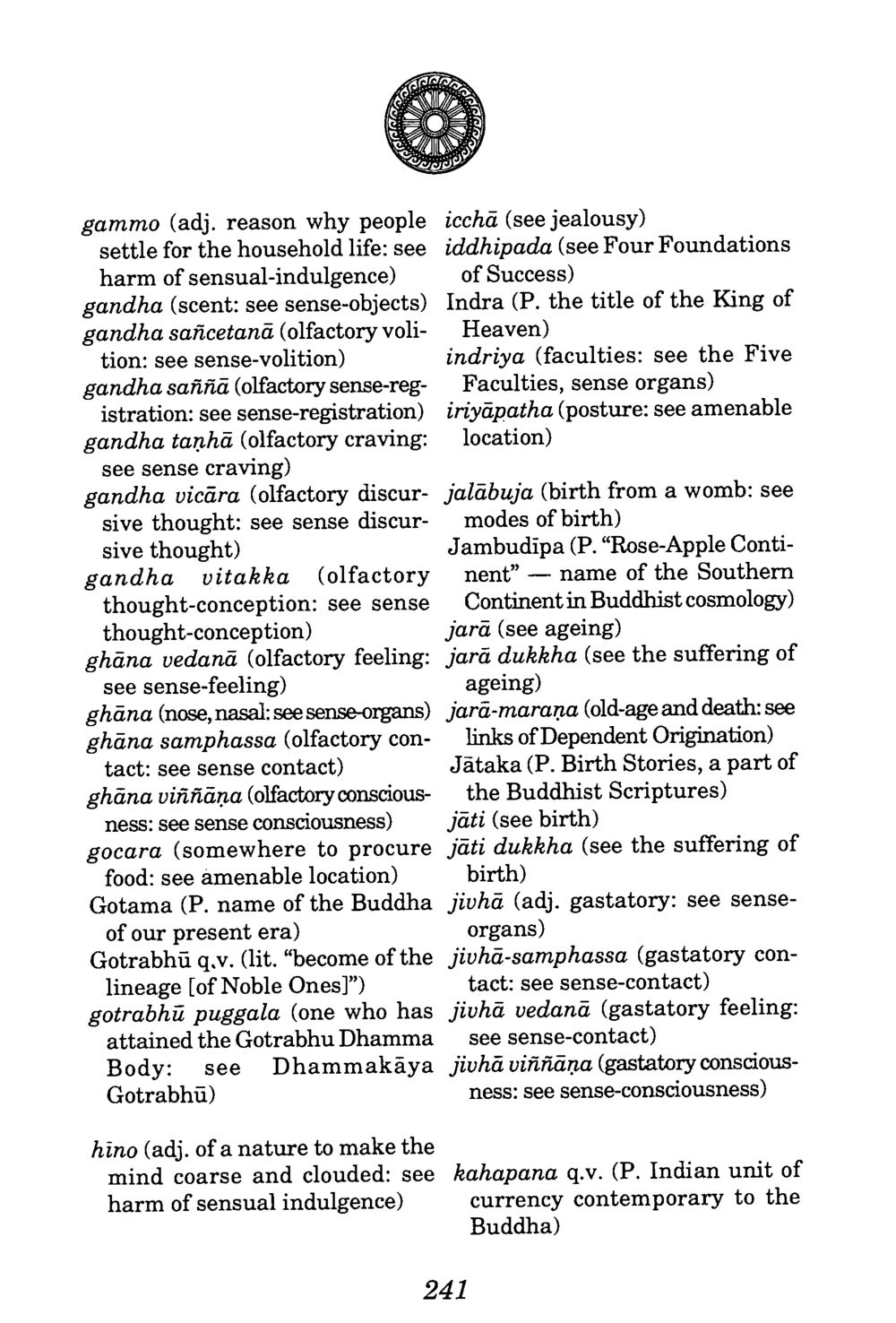
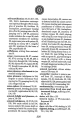
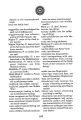
gammo (adj. reason why people icchā (see jealousy)
settle for the household life: see iddhipada (see Four Foundations
harm of sensual-indulgence) of Success)
gandha (scant: see sense-objects) Indra (P. the title of the King of
gandha saññetāna (olfactory voli- Heaven)
tion: see sense-volition) indriya (faculties: see the Five
gandha saññāṇa (olfactory sense-reg- Faculties, sense organs)
istration: see sense-registration) iriyāpatha (posture: see amenable
gandha taṇhā (olfactory craving: location)
see sense craving) jalābuja (birth from a womb: see
gandha vicāra (olfactory discur- modes of birth)
sive thought: see sense discur- Jambudipa (P. “Rose-Apple Conti-
sive thought) nant” — name of the Southern
gandha vitakka (olfactory thought- Continent in Buddhist cosmology)
conception: see sense thought) jarā (see ageing)
gāha vedanā (olfactory feeling: jarā dukkhā (see the suffering of
see sense-feeling) ageing)
gāha (nose, nasal: see sense-organs) jarā-maraṇa (old-age and death: see
gāha samphassa (olfactory con- links of Dependent Origination)
tact: see sense contact) Jātaka (P. Birth Stories, a part of
gāha viññāṇa (olfactory conscious- the Buddhist Scriptures)
ness: see sense consciousness) jāti (see birth)
gocara (somewhere to procure jaṭi dukkhā (see the suffering of
food: see amenable location) birth)
Gotama (P. name of the Buddha jihvā (adj. gastatory: see sense-
of our present era) organs)
Gotrabhu q.v. (lit. “become of the jihvā-samphassa (gastatory con-
lineage [of Noble Ones]”) tact: see sense-contact)
gotrabhu pūggala (one who has jiṭhā vedanā (gastatory feeling:
attained the Gotrabhu Dhamma see sense-contact)
Body: see Dhammakāya jihvā viññāṇa (gastatory conscious-
Gotrabhū) ness: see sense-consciousness)
hino (adj. of a nature to make the
mind coarse and clouded: see kahapana q.v. (P. Indian unit of
harm of sensual indulgence) currency contemporary to the
Buddha)
หน้าหนังสือทั้งหมด
1

2
3
4
5
6
7
8
9
10
11
12
13
14
15
16
17
18
19
20
21
22
23
24
25
26
27
28
29

30
31
32
33
34
35
36
37
38
39
40
41
42
43
44
45
46
47
48
49
50
51
52
53
54
55
56
57
58
59
60
61
62
63
64
65
66
67
68
69
70
71
72
73
74
75
76
77
78
79
80
81
82
83
84
85
86
87
88
89
90
91
92
93
94
95
96
97
98
99
100
101
102
103
104
105
106
107
108
109
110
111
112
113
114
115
116
117
118
119
120
121
122
123
124
125
126
127
128
129
130
131
132
133
134
135
136
137
138
139
140
141
142
143
144
145
146
147

148
149
150
151
152
153
154
155
156
157
158
159
160
161
162
163
164
165
166
167
168
169
170
171
172
173
174
175
176
177
178
179
180
181
182
183
184
185
186
187
188
189
190
191
192
193
194
195
196
197
198
199
200
201
202
203
204
205
206
207
208
209
210
211
212
213
214
215
216
217
218
219
220
221
222
223
224
225
226
227
228
229
230
231
232
233
234
235
236
237
238
239
240
241
242
243
244
245
246
247
248
249
250
251
252
253
254
255
256
257
258
259
260
261
262

263
หนังสือที่เกี่ยวข้อง
Load More